
Table of Contents
-
AI, Automation, and Smart Recruiting Tools: What’s the Difference?
-
Best Recruiting Automation Software in 2025: Side-by-Side Comparison
From the moment the internet was made public, to the very first AI speculations, technology has made serious advancements since its very first inception.
Now, it’s no news that AI has been fully integrated into the workplace, and recruiting teams are taking the plunge faster than you can imagine.
Recruiting has always been one of the most critical yet challenging aspects of running a business, and every employer knows that finding the right people not only takes time but also money and resources.
In 2025, global competition for talent is increasing, and hiring demands are becoming complex. Slow and inefficient hiring is not an option, and this is where AI in recruiting automation comes in.
AI recruiting solutions are more than just speculation. These are solutions that are used by businesses to save time, find, screen, and hire talent on a larger scale.
However, while the opportunities are promising, there is also a growing need for responsibility. Without careful planning, automation can lead to multiple problems like bias, lack of transparency, and negative candidate experiences.
At the end of this guide, you’ll have a deeper insight into what AI recruiting means for businesses, its core use cases, the challenges, and platforms that can ease you and your team into the technology adoption in 2025.
Recommended: 11 Best AI Co-Pilot Interview Tools
What Is AI and automation in recruitment?

To understand the role of AI in recruitment, let’s look at what AI-powered recruiting automation means. It might sound like a mouthful, which is why you have to understand recruiting automation first.
Recruiting automation refers to using software to handle repetitive and time-consuming tasks in the hiring process. Recruiting automation tools and recruitment automation tools are types of technology designed to automate these processes.
An example of this is when a recruiter that used to manually go through 500 resumes before getting a talent, suddenly has access to a software system that can filter the resumes based on set requirements. These tools help reduce or eliminate manual tasks and manual data entry, saving hours of work and allowing the recruiter to focus on more important decisions.
When artificial intelligence is added to this automation, the process becomes smarter. AI features such as resume parsing, candidate matching, and automated workflows further enhance efficiency and candidate management.
Instead of merely scanning resumes for keywords, AI can analyze context by looking beyond job titles and matching skills to role requirements, predicting success by identifying candidates most likely to succeed based on past hiring data, among other uses.
While traditional recruiting automation focuses on efficiency, AI in recruiting automation is all about intelligence. The full usage of data to make better decisions, not just quicker ones.
AI, Automation, and Smart Recruiting Tools: What’s the Difference?
A lot of recruiters and founders interchange these terminologies, when in reality, they don’t mean the same thing. Understanding these concepts is important for better decision-making.
- Automation
Automation means using software to perform repetitive tasks without human input. An instance of this is a recruiter automatically scheduling interviews based on availability. It removes manual effort but does not think for itself.
- AI in Recruiting Automation
AI in recruiting automation adds intelligence to the process. Instead of just automating scheduling, AI might analyze which times are most likely to lead to successful interview attendance.
It might also suggest the best interviewer for a candidate based on previous results. It is known for using data and predictive models to improve decision-making.
- Smart Recruiting
Smart recruiting tools are broad. It can include both automation and AI. A smart tool might be a chatbot that answers candidate questions 24/7, or a platform that uses machine learning to rank applicants. An all-in-one platform consolidates these features, providing a seamless experience by integrating multiple recruitment tools and workflows in a single system.
These tools build on existing processes to make them more effective.
The key difference when it comes to these three lies in decision-making. Automation follows rules, AI learns and adapts, and smart tools combine features of both.
Recruiters who understand this distinction are better prepared to choose the right solution for their specific needs, as these tools enable recruiters to streamline workflows and make more informed hiring decisions.
Recommended:* 11 High-Volume Recruiting Tools to Save Time and Cut Costs*
Modern Hiring and Job Applicants
Modern hiring has been revolutionized by the integration of AI recruiting tools, transforming the way organizations approach the entire hiring process. Today’s talent acquisition teams rely on a suite of advanced technologies—from applicant tracking systems to AI-powered recruiting platforms—to streamline recruitment and identify qualified candidates with greater speed and accuracy. These AI recruiting solutions automate critical steps such as candidate screening, interview scheduling, and candidate engagement, freeing up recruiters to focus on strategic decision-making and relationship-building.
For companies facing high volume hiring, AI recruiting tools are indispensable. They can efficiently process large numbers of job applicants, quickly match candidates to job criteria, and ensure that only the most relevant candidates move forward in the recruitment process. This not only accelerates time to hire but also improves the quality of hires by leveraging data-driven insights.
However, the true hallmark of modern hiring goes beyond automation. It’s about creating a seamless and positive candidate experience throughout the entire hiring process. AI tools should enhance—not replace—the human touch, ensuring that every job applicant feels valued and informed. By thoughtfully integrating AI-powered recruiting tools, talent acquisition teams can meet today’s hiring demands while building a strong employer brand and attracting top talent.
Major Uses of AI in Recruiting Automation for Employers

According to a report compiled by Jobberman in 2025, about 75% of employers worldwide have experienced difficulties finding skilled talent. This is a huge increase compared to the 36% that were reported in 2014.
This is why there’s a need for faster processes and why AI in recruiting automation has become so valuable.
Its applications are practical, measurable, and impactful. Some of the ways it’s been aiding employers recruitment processes include:
1. Resume Screening
AI tools can scan thousands of resumes in minutes, extracting key information like skills, experience, and education. A key feature is resume parsing, which automatically extracts structured data from candidate resumes for more efficient data management. Instead of just searching for keywords, AI can analyze and understand context, and assess job requirements to match candidates more accurately.
Its ability to identify transferable skills or non-traditional experience that still fit the role makes it an invaluable tool for recruiting teams.
This is a recruitment task that needs easier processes. AI can search through job boards, professional networks, and internal pipelines to create a shortlist of candidates. Automated job posting and posting jobs across multiple job boards are handled seamlessly by AI tools, making it easier to reach top talent quickly. AI also helps build and maintain a talent pool for future hiring needs.
It goes beyond active job seekers and can find passive candidates who might be open to opportunities.
2. Interview Scheduling and Candidate Communication
Automation makes sure candidates don’t get lost in email threads. Tools like HiveMind have this covered. The platform’s ability to schedule interviews, send reminders, and answer frequently asked questions, ensures a smooth candidate experience. Candidate self scheduling allows candidates to select their own interview times, improving efficiency and reducing administrative workload. Automation also helps in reducing manual data entry by syncing candidate information across systems.
This takes a lot of heat off the hands of the recruiter-in-charge and improves candidate experience.
3. Video Interviews and Assessments
Some employers use AI to analyze recorded interviews, taking note of both verbal and non-verbal cues. While this raises ethical questions by some, when done responsibly, it can provide additional insights into candidate fit. AI can also assist in ranking candidates based on their interview or assessment data, making the selection process more efficient.
This will help employers see a clearer view of the candidate’s communication skills, confidence, and overall suitability for the role.
4. Predictive Hiring Analytics
Artificial intelligence doesn’t just stop at filling up your recruitment pipeline. It can assess whether a candidate is likely to stay long-term, succeed in their role, or contribute positively to company culture. AI-driven analytics can also help in ranking candidates for better hiring decisions.
This helps employers make better hiring decisions. Employers gain efficiency because of this, and they’re able to get the right candidates for the job.
Recommended:* Top 11 AI Candidate Screening Tools*
Candidate Relationship Management and Sourcing
Candidate relationship management (CRM) has become a cornerstone of effective talent acquisition, especially in a competitive hiring landscape. AI-powered recruiting platforms now offer sophisticated CRM features that empower recruiting teams to nurture and engage potential candidates long before a job offer is made. By leveraging machine learning, these platforms analyze candidate data to deliver actionable insights, enabling talent teams to personalize outreach and build lasting relationships with top talent.
Conversational AI is playing a pivotal role in early candidate interactions, providing timely responses to inquiries and keeping candidates engaged throughout the hiring process. This not only enhances the candidate experience but also increases the likelihood of attracting relevant candidates who are a strong fit for open roles. Automated interview scheduling and video interviews further streamline the process, allowing hiring managers to efficiently assess multiple candidates and reduce time to hire.
With AI-powered candidate sourcing, recruiting teams can tap into broader talent pools and identify passive candidates who may not be actively seeking new opportunities but are open to the right offer. By integrating candidate relationship management with advanced sourcing tools, organizations can ensure a steady pipeline of qualified candidates and maintain a competitive edge in talent acquisition.
The Challenges Employers Face with AI Recruiting Tools

Even with its clear benefits, AI still has its disadvantages. Employers must understand the challenges before fully committing to these tools, as these issues can directly impact hiring teams and their ability to meet specific hiring needs.
1. Bias and Fairness Issues
AI tools can unintentionally strengthen existing biases in recruitment, if the training data includes stereotypes or cultural assumptions. However, using the right candidate assessment tools can help mitigate these biases by focusing on candidates’ true abilities.
For instance, certain facial expressions or speech patterns that are common in one culture may be unfairly viewed as negative in another.
This increases the risk of excluding qualified candidates based on those factors. Employers need to continuously check these systems to ensure fairness and inclusivity.
AI in recruiting automation might be an ultra-useful tool but the human factor cannot be abandoned.
2. Cultural and Personality Misinterpretation
Non-verbal communication varies greatly across cultures and individuals. What one culture considers respectful, like avoiding direct eye contact, another might interpret as a lack of confidence.
Likewise, introverted or neurodiverse candidates may behave differently in interviews, and AI may misinterpret these behaviors as poor performance. This can lead to unfair outcomes if the system isn’t properly optimized.
3. Lack of Transparency
Many recruiters and candidates don’t fully understand how AI in recruiting automation makes certain decisions.
Without transparency, it’s difficult to know why a candidate received a low or high rating, which can undermine trust in the hiring process.
This lack of clarity also makes it hard for candidates to improve or prepare fairly for future assessments.
4. Privacy and Data Security Concerns
When it comes to video interviews, AI in recruiting automation produces large amounts of personal data, including voice patterns, facial recognition data, and behavioral cues. If this sensitive information isn’t handled safely, it can be at risk of misuse.
Candidates may also feel uneasy knowing that every gesture and tone during the recruitment process is being analyzed and stored. This raises important privacy concerns that employers must address.
5. Total Dependence
When organizations depend too much on AI video assessments, they risk reducing candidates to just metrics instead of seeing them as complete individuals.
This can remove the human context, empathy, and intuition that are vital in hiring. This could also mean that mistakes in the AI system could go unnoticed, resulting in poor hiring decisions and a negative candidate experience. As organizations look to scale hiring, it’s crucial for hiring teams to balance technology with human judgment to ensure both efficiency and fairness.
Recommended:* 9 Best AI Interview Scheduling Software for Hiring*
Responsible Use of AI in Recruiting
As AI recruiting tools become more prevalent, the need for responsible and ethical use has never been greater. While AI recruiting can dramatically improve efficiency and help identify the most qualified candidates, it also carries the risk of perpetuating bias or overlooking specialized talent if not carefully managed. Talent acquisition teams must take proactive steps to ensure that their recruiting tools and automation tools are designed and used in ways that promote fairness, transparency, and inclusivity.
Regular audits of AI algorithms are essential to detect and mitigate any unintended bias in candidate screening or ranking. It’s also crucial to handle candidate data with the utmost care, adhering to privacy regulations and ensuring that sensitive information is protected throughout the recruitment process. AI tools should serve as a complement to human expertise, supporting hiring managers in making well-rounded decisions rather than replacing human judgment entirely.
By prioritizing responsible AI recruiting practices, organizations can harness the full potential of automation tools while safeguarding the integrity of their hiring process. This means being vigilant about the impact of AI on all job applicants, especially those with specialized talent or from underrepresented groups, and continuously refining recruiting tools to deliver equitable and high-quality hiring outcomes.
How to Choose and Evaluate the Right AI Recruiting Tools
It’s easy to get decision-paralyzed with the amount of choices we have today, because choosing the right solution isn’t just about finding the one with the most features but selecting one that matches business goals, and ethical standards.
1. Define Your Hiring Goals
Before investing in AI in recruiting automation, identify the specific problems you want to solve. Are you looking to reduce time-to-hire, improve candidate sourcing, eliminate bias, or enhance interview assessments? Staffing agencies, for example, may require specialized features for high-volume candidate management and submission workflows.
Being clear at this recruitment stage helps you avoid feature-filled tools that won’t meet your needs. The right tool should directly support your hiring goals, and talent leaders should play a key role in guiding the selection and adoption of these solutions.
2. Evaluate Core Features and Capabilities
Not all AI recruiting platforms are the same. Some focus on resume screening, others on sourcing candidates, and some on interview automation. Advanced solutions, such as a talent intelligence platform, leverage a talent data cloud to provide real-time insights and better decision-making for talent acquisition.
Make a list of must-have features, such as integrations with your ATS, analytics dashboards, or pipeline creation and maintenance. Comparing these features ensures you choose a tool that fits your workflow.
3. Check for Bias Reduction and Fairness
AI can unintentionally introduce discrimination, so do thorough research on how different systems handle bias. Questions like, “Can I customize criteria to match fair hiring practices?” should be asked.
A good tool should include built-in bias detection and provide clear reporting on how candidates are evaluated. This helps protect both your company and applicants.
4. Prioritize User Experience
An effective AI recruiting tool is only useful if recruiters and hiring managers can use it comfortably. Look for platforms with simple interfaces, simple navigation, and solid customer support. Teams focused on outbound recruiting or sourcing will benefit from tools that streamline workflows and enhance efficiency.
The candidate experience is also important. Ensure the tool creates a smooth, respectful process for applicants rather than making them feel like they’re dealing with a robot.
5. Test Integration with Existing Systems
Your recruiting tool should work smoothly with your current HR tools, especially your Applicant Tracking System (ATS) and communication platforms.
Poor integration can lead to repeated efforts. You end up taking more time doing tasks, which is the opposite of what you want from an AI recruitment system.
During evaluation, request a demo that shows exactly how the tool fits into your existing workflow without causing issues.
6. Analyze Data Security and Compliance
When it comes to AI in recruiting automation, these tools handle sensitive information like resumes, interviews, and candidate profiles.
Make sure the system complies with data protection laws. Ask the vendor how they store, encrypt, and delete candidate data after use. Strong security practices are essential to maintain trust and avoid legal risks.
7. Measure Return on Investment (ROI) and Scalability
Finally, think about long-term value. Does the tool save significant recruiter hours, reduce cost-per-hire, or improve candidate quality? Can it scale with your company as hiring volume grows? Supporting and scaling your hiring efforts should be a key outcome of choosing the right tool.
A recruiting tool should not just solve today’s challenges but also remain effective as your organization expands.
Recommended: AI-Powered Recruitment for Early-stage Startups
Where Does Hivemind Come In?
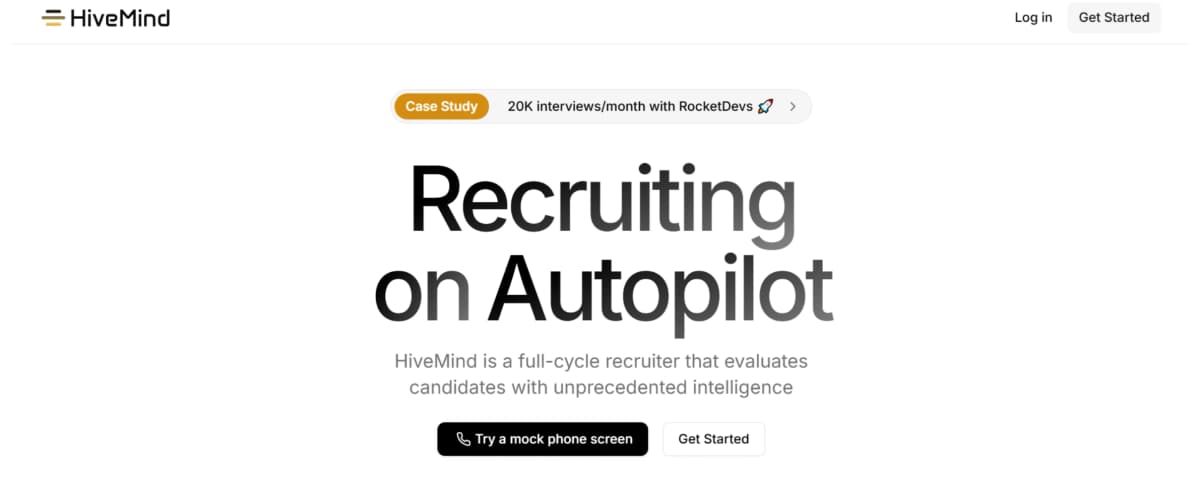
Many employers are turning to AI in recruiting automation, but they still deal with the same issues, like multiple tools, manual processes, and the challenge of balancing speed with care. This is where tools like HiveMind AI make a difference by helping employers accelerate hiring through streamlined workflows and automation.
As mentioned earlier, one of the features of HiveMind happens to be interview scheduling.
It also sorts applicants into organized pipelines. Candidates are grouped by role and stage, making it easy to see who fits your ideal profile and who does not.
The built-in AI-powered resume screening makes your hiring process even stronger, by filtering applicants based on your essential criteria.
Since hiring isn’t mostly a solo effort, HiveMind AI is designed for collaboration. Your recruitment team can evaluate candidates together within the platform, agree on the qualities that are most important, and move candidates through the pipeline transparently.
This joint approach reduces bias, improves retention, and ensures every hire is made with clarity and confidence.
Hivemind represents the future of recruiting automation done right. By unifying tools, ensuring compliance, and prioritizing candidates, it stands among the top ai recruiting tools available to employers, helping them harness the full power of AI while avoiding the risks.