
Hiring for one role is already tough. Hiring hundreds at once is a different challenge. That’s where high volume recruiting tools come in.
When you’re responsible for filling dozens or even hundreds of roles fast, you need software that helps you move quickly, stay organized, and connect with qualified candidates at scale.
The average cost-per-hire is $4,700, and it’s even higher in high-volume industries. Delays, drop-offs, and manual tasks can quickly drive up your costs and slow down your recruiting process.
In this guide, you’ll learn what high volume recruiting actually involves, challenges recruiters face, how to build a recruiting strategy that works under pressure and the 11 best high volume recruiting tools to save you time. We’ve included practical tips and a breakdown of the high volume recruiter’s role to give you the best insights.
If your current high volume recruiting tools are slowing you down or costing you good candidates, it might be time for an upgrade. Let’s look at what works.
What is High Volume Recruiting
High volume recruiting is the process of hiring a large number of people in a short amount of time.
It’s often used by companies that need to fill many positions at once; like call centers, big tech companies, retail stores, delivery services, hospitals, or seasonal jobs.
Since there are so many candidates to manage, recruiters often use automation tools to help with posting jobs, reviewing applications, scheduling interviews, and sending follow-ups quickly.
Related: Top 9 AI Recruiting Assistants to Hire Skilled Candidates Faster
High Volume Recruiting Challenges
Every recruiter I have spoken with says the same thing; high volume recruiting sounds simple on paper. ‘Fill a lot of roles, fast.’ But in reality, it comes with a unique set of challenges that can overwhelm even experienced recruiting teams.
Here are the biggest challenges recruiters face when it comes to high volume recruiting:
1. Application Overload
High volume job posts attract a flood of applicants. Without automation, it’s nearly impossible to screen efficiently or fairly. Qualified candidates may get missed, while unqualified ones clog your pipeline.
2. High Drop-Off Rates
In high-volume hiring, companies take far longer to move through interviews and approvals, and candidates drop out when the application process is too long. This delay causes you to lose talent to faster-moving competitors.
3. Interview Coordination at Scale
Coordinating interviews at scale is one of the biggest time drains. Without automation, recruiters spend hours chasing availability, sending reminders, and managing calendars.
4. Poor Visibility Across the Hiring Funnel
When hiring at scale, keeping track of every candidate’s progress becomes difficult. This creates confusion, inconsistent scoring and missed follow-ups.
5. Recruiter Burnout and Mistakes
High-volume environments are intense. Recruiters often handle 10–20 open roles at once, each with hundreds of candidates.
This workload takes a toll.
Burnout leads to mistakes. Mistakes lead to poor candidate experiences and delayed hiring. And eventually, it affects team morale and turnover in the talent team itself.
6. Lack of Scalable Tools
Most teams still rely on basic ATS platforms that work fine for occasional hires, but once the volume rises, they quickly fall apart. Without a good high volume recruiting tool, recruiters get stuck doing everything manually.
This is where HiveMind AI changes the game. In the next section, I’ll walk you through the simplest, fastest strategy for high-volume hiring: from building your pipeline to screening, ranking and making better hires, faster.
The Best High-Volume Recruiting Strategy
You can’t afford to post a job, wait for applicants, and hope for the best. At high volumes, that kind of guesswork will burn time. What you need is a system that runs smoothly even when you’re filling a hundred roles at once:
1. Plan with Precision
Before you publish a job ad, get alignment on exactly what roles you’re hiring for, how many people you need, what success looks like in each role, and how you’ll evaluate candidates. You also need to decide where those candidates will come from. The more you know before you begin, the better you can focus your energy.
2. Write Clear Job Ads
Once you’ve mapped out the roles and sourcing strategy, move on to write job ads that are direct, specific, and honest.
When you’re hiring in volume, especially without a high volume recruiting tool, clarity is your filter. The clearer your ads, the fewer unqualified applications you’ll need to sort through.
3. Source Where Candidates Actually Are
Think about where your ideal candidates actually spend their time. It’s easy to default to LinkedIn or your usual job board, but for high-volume roles, you’ll need to widen the net.
If you’ve hired great people in the past, ask them where they found the job. Build sourcing strategies around those real behaviors.
Top Pick: 11 Underrated Benefits of AI in Recruitment You Can’t Ignore
4. Streamline Screening
It’s not realistic to manually review every resume when you’re hiring dozens or hundreds of people.
Set up a clear and fair process that helps you move fast without missing the right talent. HiveMind AI helps you screen faster and smarter, surfacing strong candidates early so you don’t miss great talent or waste time.
5. Simplify Scheduling
Scheduling interviews by email drags things out and frustrates candidates. Use scheduling tools that let people choose their own time, get reminders, and reschedule without needing to talk to a person.
6. Communicate at Every Stage
One of the biggest mistakes in high-volume hiring is poor communication. You can fix this by putting a simple communication system in place with a high volume recruiting tool, which uses automated updates at every stage of the process.
This makes your hiring feel more human, even if you’re managing hundreds of applications.
7. Prepare Your Hiring Managers
If your hiring managers are part of the process, make sure they’re ready. Too often, managers become the bottleneck.
Solve this by giving them a structured scorecard, a clear deadline, and training on how to assess the specific roles they’re involved in. Speed matters, especially when your best candidates have other offers coming in.
8. Track What Matters
Throughout your hiring cycle, track your numbers. Don’t guess what’s working. Measure time to hire, drop-off rates, source quality, and offer acceptance. Make this part of your weekly review. Every insight helps you hire better next time.
9. Build Your Future Pipeline
Treat every hiring round as an investment in your future pipeline. Not everyone will get the job, but that doesn’t mean they’re not worth keeping in touch with. Build a short list of strong candidates who weren’t selected but impressed you. This single habit can shave weeks off your next hiring sprint.
Next, let’s look at the 11 best high volume recruiting tools.
11 Best High Volume Recruiting Tools
- HiveMind AI
- Paradox AI
- Phenom
- Eightfold AI
- HireVue
- Harver
- Fountain
- Oleeo
- HiredScore
- Humanly
- XOR
High-volume hiring requires high volume recruiting tools that can efficiently handle thousands of applicants with minimal manual effort.
Below are 11 high volume recruiting tools tailored for high applicant volumes:
1. HiveMind AI
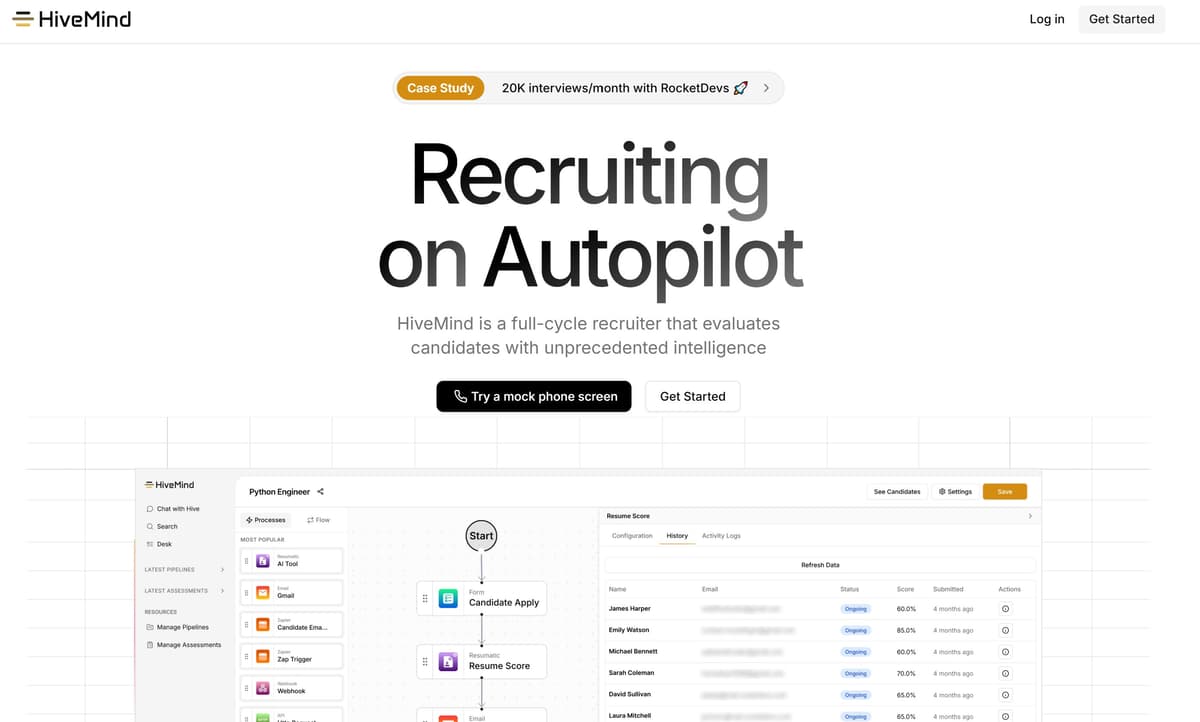
HiveMind AI has powered over 20,000 interviews monthly for companies like RocketDevs.
In one case, a high-growth staffing agency cut manual scheduling time by 90% and increased the daily volume of qualified candidates.
One of HiveMind’s AI advantages is that it’s hiring workflow is highly customizable, this ensures the AI ranking aligns with real company success factors.
It requires candidates to invest time in tests, but those who complete tend to be serious, and the result is a dramatically streamlined funnel.
In short, HiveMind AI is best-in-class for high volume assessment: it helps hiring teams handle huge applicant numbers fairly and efficiently, based on objective job-related criteria.
Best For: Companies hiring at scale, especially those managing hundreds or thousands of applicants per month. Also best for businesses that want to reduce manual tasks without sacrificing quality or candidate experience.
Key Features:
- AI-powered resume ranking
- Skill-based assessments created by domain experts
- Easy drag-and-drop hiring flow builder
- AI Co-Pilot for interview support and summaries
- One-way and live video interviews with built-in scoring
- Centralized inbox for candidate communication
- Automated emails, reminders, and status updates
- Works for tech and non-tech roles across all industries
2. Paradox (Olivia)
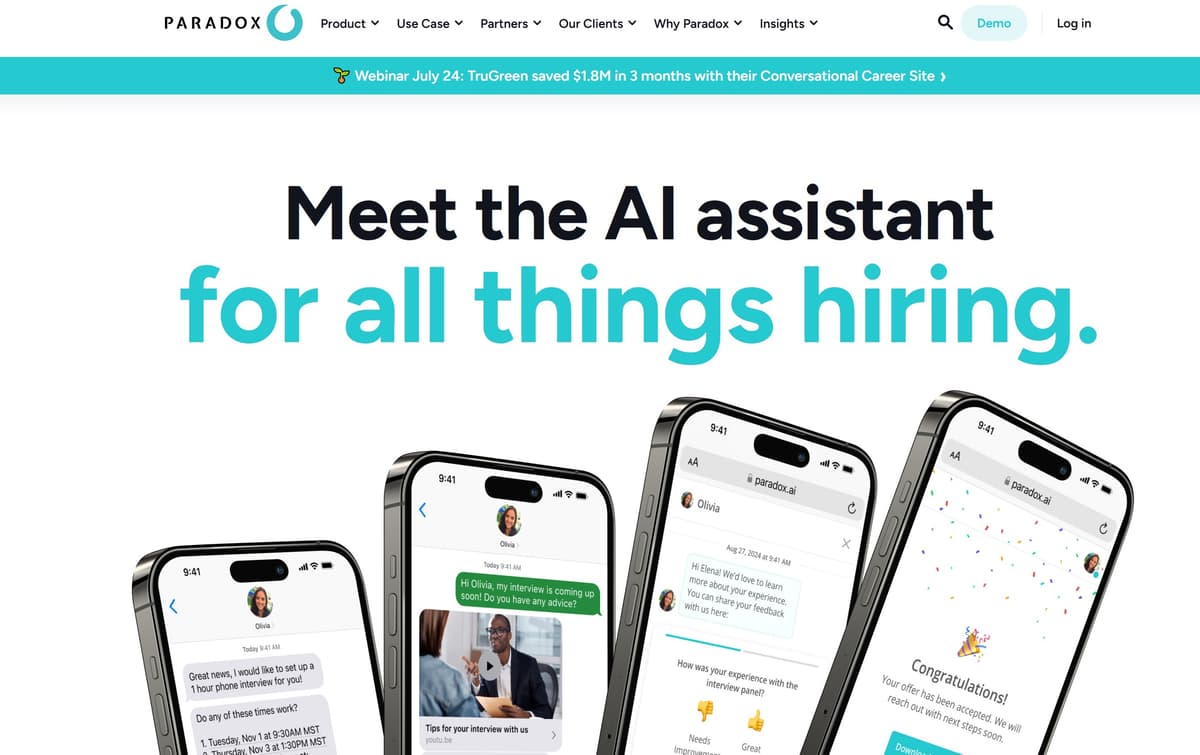
Global companies like Unilever use this high volume recruiting tool to handle thousands of store-level openings. This high volume recruiting tool excels in speed and scalability.
Its AI assistant, Olivia, chats with candidates 24/7, screens them instantly, answers their questions, and schedules interviews automatically. The AI converses in over 100 languages, making it effective for diverse workforces.
Best For: Paradox is especially popular in hourly hiring and frontline industries like retail, restaurants, hospitality, and customer service, where managers must hire at scale.
Key Features:
- Olivia: 24/7 AI recruiting assistant for screening, scheduling, and candidate Q&A
- Mobile-first, conversational experience
- Instant interview scheduling
- Automated candidate reminders and follow-ups
- Seamless ATS integrations
- Real-time analytics and status tracking
- Supports multiple communication channels: SMS, WhatsApp, web chat
3. Phenom
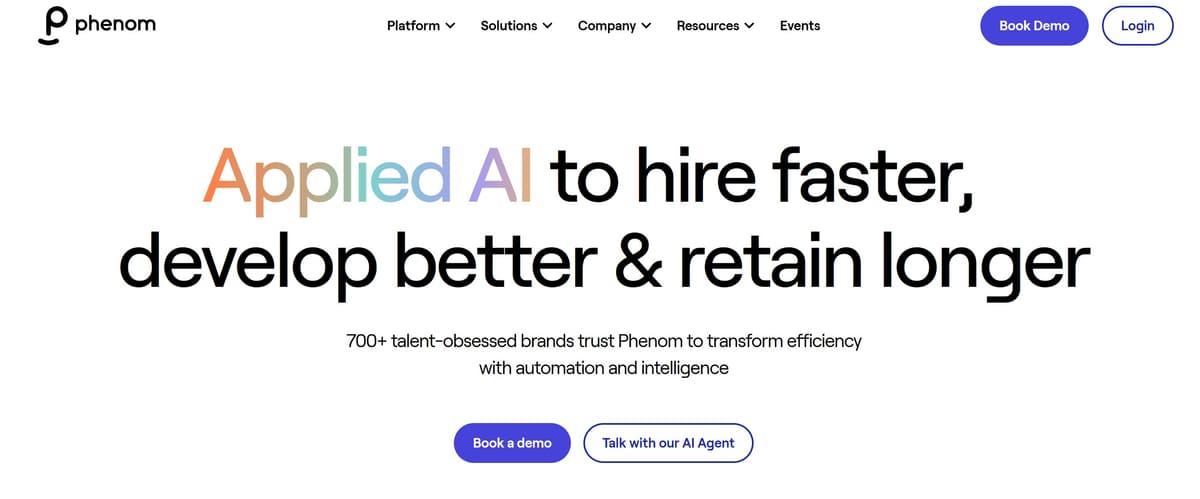
According to DHL’s case study, using Phenom’s high volume recruiting tool features reduced time-to-hire by 14 days.
Phenom’s AI solves high volume hiring challenges by scoring candidates based on intent, skill match, and behavior, then personalizes the experience for each one.
It also supports internal mobility, letting teams hire from within without losing track of internal candidates in the flood of external ones.
Best For: Phenom is used across industries (from fast-food chains to hospitals) that do continuous large-scale hiring.
Key Features:
- AI-powered career sites that adapt in real-time
- Talent CRM for personalized candidate engagement
- Chatbot for 24/7 candidate interaction
- Automated scheduling and interview coordination
- Internal mobility and employee reskilling tools
- Talent analytics and workforce planning
- Integration with most major ATS platforms
4. Eightfold AI
Eightfold AI can infer skills from resumes (even if not explicitly listed) and find candidates who are great fits based on skill adjacency and potential, not just past titles.
This means Eightfold can surface “hidden gem” candidates at scale, which is invaluable when you have tens of thousands of resumes to sift through or need to rediscover applicants in your database.
Best For: Eightfold is used by large enterprises that have high volumes of applicants and want to leverage deep AI insights. It also supports hourly and campus hiring.
Key Features:
- Deep-learning-powered talent matching and scoring
- Internal mobility recommendations
- Resume screening and bulk candidate ranking
- Candidate rediscovery from past applications
- Diversity-focused screening that removes bias
- Predictive analytics for pipeline quality and hiring success
- ATS and HRIS integration support
5. HireVue
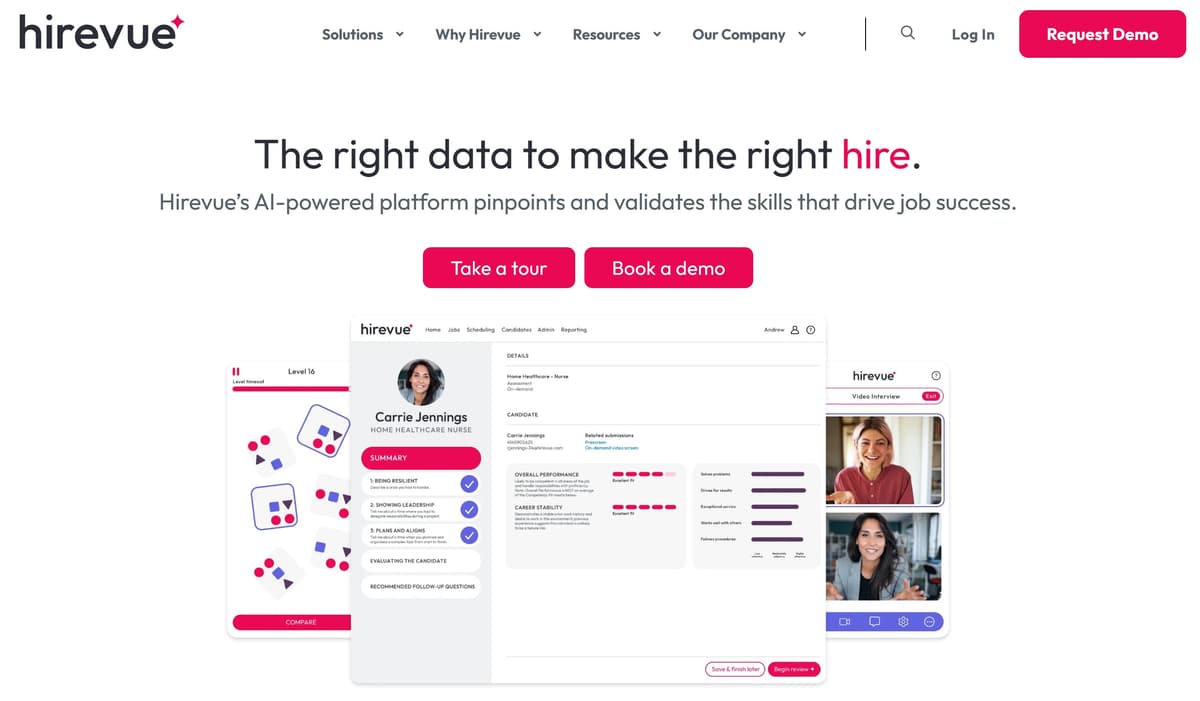
HireVue was one of the first companies to bring structured video interviewing into high-volume hiring at scale, and its years of optimization show.
Another key advantage of this high volume recruiting tool is its AI scoring system, which analyzes tone, content and behavioral patterns in interviews.
It reduces unconscious bias, especially in early screening. Plus, it handles compliance and fairness testing rigorously…something many AI recruiting tools neglect.
Best For: HireVue is popular for campus recruiting, entry-level hiring, and customer-facing roles.
Companies in retail, banking, airlines, and consulting use it to vet thousands of applicants (like interns, tellers, flight attendants) efficiently. It’s also used in tech hiring for coding challenges and technical assessments.
Key Features:
- On-demand video interviews with automated scoring
- AI-based assessments for soft skills and cognitive ability
- Game-based testing for non-technical roles
- Live video interviewing platform with collaborative tools
- Structured question libraries for consistency
- ATS integrations and workflow customization
- Detailed candidate scorecards and analytics
Related: Top 37 HireVue Interview Questions with Smart Answers
6. Harver
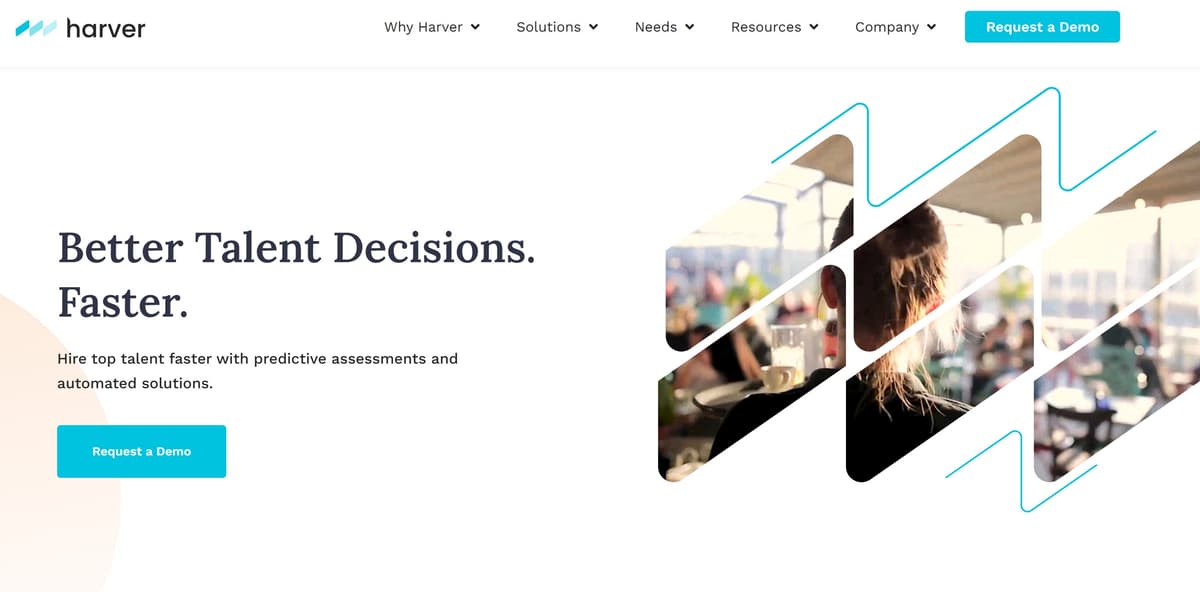
From the moment candidates enter the high volume recruiting funnel, Harver kicks off automated workflows that screen, assess, and schedule candidates. Albert Heijn cut time-to-hire by 40% with Harver and that helped 60% of applicants get hired within 10 days.
Its matching engine doesn’t just say “qualified” or “not qualified.” It shows fit across multiple metrics, including cognitive fit, job readiness, and behavioral match.
That’s key when hiring for roles where turnover is high and success can’t be gauged by a resume alone.
Best For: Harver is a high volume recruiting tool widely used in industries like hospitality, retail, contact centers, and logistics. It’s also popular for campus and early-career hiring.
Key Features:
- Pre-built assessments
- Behavioral and cognitive testing scored instantly
- Matching engine that scores candidates on multiple criteria
- Workflow automation
- Real-time dashboards and candidate tracking
- Built-in interview scheduling
- Branded, mobile-first candidate experience
7. Fountain
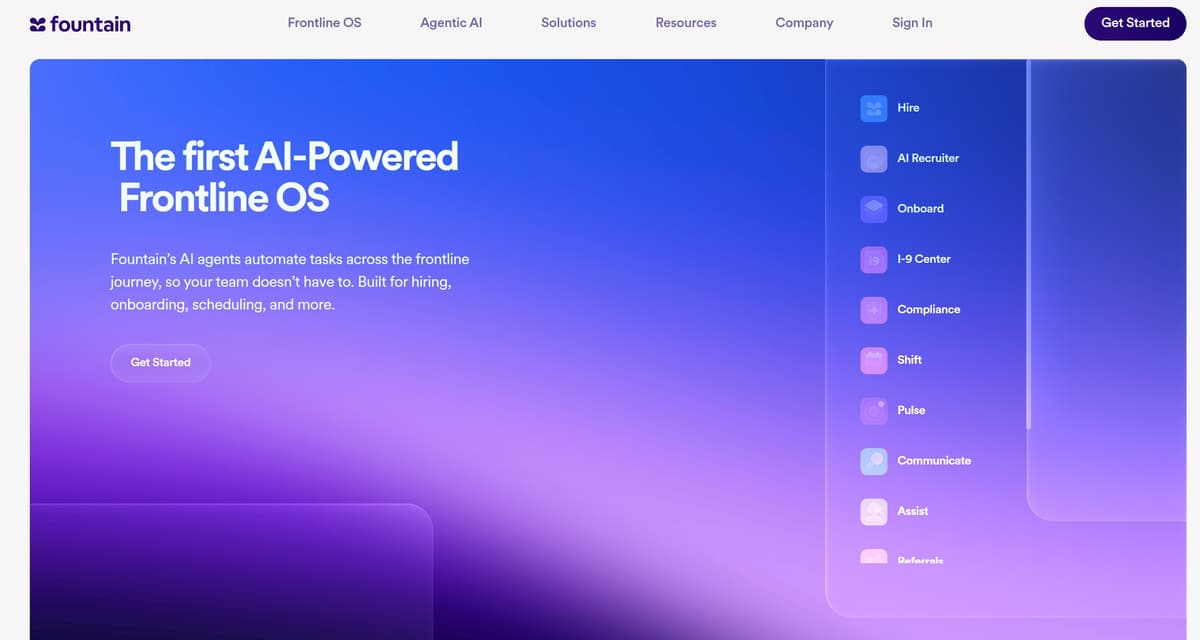
UPS hired 100,000 workers in just 6 weeks by leveraging Fountain to streamline high-volume recruitment.
With built-in text messaging, document uploads, screening questions, and automated interview scheduling, recruiters don’t need to chase candidates. They simply set the workflow, and candidates move through the pipeline on their own.
Best For: This high volume recruiting tool is built to handle recruiting for industries like food service, retail, warehouses, delivery/logistics, manufacturing, and healthcare support.
Key Features:
- Mobile-first candidate experience with fast apply
- Workflow automation with conditional logic
- Built-in texting, scheduling, and document uploads
- Real-time analytics and dashboards
- Multilingual candidate support
- Franchise and multi-location configuration
- Seamless integrations with HRIS, background check, and payroll tools
8. Oleeo
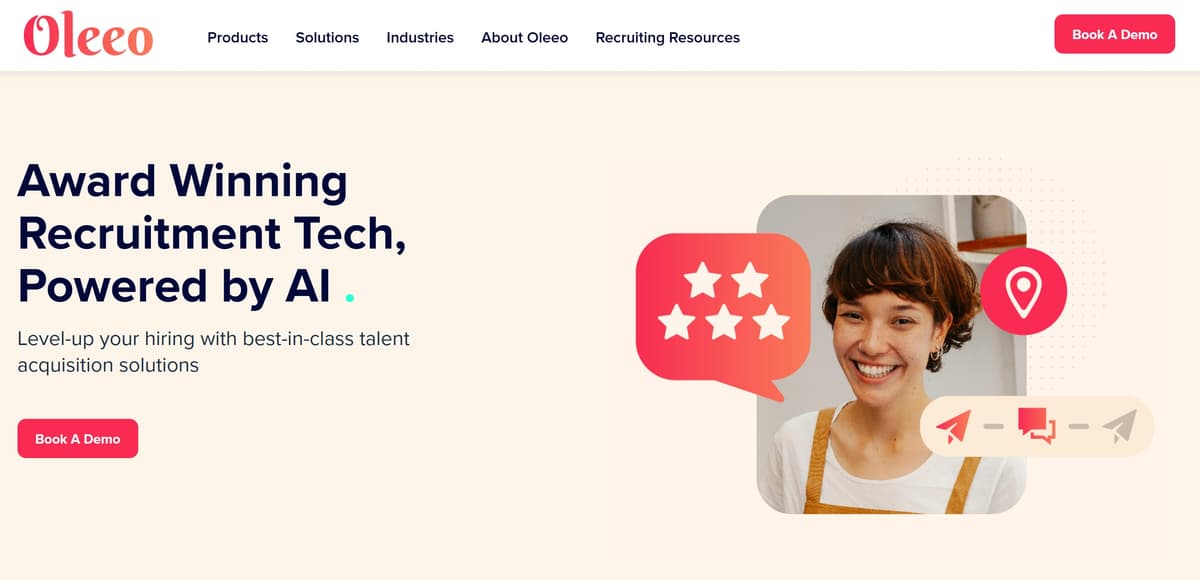
The British Transport Police doubled the number of successful female and minority hires by using Oleeo’s diversity recruitment software.
Their platform is trusted across high-volume graduate recruitment, campus hiring, and enterprise frontline roles.
This AI also helps remove human bias. Many public-sector organizations (police forces, government programs) use Oleeo for this reason, as it promotes fair, merit-based selection in very large candidate pools.
Best For: Oleeo is often used for seasonal hiring sprees, large campus recruiting programs, or volume recruitment. It is especially appealing for public-facing institutions or global enterprises with strict compliance needs.
Key Features:
- Intelligent automation from apply to offer
- Predictive analytics and reporting dashboards
- Anonymized screening to reduce bias
- Event management for campus and graduate recruitment
- Configurable workflows per business unit
- CRM functionality for talent pooling
- Built-in compliance and GDPR features
Popular: The Best 9 Applicant Tracking Systems for Small Companies
9. HiredScore
HiredScore doesn’t just automate high volume recruiting tasks, it adapts to how your business hires: It builds a custom machine learning model based on your company’s historical hiring patterns, culture, and success data.
This means every recommendation gets smarter over time and more personalized to your roles.
Workday partnered with HiredScore to embed its AI recommendations into the Workday Recruiting interface.
Best For: HiredScore is widely used in finance, healthcare, and Fortune 500 firms that deal with high applicant volume and strict compliance needs.
Key Features:
- AI matching across external, internal, and silver medalist talent pools
- Works on top of existing ATS and HR systems
- Internal mobility and career pathing recommendations
- Bias detection and compliance safeguards
- Real-time data visibility across hiring teams
- Smart prioritization queues for faster decisions
10. Humanly
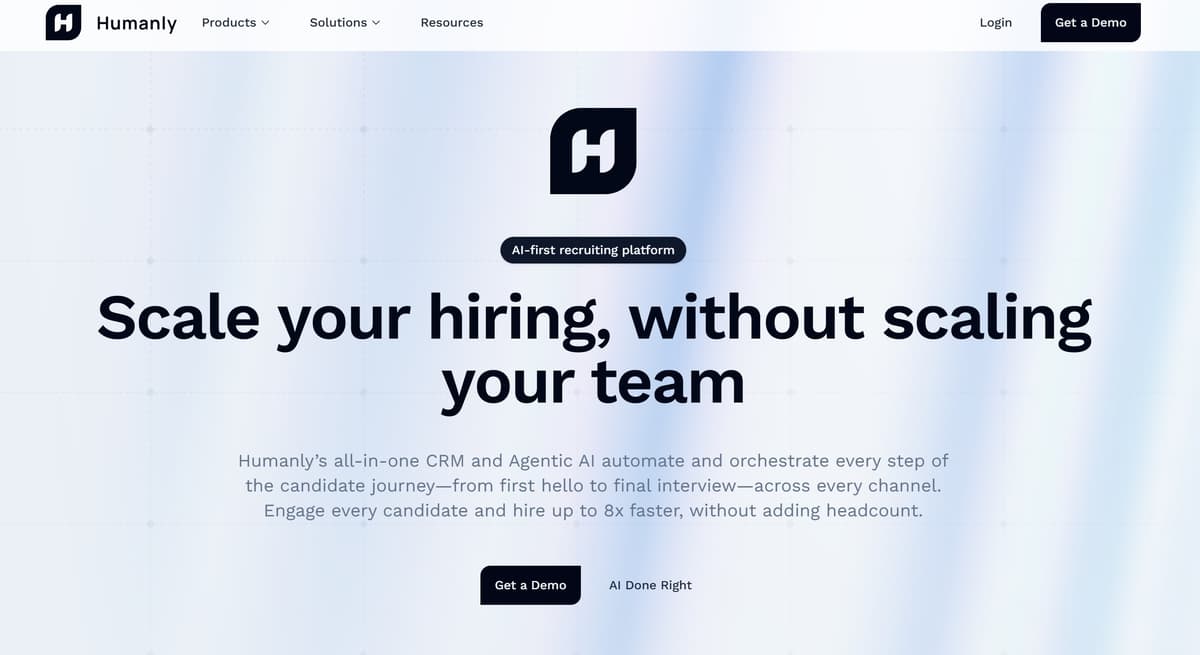
Noom scaled hiring and improved diversity with Humanly. It can pull in candidates from LinkedIn, Indeed, Facebook, etc., and then engage them with personalized, automated messages.
This high volume recruiting tool also records conversations and uses natural language analysis to give hiring teams deeper candidate insights before the first interview even starts.
Humanly removes biased language from job descriptions and uses inclusive screening flows. You also get full transparency into why a candidate was or wasn’t progressed, a major plus for regulated industries.
Best For: Humanly is a high volume recruiting tool used in sectors like tech startups, call centers, and hospitality.
Key Features:
- AI chatbot for screening and scheduling across SMS, chat, and Teams
- Automated follow-ups and reminders to reduce ghosting
- Conversation scoring and analytics for deeper insights
- Bias removal tools for inclusive job descriptions
- ATS integrations with Greenhouse, Lever, and more
- Candidate re-engagement tools to reduce drop-off
- Human handoff when needed, without losing context
11. XOR
XOR’s biggest strength is communication. While most high volume recruiting tools focus on screening or assessments, XOR focuses on fast, consistent and multi-channel candidate communication.
XOR also handles video interviews, document collection, background check integration, and even bulk hiring events. You can invite hundreds of candidates to an interview day, auto-confirm RSVPs, send reminders, and collect post-event feedback, all without lifting a finger.
Best For: Companies facing seasonal surges or those hiring across many locations simultaneously.
Key Features:
- AI chatbots for screening and scheduling
- Video interviews and digital document collection
- Automated reminders to reduce no-shows
- Multi-language chatbot support
- Bulk interview coordination for hiring events
- End-to-end analytics and dashboard visibility
- Integrates with ATS, HRIS, and onboarding platforms
For You: AI-Powered Recruitment for Early-stage Startups: Top 7 Tools
High Volume Recruiter Job Description
If you’re hiring for high-volume roles across multiple locations or departments, even with high volume recruiting tools, you need recruiters who can keep up with speed, scale and structure. A high volume recruiter is responsible for filling large numbers of roles quickly and efficiently, often under tight deadlines.
This section provides a complete, copy-and-paste-ready high volume recruiter job description, for you:
Job Title: High Volume Recruiter
Department: Talent Acquisition
Location:
Employment Type:
About the Company
In 2–4 sentences, describe your company in a way that attracts mission-aligned recruiters. Mention:
- What industry you’re in
- The scale you’re hiring for
- Your culture and pace
- Any unique hook (e.g., rapid growth, remote-first, social impact)
Role Summary
As a High Volume Recruiter, you’ll be on the front lines of our hiring engine: helping us scale fast without sacrificing candidate quality. You’ll manage dozens of open roles, screen high volumes of applicants, and own the end-to-end hiring flow for key departments like Ops, Sales, and Customer Support.
Key Responsibilities
- Own 25–50 open requisitions at any time across entry- and mid-level roles
- Source candidates using diverse channels
- Screen and shortlist large applicant pools using pre-set criteria
- Automate repetitive tasks
- Partner with hiring managers to keep feedback and interviews moving
- Maintain up-to-date records in our ATS (we use HiveMind AI)
- Track hiring KPIs (time-to-fill, drop-off rates, source performance)
Requirements
- 3+ years of recruiting experience, preferably in high-growth or high-volume environments
- Comfort with fast turnarounds and urgent hiring goals
- Experience using modern ATS and sourcing tools
- Strong communication and coordination skills
- Highly organized and process-driven
Bonus Points
- Experience recruiting in (Company field)
- Background (Preferred background)
- Familiarity with tools like (Company tools)
Perks & Benefits
(List your perks and benefits)
Conclusion
The best high volume recruiting tools don’t just help you move fast, they help you move smart. HiveMind was designed by recruiters, not just engineers, so every feature solves a real problem recruiters experience daily. Our users have replaced weeks of manual coordination with workflows that surface skilled candidates in hours, not days.
If you’re serious about solving the real pain points of high-volume hiring, Hivemind AI was built for you.
Learn More
FAQs on High Volume Recruiting Tools
1. What are the 4 pillars of recruiting?
The four pillars of recruiting are: Sourcing, screening, selection and onboarding.
2. What is an ATS tool in recruitment?
An ATS (Applicant Tracking System) is a recruitment software that helps companies manage the hiring process. It allows recruiters to post jobs, collect applications, screen candidates, schedule interviews, and track hiring progress in one place.
3. Which method of recruitment is fastest?
Internal referrals are often the fastest method of recruitment. For scale, however, high volume recruiting tools with automated sourcing and screening are fastest for filling multiple roles at once.
4. What is a high volume job?
A high volume job is a role that requires recruiting and hiring many people at once, often on a recurring basis. These jobs are common in industries like retail, logistics, customer service, healthcare, and BPO. Companies hiring for high volume jobs often use specialized tools like HiveMind AI to manage bulk applications and interviews.
5. What is the most frequently used method of recruiting?
The most frequently used method of recruiting is online job postings, especially on platforms like LinkedIn, Indeed, and company career pages. Many recruiters also rely heavily on internal referrals and LinkedIn sourcing for quality hires.