

For over a decade, Bullhorn has been one of the most recognizable names in the staffing and recruiting software market. Many agencies built their entire operational backbone around it, from candidate tracking to client management and reporting.
However, as recruiting enters 2026, the expectation placed on recruiting CRMs and staffing software has changed dramatically. Agencies are no longer just looking for systems of record, they want systems of intelligence. They want tools that actively help them find, qualify, engage, and place talent faster, across borders, and at scale.
Industry surveys heading into 2026 suggest that a significant portion of staffing agencies are actively reassessing their core recruiting technology. Cost pressures, global competition, and the rapid rise of AI-driven recruiting workflows have exposed gaps in legacy platforms.
Bullhorn, while still powerful in traditional agency workflows, is often criticized for its pricing structure, complexity, and relatively slow adoption of modern AI capabilities. This has led many recruiters to search for a Bullhorn alternative that better reflects how recruiting actually works today.
This guide is written for agency owners, recruiting leaders, and operations managers who are asking a simple but consequential question – what are the best Bullhorn alternatives for modern recruiting in 2026?
We will explore why agencies are switching, what features truly matter in a modern recruiting CRM, and which platforms are emerging as serious contenders. Along the way, we will also examine how AI-first platforms like Hivemind AI represent a fundamentally different approach to staffing software, one that prioritizes automation, intelligence, and adaptability over rigid process enforcement.
Why Consider Bullhorn Alternatives in 2026?
Bullhorn’s longevity is both its strength and its limitation. On one hand, it has decades of agency-specific functionality baked into its workflows. On the other hand, much of its architecture was designed for a recruiting era that looked very different from today’s environment. Agencies in 2026 operate across multiple geographies, manage remote and hybrid talent pools, and compete on speed and candidate experience as much as on relationships.
-
Cost: One of the most common reasons agencies seek a Bullhorn alternative is cost. As teams scale, licensing fees, add-ons, and customization expenses can grow quickly. For agencies operating in growth markets like Nigeria or serving international clients, these costs can become disproportionate to local revenue realities. Modern staffing software increasingly emphasizes modular pricing, cloud-native deployment, and flexible plans that align better with agency growth stages.
-
AI Capability: While Bullhorn has introduced automation features over time, many recruiters feel that these additions are incremental rather than transformative. In contrast, newer recruiting CRM platforms are built around AI from the ground up. They offer semantic candidate search, automated shortlisting, predictive matching, and workflow automation that reduces manual data entry. In a market where recruiters may handle hundreds of open roles and thousands of candidates, these capabilities are no longer optional.
-
Flexibility: Agencies are demanding flexibility because recruiting is not a single linear pipeline. Different clients, roles, and markets require different workflows. Legacy systems often enforce rigid stages and structures, making customization expensive or technically complex. Modern agency recruiting tools emphasize configurable workflows, API-first integrations, and adaptability to evolving hiring models.
Best Pick: The Complete Guide to Paid Time Off Policies (2026)
The Changing Expectations of Recruiting CRM and staffing Software
The definition of a recruiting CRM has expanded significantly. In the past, it functioned primarily as a database for resumes and client records. In 2026, agencies expect their CRM to act as an operational co-pilot. This includes proactively surfacing relevant candidates, flagging risks in pipelines, and even suggesting next best actions for recruiters.
Staffing software is also expected to support global operations by default. This means multilingual interfaces, support for multiple currencies, compliance considerations across regions, and seamless collaboration among distributed teams. For agencies sourcing talent from emerging markets and placing candidates globally, these features directly impact competitiveness.
AI recruiting software is central to this shift. Rather than relying solely on keyword matching, modern platforms use semantic understanding to interpret skills, experience, and career trajectories. This reduces bias introduced by rigid filters and enables recruiters to uncover non-obvious but highly qualified candidates. For agencies managing diverse talent pools, this represents a meaningful upgrade over traditional ATS and CRM systems.
Top Bullhorn Alternatives for 2026
-
Hivemind AI
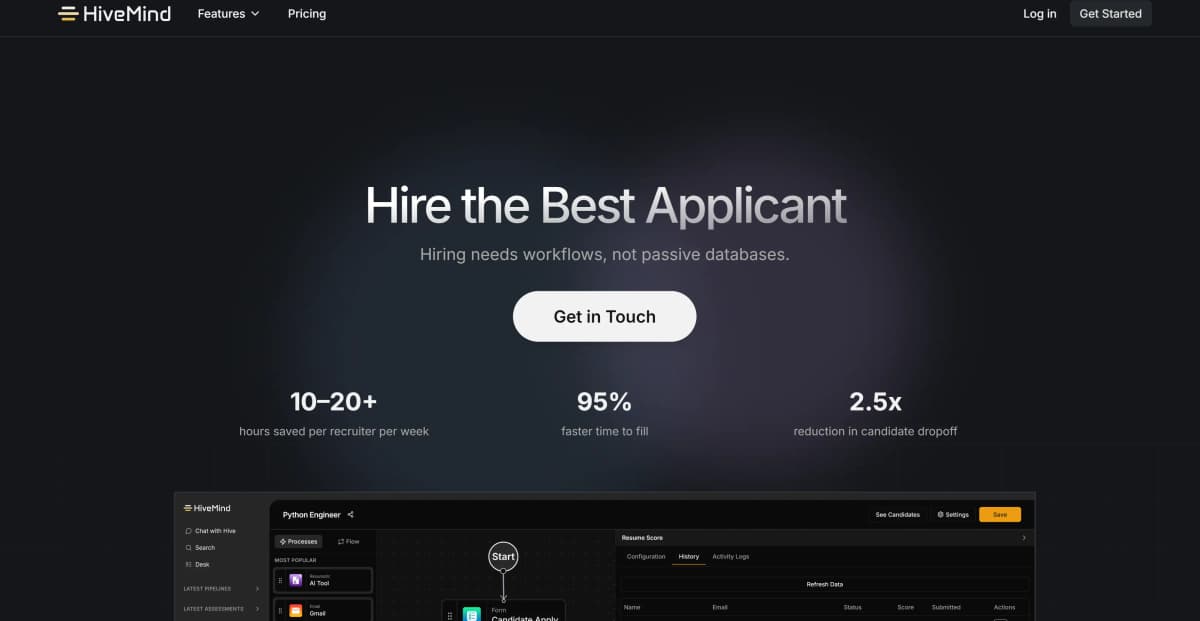
Hivemind AI represents a fundamentally different approach to agency recruiting tools. Rather than retrofitting AI onto a traditional ATS CRM structure, Hivemind AI is built around AI as the core operating layer. It treats recruiting workflows as dynamic systems that adapt based on context, role requirements, and candidate signals. Hivemind AI offers semantic search, automated shortlisting, and intelligent workflow orchestration for agencies evaluating Bullhorn migration options. Recruiters spend less time managing stages and more time making decisions. In global agency settings, Hivemind’s ability to understand skills beyond keywords makes it especially powerful for cross-border hiring.
-
Zoho Recruit
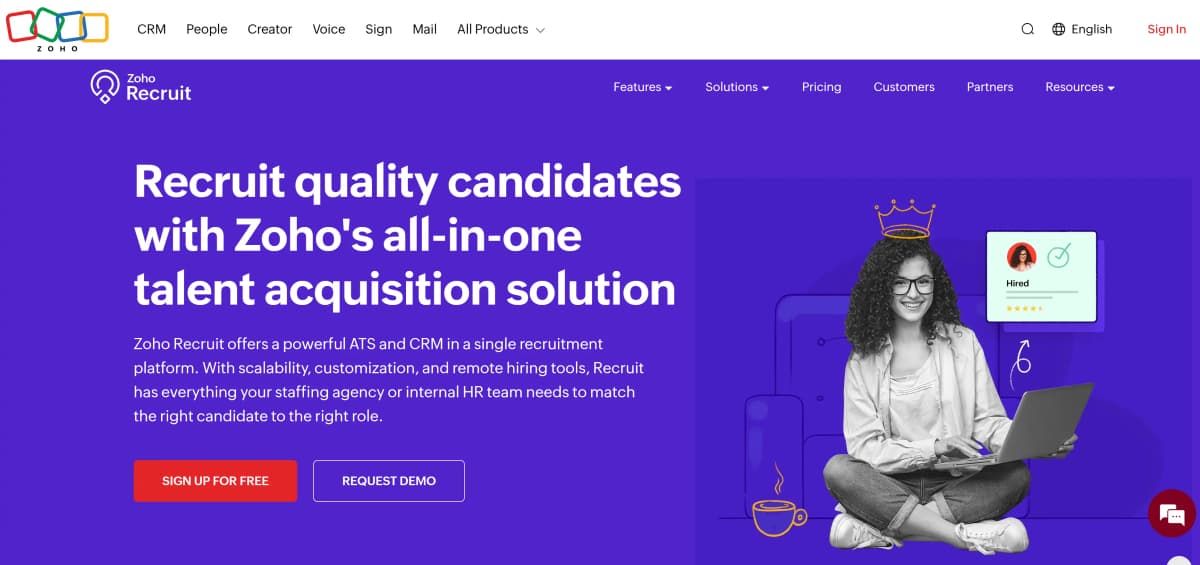
Zoho Recruit has steadily gained traction as a Bullhorn alternative, particularly among agencies already using other Zoho products. Its strength lies in its integration ecosystem and relatively affordable pricing. Zoho recruit offers both ATS and CRM functionality, allowing agencies to manage candidates and clients within a unified interface. Zoho Recruit’s appeal comes from its flexibility and global readiness. Agencies can customize workflows, automate routine tasks, and integrate with tools like email, calendars, and accounting software. While its AI features are improving, they tend to focus more on automation than deep intelligence.
-
Ceipal ATS

Ceipal positions itself as an AI-powered staffing platform, making it a natural consideration for agencies seeking a modern Bullhorn alternative. Its standout features include AI-driven candidate matching, resume parsing, and talent rediscovery across existing databases. Ceipal also emphasizes diversity and compliance tools, which are increasingly important in global recruiting. Agencies often choose Ceipal for its balance between advanced features and agency-specific workflows. However, some recruiters note that the platform can feel complex during initial setup.
-
Vincere
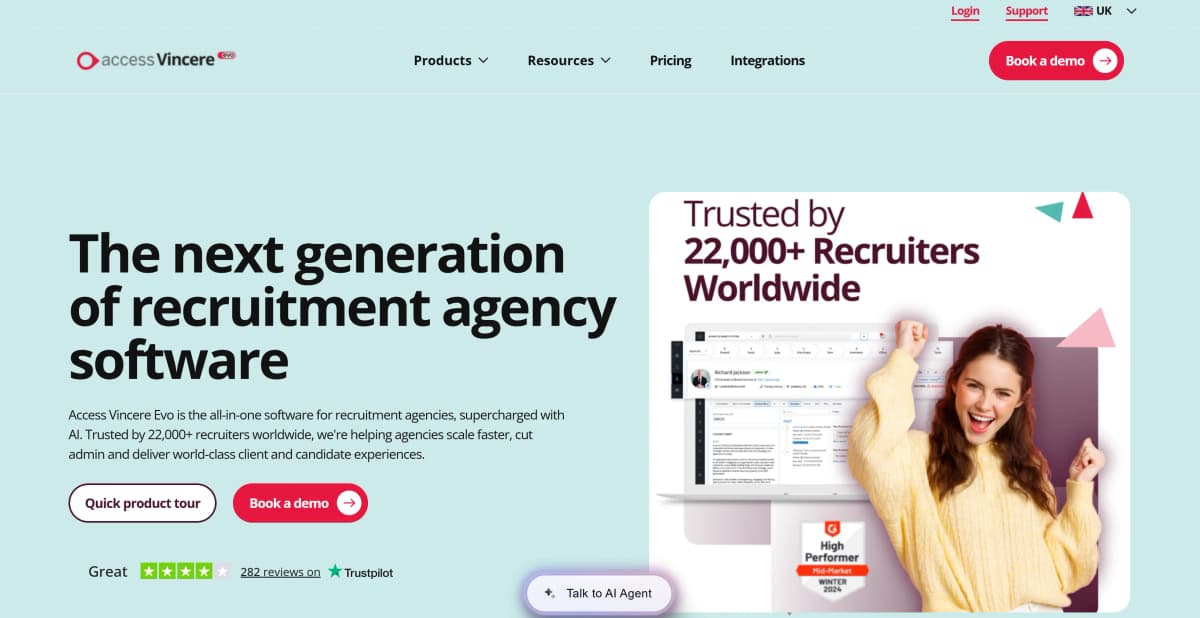
Vincere is designed specifically for staffing agencies, with a strong focus on operational efficiency and pipeline visibility. Unlike more generic ATS platforms, Vincere emphasizes sales-recruitment alignment, making it attractive to agencies where business development and delivery are tightly linked. Vincere’s strengths lie in its reporting, compliance tools, and agency-centric design. While it may not lead the market in AI innovation, it offers a stable, purpose-built alternatives for agencies that want modern functionality without departing too far from familiar staffing workflows.
-
Manatal
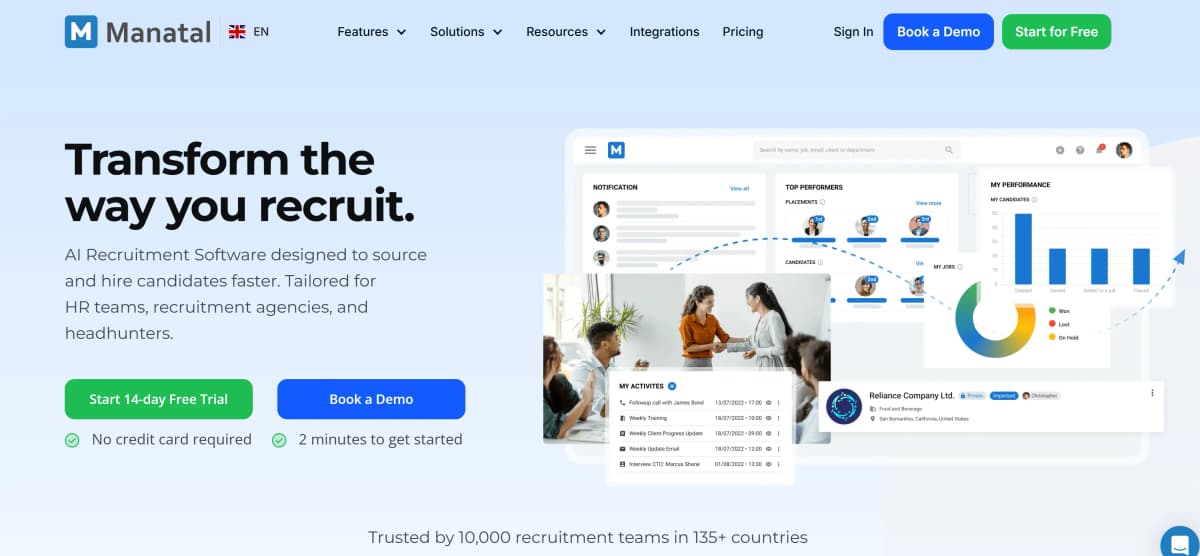
Manatal has emerged as a popular option among small to mid-sized agencies looking for affordability without sacrificing modern features. Its interface is intuitive, and it offers AI-based recommendations that help recruiters identify suitable candidates quickly. Manatal’s pricing and ease of use are significant advantages for agencies operating in emerging markets. While it may not match enterprise platforms in depth, it provides a practical Bullhorn alternative for agencies seeking simplicity, speed, and reasonable automation.
-
Recruiterflow
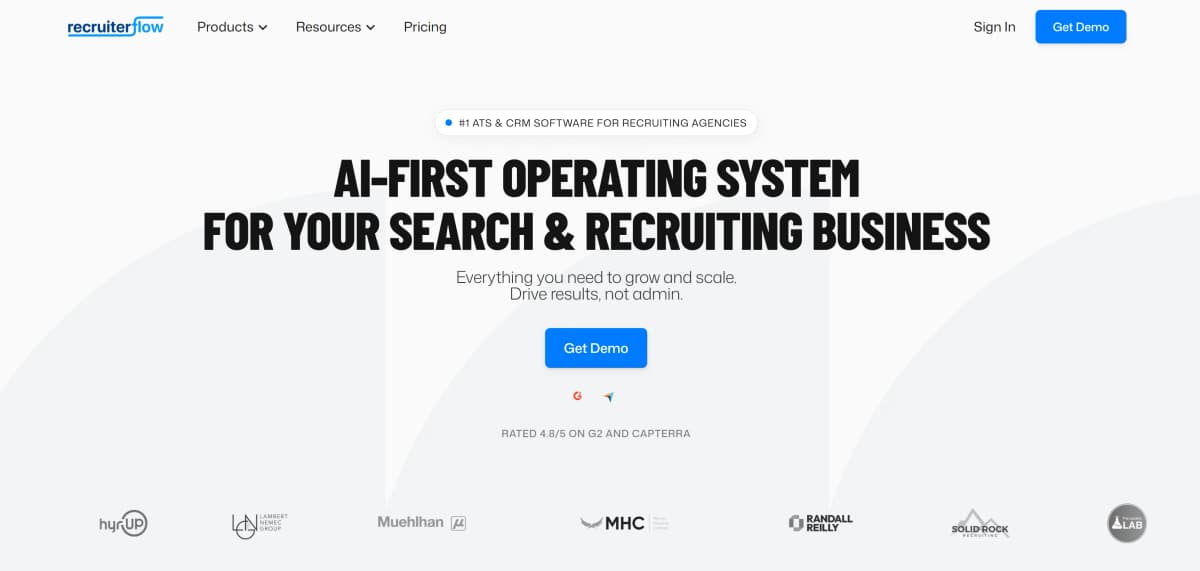
Recruiterflow blends CRM functionality with recruiting automation, positioning itself as a relationship-driven platform. Its design emphasizes candidate engagement, email automation, and pipeline management. Agencies that prioritize candidate experience and long-term talent relationships often gravitate toward Recruiterflow. Its strength lies in helping recruiters maintain consistent communication at scale, though agencies seeking advanced AI-driven matching may find its intelligence features more limited compared to AI-first platforms.
Key Features to Look for in a Bullhorn Alternative
Choosing a Bullhorn alternative in 2026 requires looking beyond surface level feature lists. Agencies should evaluate how deeply intelligence is embedded into the platform. AI candidate matching should not simply rank resumes but explain why candidates are relevant. Pipeline management should surface bottlenecks automatically rather than relying on manual reporting.
Integration capability is another critical factor. Modern recruiting does not happen in isolation. Platforms must integrate seamlessly with sourcing tools, communication platforms, assessment providers, and analytics systems. An API-first architecture is often a strong indicator of long-term flexibility.
Finally, agencies should consider how the platform supports client management. Staffing software must balance candidate-centric and client-centric workflows. Tools that unify these perspectives tend to reduce friction and improve placement speed.
Top Pick: AI Recruitment Software: Buyer’s Guide for HR Teams
How to Migrate from Bullhorn to a New Platform
Migrating is often the most intimidating part of switching recruiting software. Agencies worry about data loss, downtime, and recruiter resistance. In practice, successful migrations follow a structured approach that prioritizes clarity and communication.
-
Data Preparation - Agencies should audit their Bullhorn data, removing duplicates and outdated records. This not only simplifies migration but improves the quality of the new system from day one.
-
Tool selection - This is where agencies align requirements with platform strengths rather than attempting to replicate every legacy workflow.
-
Training - this is equally important. Recruiters need to understand not just how to use the new system, but why it works differently
AI-driven platforms like Hivemind AI often require a mindset shift, moving from manual control to assisted decision-making. Agencies that invest in change management tend to see faster adoption and better outcomes.
Challenges and Solutions in Agency Recruiting Tools
Even the best staffing software presents challenges. Integration complexity, cost management, and ethical considerations around AI are common concerns. Agencies should evaluate vendor transparency, support quality, and long-term product vision.
AI bias is another critical topic. Platforms must provide visibility into how recommendations are generated and allow recruiters to apply human judgement. Responsible AI design is becoming a differentiator among modern recruiting CRM providers. By approaching these challenges proactively, agencies can turn technology upgrades into competitive advantages rather than operational disruptions.
Conclusion
The search for a Bullhorn alternative in 2026 reflects a broader shift in recruiting. Agencies are moving away from static systems of record toward intelligent platforms that actively support decision-making. While Bullhorn remains a capable tool, it is no longer the default choice for agencies seeking flexibility, affordability, and AI-driven performance. Modern recruiting CRM and staffing software options offer a wide range of approaches, from incremental improvements to complete reimaginings of how recruiting works. Platforms like Hivemind AI demonstrate what is possible when intelligence is embedded at the core of the system rather than added as an afterthought.
For agencies planning their next phase of growth, the question is no longer whether to consider alternatives, but which platform aligns best with how they want to recruit in the future. Choosing the right Bullhorn alternative can define an agency’s competitiveness for years to come.