
How to Create the Perfect Candidate Persona (With Templates)
Hiring is just like dating. Here’s how: we’ve all got pictures of who we perceive to be the perfect partner, and usually, we have a long list of qualities that make that possible.
Hiring is a lot like that. Getting the right person for the job involves having a list of qualities, skills, and experiences you expect your potential candidates to have.
Many hiring teams start without a clear idea of their ideal candidate. According to a WIRED article titled “The Way We Hire is All Wrong”, hiring at some tech companies often feels like a complete random mess, where teams don’t even know how to define “the best candidate” for their needs. By segmenting and prioritizing your audience, you gain a clearer idea of candidate expectations, priorities, and alignment with your organizational values.
They post a job, hoping for the best. But without a solid plan, hiring can be inefficient. Optimizing your hiring efforts with candidate personas ensures your recruitment activities are targeted and effective. Candidate personas offer a specific picture of your ideal employee, which makes hiring faster and more effective.
In this step by step guide, you’ll get to understand what candidate persona is, its benefits, how to create candidate persona templates easily, and how tools like Hivemind AI make it easier.
What is a Candidate Persona?
A candidate persona is a well-detailed representation of the right candidate you want for the job.
It’s more than just a list of skills. Putting together a strong candidate persona involves describing who they are, what motivates them, the working environment they excel in, how they think, and their working ethics. Understanding candidates’ motivations is crucial, as it helps tailor your employer branding and recruitment messaging to attract the right talent.
Creating candidate personas means bringing together insights and accurate research about the qualities, skills, and traits needed for a specific job. Candidate persona creating is a straightforward process that helps optimize hiring by developing detailed profiles that improve recruitment efficiency.
A candidate persona is your guide when describing an ideal employee to someone new. This shifts hiring from luck to targeted hiring by developing an ideal candidate persona as the archetype for your recruitment efforts.
Related: The Best 7 Video Assessment Tools of 2025
Benefits of Candidate Personas
Recruiting teams and hiring managers who have well-detailed personas have better recruitment strategies and well-defined performance metrics. Here are some of the other benefits it offers:
1. It helps with targeted hiringWell-detailed candidate personas means you approach hiring with a clear idea of the ideal skills and qualities. This not only speeds up hiring but also keeps the quality of applicants high. You can move promising candidates through the pipeline without unnecessary delays.
2. Better job descriptionsWithout a candidate persona, job descriptions can be too generic or fail to connect with the right talent. A well-designed persona gives you a clear idea of the type of person you want to reach, and it helps you write job postings that directly speak to their motivations and interests.
Instead of listing endless responsibilities and qualifications, you can highlight the aspects of the role that will truly attract them.
3. It helps with better cultural fitsSkills can be trained, but cultural fit is much harder to change once someone is hired. Candidate personas let you define the personality traits, values, and work styles that match your company culture.
By identifying the common traits shared by your most successful employees, you can build personas that reflect what truly works in your environment.
This means you’re hiring not just for technical skills but also for the candidate to thrive successfully in the environment.
For example, if your company values collaboration, you can prioritize candidates who put strong teamwork skills first in your persona.
With this focus during interviews, you can ask specific questions to discover whether a candidate’s work style aligns with your expectations.
**4. Lower recruitment costs**A disorganized hiring process can become costly pretty fast, especially when ads, outsourced recruiters, and time are involved.
Candidate personas help lower those costs by simplifying your entire recruitment approach.
With a clear target, you can focus on the most effective platforms and avoid paying for vague job postings that attract the wrong audience.
5. Higher retention ratesOne of the hidden benefits of creating a candidate persona is the positive effect it has on employee retention.
When you hire people who are a good fit for the role and the company from the start, they are more likely to feel satisfied and dedicated to their work.
This leads to fewer misunderstandings, less burnout, and greater job satisfaction. High retention rates also enhance your employer brand and the company’s reputation as a great place to work, as satisfied employees are more likely to recommend your company to others.
Related: Top 17 Phone Screening Questions to Ask Candidates
The Role of Hiring Managers
Hiring managers are at the heart of the recruitment process, and their input is essential when it comes to creating a candidate persona. Since a candidate persona is a semi-fictional representation of the ideal job candidate, hiring managers are uniquely positioned to define the key skills, experience, and personality traits needed for success in a specific role. By collaborating closely with the recruiting team, hiring managers ensure that the candidate persona template accurately reflects both the requirements of the job and the company’s culture.
This partnership allows for a more targeted recruiting strategy, as everyone involved in the hiring process is on the same page about what makes an ideal candidate. Using a candidate persona template, hiring managers can systematically outline the must-have skills, relevant experience, and personal qualities that matter most. This clarity not only streamlines the recruitment process but also helps the recruiting team focus their efforts on attracting and evaluating candidates who truly fit the role. Ultimately, the involvement of hiring managers in candidate persona creation leads to better hiring decisions and a more efficient recruitment process.
How to Create a Candidate Persona

In order to create the right candidate personas, you need to understand how every element fits together. Making a candidate persona is like baking a cake. You need the right ingredients, and you must know how they all work together. Market research is a key step in gathering the data needed for effective candidate persona creation, ensuring your approach is informed by current industry trends and job market conditions. Let’s break it down together:
Learn from your best employees
The easiest way to find out what works is to study the people who are already excelling in that role. Gather insights from your current employees to understand the successful traits, skills, and characteristics present within your organization. Look at their habits, skills, and personality traits that help them succeed. Talk to them about their career paths and why they chose your company.
Pay close attention to what they enjoy the most about working with you. As you analyze your best employees, identify the desired skills—both technical and soft skills—that contribute to their success. These insights can guide you in attracting similar high performers. For example, a top salesperson might value competition, while a top developer prefers focused work time.
Use these insights to refine your job description and target candidates.
Study your competitors
Make it your job to check what other companies offer for the same role. Review their job postings online and look at the skills they seek. Pay attention to the type of job seeker they are targeting, including their preferences and motivations.
Notice certain patterns like certifications that come up often and examine the LinkedIn profiles of people in similar roles.
See what experience they had before getting hired and find out the salary range they offer in your industry.
This helps you understand what candidates expect before applying and would be crucial when creating your candidate personas. Learning from competitors helps you stay ahead of the talent game in the job market and attract future talent by anticipating emerging trends.
Lay Down Your Essentials
This is an important step, and it’s divided into must-haves and nice-to-haves. Must-haves are the skills and traits a person needs to succeed. When defining these, make sure to exclude protected characteristics to ensure fair and unbiased hiring practices.
Nice-to-haves are additional qualities that enhance their abilities. Remember to be realistic because not every skill is crucial from day one. Some skills can be learned quickly on the job.
Try to focus on the traits that genuinely affect performance, such as relevant experience, technical skills, and personality type. This helps you avoid hiring for an unrealistic “perfect” candidate.
Determine Soft Skills and Cultural Fit
If your candidate personas don’t include soft skills, that’s a recipe for a hiring disaster. These include communication, teamwork, adaptability, and problem-solving. Don’t leave out your company culture while determining this.
Hire someone whose work style matches that environment, because your team’s future isn’t the only thing at stake here, the candidate’s career is too.
If your team thrives on quick decisions, an overly cautious worker may struggle. Look for clear signs they can handle challenges and collaborate effectively.
Remember, cultural fitness keeps people happy long-term. Employees who fit well can become brand ambassadors, positively representing your company and strengthening your employer brand. It’s all about aligning values, not hiring work robots.
Know where job applicants visit the most
Find out where your ideal candidates spend time online. It could be job boards or social media platforms. This helps you post jobs where the right people will see them. It also helps you understand their interests and community.
You might join those spaces to build relationships before hiring. Think beyond just LinkedIn, certain industry communities are powerful. If you’re targeting young professionals, consider channels like university career networks, emerging tech forums, or platforms popular with recent graduates. Knowing their online habits saves time and money. You meet them where they already hang out.
By focusing on the platforms where your ideal candidates are most active, you can optimize your recruitment funnel—reducing unqualified applicants and improving hiring efficiency.
6. Create your ideal candidate’s persona
This is where you put all the bits and pieces together from the previous steps. Organize your candidate personas as if you’re describing already existing candidates.
Give them a name, an age range, and a short background. Include their skills, experience, and education level. Mention their goals, motivations, and preferred work style.
List their must-have and nice-to-have traits, and add details about where they spend time online. Make it feel real, you should be able to picture them already working with the team. This persona guides every step of your hiring process. The goal is to define your ideal hire—someone who perfectly aligns with your company’s culture, mission, and growth objectives. By focusing on your target candidate, you ensure your recruitment strategy is tailored to attract and engage the right individuals. It’s like having a clear target profile for recruitment.
For You: Top 11 AI Candidate Screening Tools in 2025
Candidate Experience and Personas
A positive candidate experience is crucial for attracting and securing top talent, and candidate personas play a key role in making this happen. By developing a deep understanding of the ideal candidate’s motivations, career goals, and preferred communication style, hiring managers can tailor every stage of the recruitment process—from job postings and job descriptions to the interview process itself.
When you use a candidate persona to guide your approach, you’re able to craft job postings that speak directly to what matters most to your target audience. This personalized touch not only makes your company stand out but also ensures that candidates feel seen and valued throughout their journey. During interviews, hiring managers can address the specific concerns and aspirations of the ideal candidate, showcasing the company’s culture and growth opportunities in a way that resonates.
A well-crafted candidate persona ensures that the recruitment process is focused on finding the right candidate, not just filling an open position. This leads to a smoother, more engaging candidate experience—one that attracts top talent and leaves a lasting positive impression, even on those who aren’t ultimately hired.
Employer Brand and Candidate Attraction
Your employer brand is your company’s reputation in the eyes of potential applicants, and it’s a powerful tool for attracting high quality candidates. Candidate personas help you shape this brand by giving you a clear picture of the ideal candidate’s characteristics, skills, and motivations. With this insight, you can develop a compelling employer value proposition that highlights what makes your company unique—whether it’s your culture, values, benefits, or opportunities for career growth.
Candidate personas also inform your recruitment marketing strategy, ensuring that your job ads, social media content, and other outreach efforts are targeted and effective. By speaking directly to the needs and aspirations of your ideal candidate, you’ll stand out from competitors and attract the right talent for your team. Leveraging candidate personas in your employer branding efforts means you’re not just casting a wide net—you’re drawing in candidates who are genuinely excited about what your company has to offer.
Streamlining the Hiring Process
A well-defined candidate persona is a powerful hiring tool for streamlining the recruitment process. By using a candidate persona template, hiring managers can quickly identify the most important qualifications, skills, and personal traits needed for the role. This clarity allows the recruiting team to focus their efforts on candidates who truly match the ideal profile, rather than wasting time on applicants who aren’t a good fit.
With everyone aligned on what makes an ideal candidate, the hiring process becomes more efficient. Unqualified candidates are filtered out early, reducing the time and resources spent on unnecessary interviews and assessments. Evaluating candidates against a consistent set of criteria also makes it easier to compare applicants and make confident hiring decisions. Ultimately, this streamlined approach helps companies fill open positions faster, improve time-to-fill metrics, and ensure that recruitment efforts are focused on finding the right talent for every job.
Measuring Success with Candidate Personas
To get the most out of your candidate personas, it’s important to measure their impact on your recruitment process. Key metrics like time-to-hire, time-to-fill, and the quality of new hires provide valuable insights into how well your personas are helping you attract and select the ideal candidate. Hiring managers should regularly review these metrics to identify what’s working and where there’s room for improvement.
Candidate personas can also help you evaluate the effectiveness of your recruitment marketing efforts, including which job boards and social media channels are delivering the best results. By analyzing this data, you can refine your recruitment strategy, adjust your candidate personas, and focus your efforts on the tactics that bring in top candidates. Regularly updating your candidate personas ensures they stay relevant as your company, industry, and talent market evolve—keeping your recruitment process targeted, efficient, and successful.
Candidate Persona Templates for Recruiters & Hiring Managers
Candidate Persona Template 1
Name: Aiden Greenhall Role: Marketing Manager Age: 25–32 Location: New York Education: Bachelor’s in Marketing or Communications Experience: 3 - 5 years in digital marketing and content creation. Technical Skills: SEO, social media strategy and copywriting. Soft Skills: Creativity, adaptability and good communication. Goals: Lead a creative team and work on high-profile campaigns. Pain Points: Lack of creative freedom and still uses outdated tools. Work Style: Collaborative and thrives in fast-paced environments.
Candidate Persona Template 2
Name: Carrie Wood Role: Software Developer Age: 27–35 Location: Remote Education: Bachelor’s in Computer Science or equivalent experience Experience: 5+ years in backend development and cloud systems. Technical Skills: Node.js, Python and AWS. Soft Skills: Problem-solving, time management and communication. Goals: Work on scalable and innovative projects. Pain Points: Poor code review processes and outdated tech stacks. Work Style: Independent but willing to collaborate.
Candidate Persona Template 3
Name: Jack Frost Role: Customer Support Age: 24–30 Location: Ontario Education: Bachelor’s degree or diploma in customer service, communications, or related field. Experience: 2 - 4 years in customer-facing roles, preferably in e-commerce. Technical Skills: Knowledge of CRM tools, fast typing speed and conflict resolution. Soft Skills: Patience, empathy and active listening. Goals: Provide excellent service and move into a lead role. Pain Points: High ticket volumes without proper tools and lack of feedback from management. Work Style: Team-oriented but capable of managing workloads independently.
Candidate Persona Template 4
Name: Sophia Lin Role: UX Designer Age: 26–33 Location: San Francisco Education: Bachelor’s in Design, HCI, or related field Experience: 4–6 years in user experience and interface design. Technical Skills: Figma, Adobe XD, user research, and prototyping. Soft Skills: Attention to detail, creativity, and collaboration. Goals: Design intuitive, inclusive products that improve user satisfaction. Pain Points: Projects with unclear requirements and limited user research budget. Work Style: Highly collaborative with cross-functional teams.
Candidate Persona Template 5
Name: Malik Johnson Role: Data Analyst Age: 28–36 Location: London Education: Bachelor’s in Statistics, Mathematics, or related field Experience: 5–7 years in data analytics and business intelligence. Technical Skills: SQL, Python, Tableau, and data visualization. Soft Skills: Critical thinking, problem-solving, and clear communication. Goals: Use data to drive strategic decision-making and business growth. Pain Points: Disorganized data sources and lack of stakeholder buy-in for data-driven insights. Work Style: Analytical and detail-oriented, works well independently or in small teams.
Don’t Miss: AI-Powered Recruitment for Early-stage Startups: Top 7 Tools
How Can Hivemind Help?
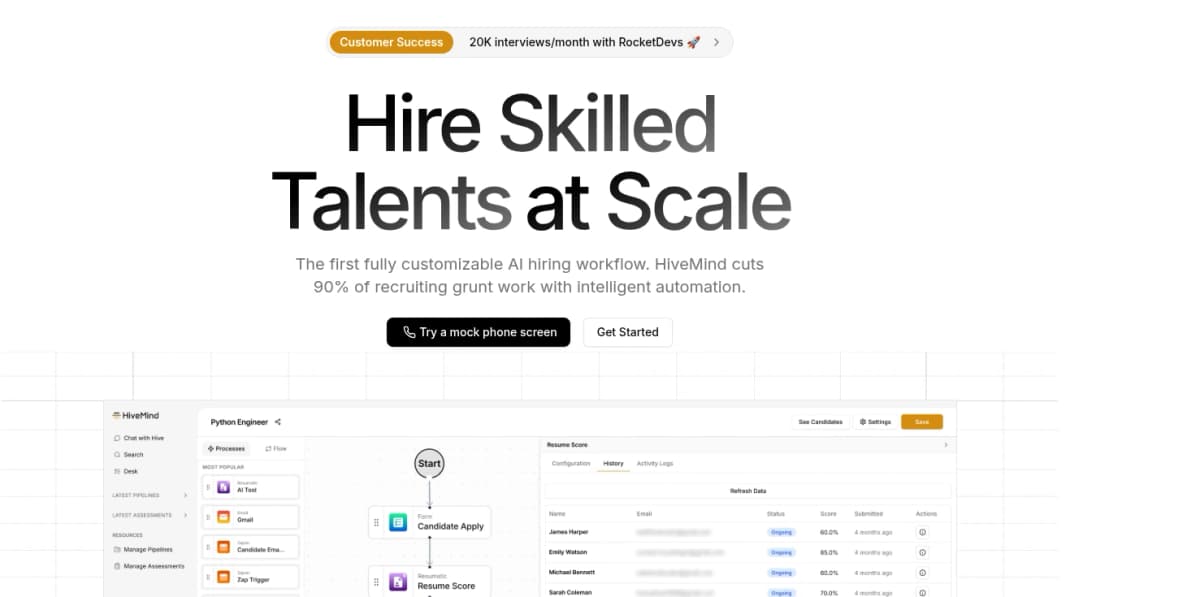
Creating candidate personas manually takes a lot of time. You need to gather details, compare them, and identify patterns. When hiring for multiple roles, it can quickly get confusing.
Hiring teams are already familiar with using modern ATS (Applicant Tracking System) tools, resume screening, and candidate sourcing tools. Tools like HiveMind AI that help with curating candidate personas are no different, as their main job is to make things faster for you.
With HiveMind AI, you won’t need to start from scratch. Its candidate pipelines keep all applicants organized by role and stage in the hiring process. You can easily see who fits your ideal persona and who doesn’t.
This helps you notice trends, like common skills or backgrounds among your best matches.
The candidate report card is where the real value lies. Instead of just a list of skills, it provides a complete view of each person, their resume, experience, portfolio, and even recorded audio or video interviews. The report card also supports conducting interviews by giving hiring teams deeper insights into each candidate, helping interviewers prepare targeted questions and evaluate fit beyond the resume.
This extra information helps you understand how they think, speak, and solve problems, which is vital for building an accurate persona.
It also has built-in resume screening tools to match candidates to your must-have criteria automatically. This means your persona is based on actual performance and data.
Ready to see HiveMind AI in action?