
Finding the right hire can sometimes feel like online dating. There are numerous profiles with plenty of promising matches, but in the end, only one or two will get the final “yes.”
In the present competitive job market, top candidates are available only for a limited time, making efficient candidate ranking crucial.
For most roles, you get a large number of applications, most of whom are qualified for the role. Unfortunately, you can’t hire everyone, unless your HR budget is infinite, in which case, please adopt me! With so many applicants, screening candidates efficiently is essential to avoid missing out on top talent.
So, how do you determine which candidate should join the team and which ones you’ll politely thank and move along?
That’s where a candidate ranking system comes in. In modern hiring, these systems are essential tools that leverage technology and structured evaluation to make recruitment more efficient and systematic. You could rely on your gut instinct, but your gut is for lunch decisions, not life-altering hiring calls.
A good candidate ranking system, on the other hand, uses data, scoring, and sometimes a sprinkle of AI magic to help you choose the right person.
In this article, we’ll walk you through seven tools that make ranking candidates less of a guessing game and more of a science.
What Is a Candidate Ranking System?
Think of hiring like running a talent show, lots of hopeful contestants, each with their own strengths, quirks, and stage presence.
Your job as the recruiter is to figure out who’s going to be the star of the team, without accidentally giving the trophy to the person who just juggled flaming swords in the interview.
A candidate ranking system is the structured way of doing exactly that.
Instead of flipping through resumes and hoping something “just feels right,” it uses a consistent scoring process to rate applicants on factors like:
-
Resume screening: Checking qualifications, experience, and skills.
-
Interviews: Structured chats to see if they’ve got both the technical chops and the people skills.
-
Assessments & tests: From coding challenges to personality profiles, to make sure the skills aren’t just talk.
-
Reference checks: A polite peek into their work history to confirm they were as amazing as they claim.
The ranking part comes in when you take all that data - keyword matches, test scores, interview notes - and assign each candidate a score. This is a ranked based approach, where candidates are systematically scored and ordered according to their suitability, making it easier to compare and select the best fit.
The higher the score, the higher they appear on your shortlist. That way, you’re making decisions based on evidence, not gut feelings.
TLDR: A good candidate ranking system helps you cut through the noise, minimize mis-hires, and make confident hiring calls without losing weeks to back-and-forth debates.
Related: How to Create Perfect Candidate Personas With Templates
Benefits of Candidate Ranking
Implementing a candidate ranking system brings a host of benefits to organizations looking to streamline their hiring process and secure the best candidates for every job role. By ranking candidates based on their skills, qualifications, and fit, hiring managers can quickly identify top talent from a sea of applicants, making the whole process more efficient and less overwhelming. This approach not only reduces time-to-hire but also helps minimize costly mis-hires, as decisions are grounded in data rather than gut feelings.
AI-powered tools and applicant tracking systems make it possible to manage and evaluate large volumes of candidates with ease, ensuring that no qualified candidate slips through the cracks. Candidate ranking also demonstrates a commitment to fairness, as every candidate is judged on the same criteria, leveling the playing field and supporting diversity and inclusion initiatives. Ultimately, organizations that embrace candidate ranking are better equipped to hire the right talent, reduce recruitment costs, and build stronger teams.
Using Match Criteria to Rank Candidates
Match criteria are the backbone of any effective candidate ranking system. By defining clear, predefined criteria—such as technical skills, soft skills, education, and relevant experience—recruiters can objectively evaluate and compare qualified candidates. This ensures that the ranking process is consistent and focused on what truly matters for each job.
For example, if you’re hiring a software developer, your match criteria might prioritize technical skills like Python or Java, hands-on experience with certain frameworks, and a degree in computer science. Soft skills, such as problem-solving and teamwork, can also be weighted to reflect the needs of your team. By applying these criteria, recruiters can quickly shortlist candidates who best match the requirements, reducing the risk of mis-hires and ensuring that only the most qualified candidates move forward in the process.
Using match criteria not only streamlines evaluation but also helps recruiters maintain consistency and fairness, making it easier to defend hiring decisions and improve the overall quality of hires.
Top 7 Candidate Ranking Systems
-
HiveMind AI’s Candidate Ranking System
-
HiredScore
-
Gumloop’s Candidate Ranking System
-
Broadbean’s Applicant Ranking System
-
Talowiz
-
Vervoe
-
SmoothHiring
1. HiveMind AI’s Candidate Ranking System
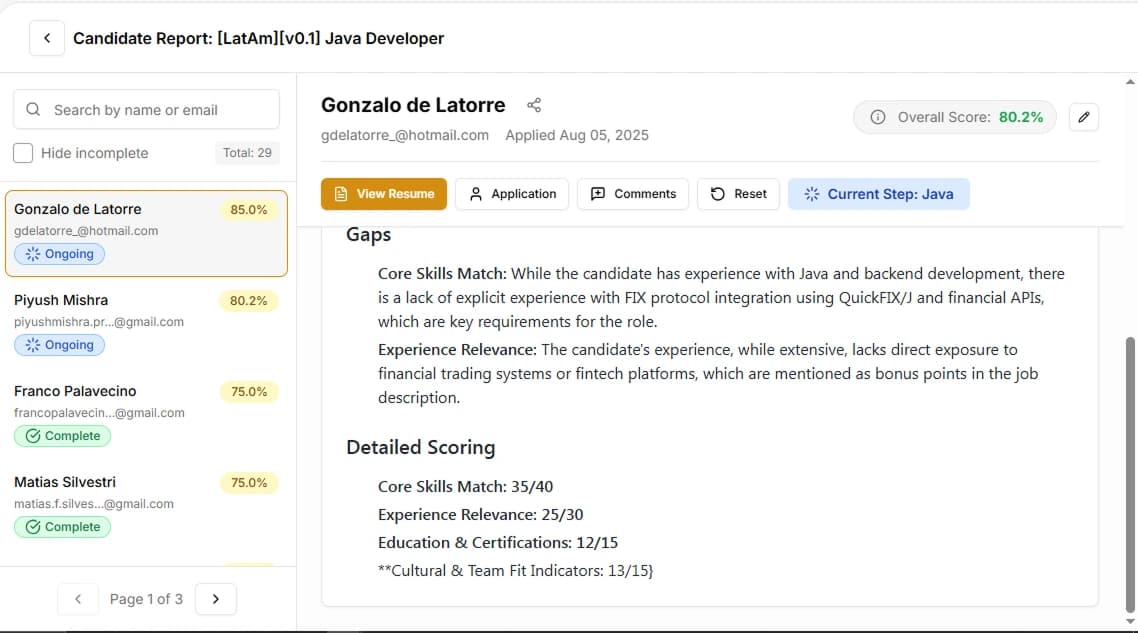
First on our list is HiveMind’s AI candidate ranking system. If you’re not familiar with HiveMind AI, it is a recruiting platform that doesn’t just help you find candidates, but actually makes the whole process feel less like drowning in resumes and more like having a co-pilot.
While HiveMind has a whole lot of other awesome features, we’ll be focusing on its candidate ranking system, and here’s how it works:
HiveMind doesn’t just glance at a resume and throw out a random score. Instead, it digs into the details like, technical skills, work history, cultural fit, even how candidates perform in coding challenges or video interviews. Its AI feature, Resumatic, produces detailed breakdowns like this:
-
Core Skills Match (40%) - How well the candidate’s skills stack up against the job description.
-
Experience Relevance (30%) - Whether their past projects and roles align with what the role actually requires.
-
Education & Certifications (15%) - Because sometimes those degrees and badges matter.
-
Cultural & Team Fit (15%) - Looking at collaboration, adaptability, and soft skills.
HiveMind also leverages historical data from past hiring decisions to refine its predictions and improve the accuracy of candidate ranking.
From there, HiveMind produces a scorecard that’s surprisingly human-readable.
For example, a backend engineer might end up with a 79% match overall, with notes highlighting strengths in Java and Spring Boot, a high score in coding challenges, and a gap in financial API experience.
It’s like having a recruiter who not only gives you the numbers but also tells you why the candidate scored that way.
And because HiveMind factors in interview results, assessments, and even red flags like potential cheating on tests, you’re not just ranking resumes, you’re ranking actual candidates.
2. HiredScore
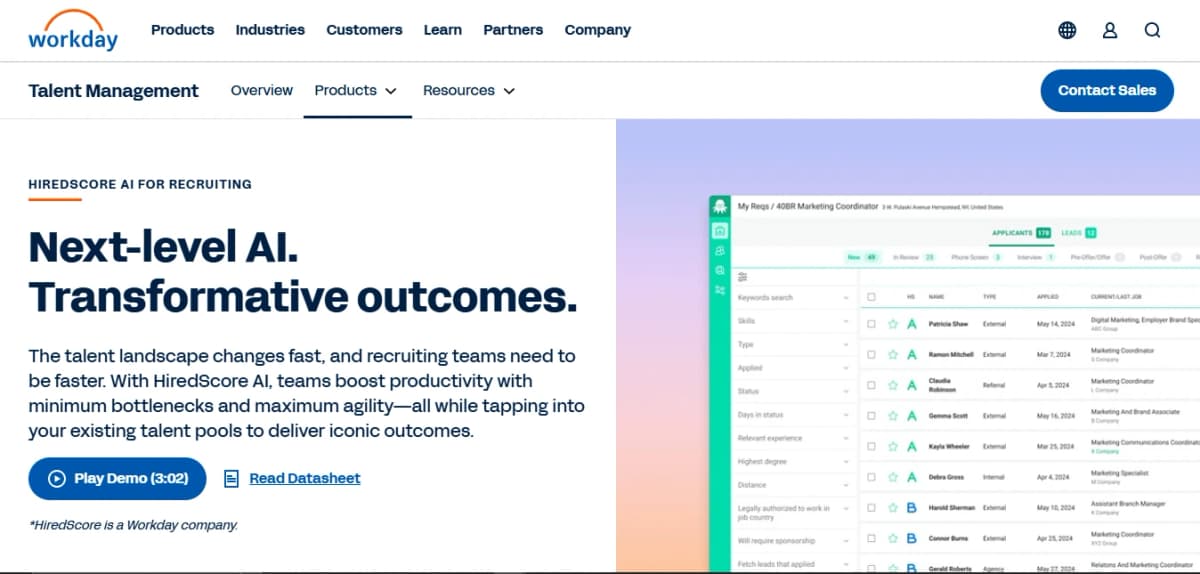
Next on the list is HiredScore, which recently joined the Workday family. HiredScore’s candidate ranking system helps recruiters zero in on the most qualified talent without drowning in spreadsheets or bias.
It grades applicants using AI-driven scoring, surfacing the best matches so you don’t waste hours chasing candidates who aren’t the right fit.
But it doesn’t stop there, here are a few other features that make it standout:
-
Prioritize top talent - Automatically highlight the strongest candidates so you can spend time where it actually matters.
-
Smarter sourcing - Go beyond job boards by mining your existing databases and networks to uncover hidden gems who are likely to apply.
-
Timely nudges - Get real-time notifications that cut down busywork and keep recruiters focused on high-value tasks.
For You: LinkedIn Recruiter Pricing Breakdown (2025): Is It Worth it?
3. Gumloop’s Candidate Ranking System
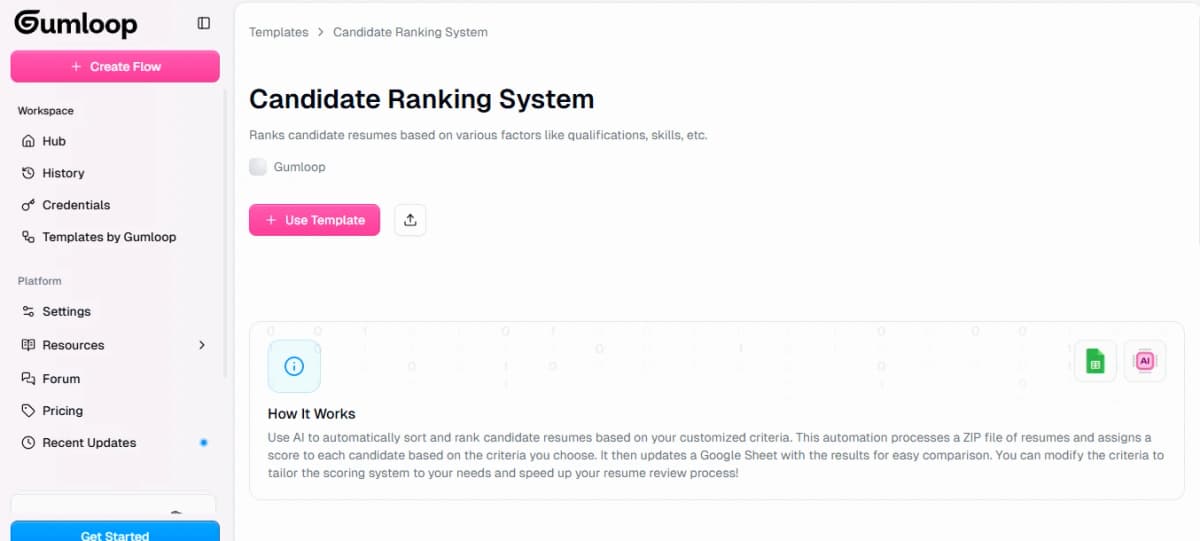
If you’ve ever wished you could just drop a pile of resumes into a machine and have it spit out a ranked list, Gumloop is basically that wish granted.
Here’s how it works: you upload a ZIP file of resumes, set your own criteria (skills, experience, education, whatever matters most for the role), and Gumloop’s AI goes to work.
The result? A neat Google Sheet with candidates scored and sorted from strongest to weakest. It’s like an instant highlight reel of your applicant pool.
What makes Gumloop’s candidate ranking system stand out is the customization.
You’re not stuck with a one-size-fits-all formula. Instead, you can adjust the scoring knobs to match exactly what your hiring team values, whether that’s years of backend experience, specific certifications, or even niche skills.
Some other features include:
-
Efficient sorting - Say goodbye to hours of resume skimming. Gumloop does it in minutes.
-
Customizable criteria - Fine-tune the system so it reflects your version of the perfect hire.
-
Automated output - Get everything organized in a Google Sheet, ready for collaboration and quick decision-making.
4. Broadbean’s Applicant Ranking System
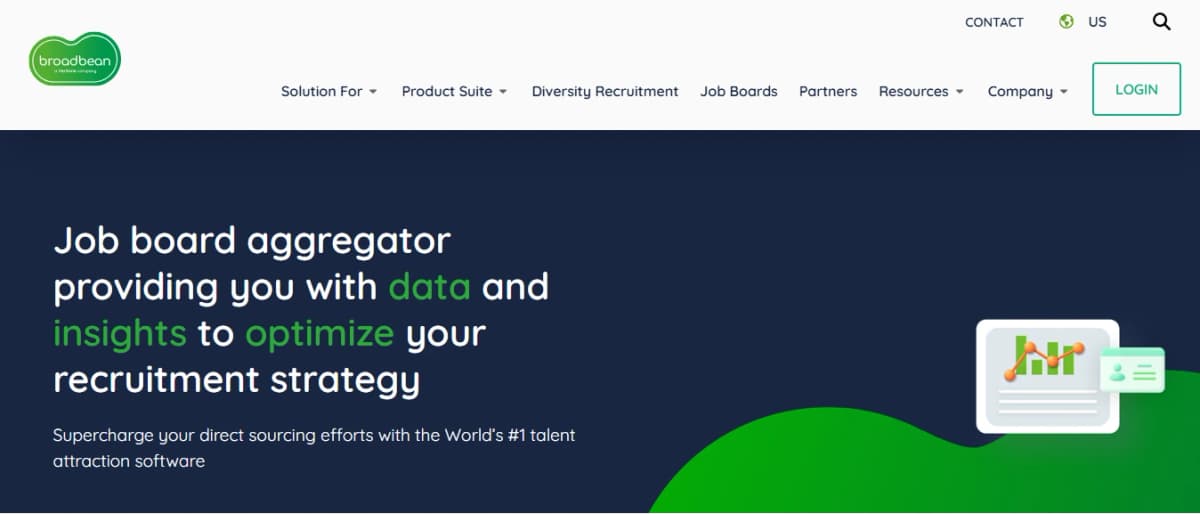
Broadbean uses machine intelligence to take in all those applications, line them up against your job criteria, and then score each candidate.
Instead of leaving you with a messy inbox of resumes, it produces a ranked list based on who fits best.
Here’s how the ranking works in practice:
-
Match criteria - You define what matters most for the role (skills, qualifications, experience). Broadbean then grades each candidate against those factors.
-
Sorting and scoring - Candidates are automatically sorted from highest match to lowest, so you instantly see your strongest options at the top.
-
Shortlist ready - Once ranked, the system makes it easy to progress top applicants quickly, so you’re not stuck second-guessing who deserves a callback.
This means Broadbean isn’t just about handling volume, it’s about making sure the best candidates rise to the top instead of getting lost in the shuffle.
For recruiters juggling hundreds (or thousands) of applications, that kind of structured candidate ranking system can save days of manual work and help you move faster without sacrificing fairness.
5. Talowiz
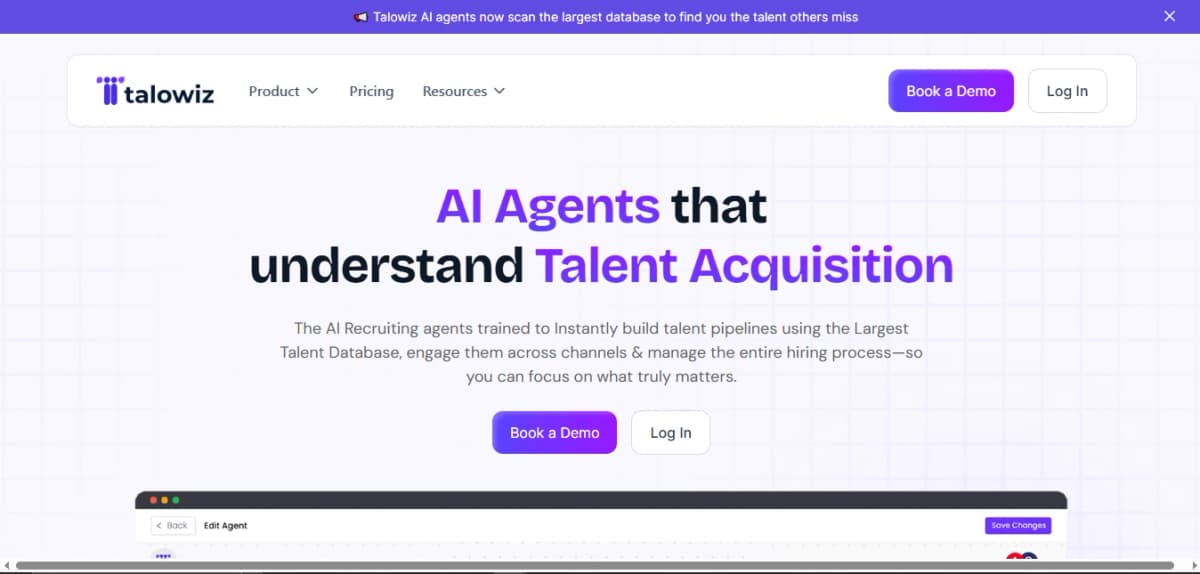
Talowiz is like that super-organized friend who color-codes everything; it takes the mess out of recruiting and gives you a streamlined view of who’s actually worth calling back.
Its candidate ranking system works by applying predefined criteria to your applicant pool, then scoring and sorting candidates automatically.
Instead of flipping between resumes, you get intelligent insights about who aligns best with the role.
The real value here is the automation: Talowiz keeps recruiters from drowning in repetitive screening tasks, freeing up time to focus on actual conversations with top talent.
Think of it as an assistant who not only does the busywork but also highlights where you should pay attention.
Related: 9 Best AI Interview Scheduling Software for Hiring (2025)
6. Vervoe
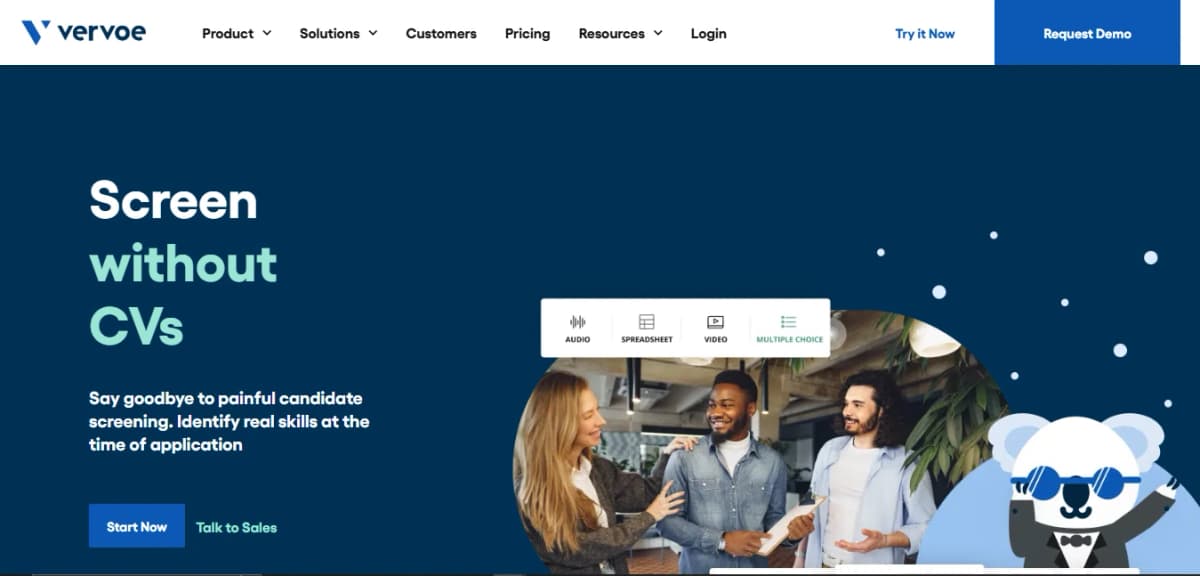
If traditional hiring feels like a popularity contest, Vervoe flips the script by letting candidates prove themselves through skills.
Instead of eliminating people early, everyone gets a fair shot to showcase what they can actually do.
Here’s where its candidate ranking system shines: Vervoe runs skill assessments like coding challenges, video responses, or work samples and automatically scores them.
Candidates aren’t judged on their resumes alone; they’re ranked against each other based on real performance.
Recruiters can then use the “compare” feature to view shortlisted candidates side by side, expanding files, videos, or code responses in one place.
That way, you’re not just choosing the most polished resume, you’re choosing the person who actually demonstrated the strongest skills.
7. SmoothHiring
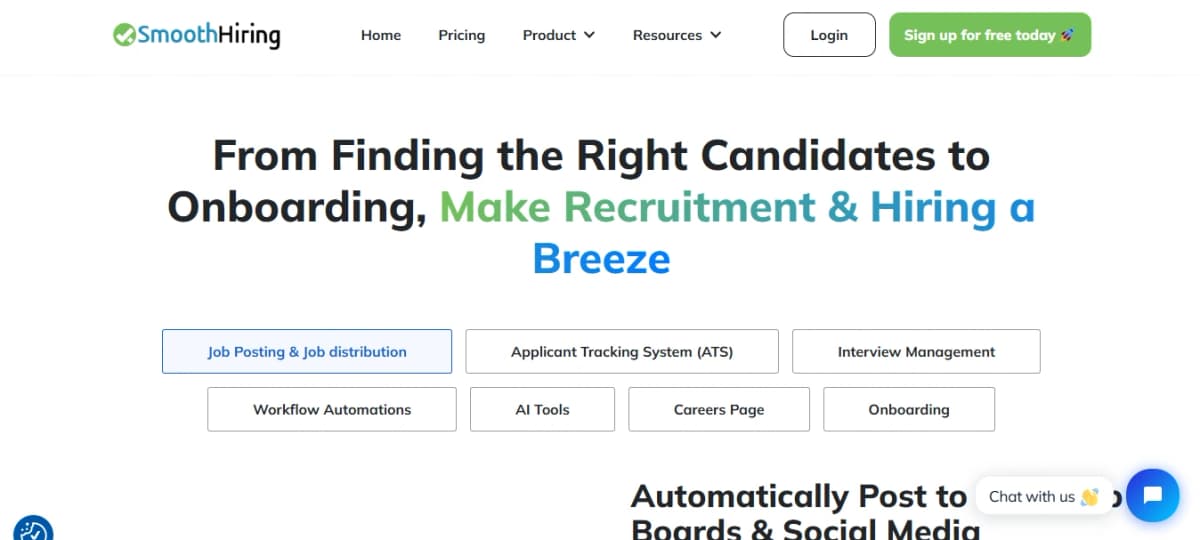
With a name like SmoothHiring, you know they’re promising a stress-free experience.
True to form, this platform focuses on discovering and ranking new candidates quickly, so you’re not stuck recycling the same old talent pool.
Its candidate ranking system helps you identify strong matches early in the process, so by the time you’re ready to interview, you’ve already got a ranked shortlist of promising applicants.
For busy recruiters, that means less guessing and more confidence that the candidates you move forward are genuinely the best fit.
SmoothHiring is especially handy for organizations that need a constant inflow of candidates, think retail, hospitality, or any sector where hiring never really slows down.
Don’t Miss: Top 11 AI Candidate Screening Tools
Best Practices for Candidate Evaluation
To consistently identify the best candidates for any job role, it’s essential to use a well-rounded evaluation process. Start with resume screening to assess qualifications and relevant experience, then incorporate test scores from skills assessments to objectively measure technical abilities. Don’t overlook the importance of interview notes, which can provide valuable insights into a candidate’s communication style and cultural fit.
Leveraging AI-powered tools and machine intelligence can further enhance the evaluation process by reducing bias and automating repetitive tasks, allowing recruiters and hiring managers to focus on high-value interactions. Involving multiple stakeholders—such as team members and hiring managers—ensures a more holistic view of each candidate and increases the likelihood of finding the right fit for your organization.
By combining structured methods, focusing on both hard and soft skills, and using intelligent insights, organizations can improve the accuracy of their candidate evaluations and make more successful hires.
Common Mistakes in Candidate Ranking
Even the best candidate ranking systems can fall short if common mistakes aren’t avoided. One frequent pitfall is relying too heavily on keyword-stuffed resumes, which can cause recruiters to overlook candidates with strong soft skills or cultural fit. Ignoring predefined criteria or focusing on just one candidate based on personal preference can also introduce bias and lead to mis-hires.
Another mistake is depending solely on interview notes, which are often subjective and may not capture the full picture. Recruiters should use a systematic approach, evaluating all candidates against the same set of skills, qualifications, and criteria to ensure fairness. Failing to leverage AI-powered tools and applicant tracking systems can also slow down the process and increase the risk of manual errors.
Taking inspiration from ranked choice voting—where voters rank candidates in order of preference—can help recruiters create a more transparent and balanced ranking process. By being mindful of these common mistakes, recruiters can ensure their candidate ranking process is both effective and equitable, leading to better hiring outcomes.
Conclusion on Candidate Ranking Systems
A candidate ranking system isn’t just about sorting resumes; it’s about making hiring faster, clearer, and a lot less stressful. Much like an election, where candidates compete in a race and a ranking system determines the winner, the hiring process uses candidate ranking to identify the best fit for your team.
With the right tool in place, you get to focus on people, not piles of applications.
Platforms like Hivemind AI take care of the heavy lifting, so you can spend your energy where it counts: choosing the right fit for your team.
FAQs on Candidate Ranking Systems
What is the best sourcing tool for candidates?
The “best” depends on your hiring needs, but LinkedIn Recruiter is often considered the gold standard for sourcing.
It gives recruiters direct access to a massive professional network with advanced filters.
For startups and growing teams, AI-powered tools like Hivemind can also streamline sourcing by automatically surfacing qualified candidates from multiple channels.
What is the most used applicant tracking system?
Greenhouse and Lever are among the most widely adopted ATS platforms, especially in tech and fast-growing companies. Workday and SAP SuccessFactors dominate in large enterprises. Each helps recruiters manage pipelines, scheduling, and candidate communication in one place.
What is the most common recruiting tool?
Job boards remain the most common recruiting tool globally, Indeed, LinkedIn Jobs, and Glassdoor top the list. They’re simple, high-volume, and effective for casting a wide net. Many companies pair them with an ATS or automation tool to manage the influx of applicants.
What is the most widely used HR selection tool?
Structured interviews are still the most widely used HR selection tool worldwide. They provide consistency and fairness by asking every candidate the same set of questions. Increasingly, companies are also adding skill assessments and AI-driven ranking tools to cut bias and speed up decision-making.