
It’s no news that hiring the right talent goes beyond resume screening. Of course, resume screening helps separate the potential candidiates from the unqualified, but the real process begins when you speak to that candidate.
This could be through an in-person interview or phone screening, and it is one of the most critical steps in the hiring process.
Phone screening is the most preferred method of communication for a lot of hiring managers because it’s cost-effective, efficient, quick, and you get to speak to the candidate in their comfort zone.
Which helps determine not just skills but character as well, making it the perfect way to narrow down your candidate pool.
Knowing which phone screening questions to ask candidates can make or break your ability to identify top talent early.
In this guide, we’ll explore the top 17 phone screening questions to ask candidates, the benefits, and show you how platforms like Hivemind can help make this process even more seamless.
What Are the Benefits of a Phone Interview?

Let’s look at some of the benefits of a phone interview before diving into the questions:
1. It Saves Your Time as a Recruiter
Phone screening interviews allow recruiters to evaluate a large number of applicants without investing significant time. This is because it ensures that only the most promising candidates make it to the next stage.
2. Cost-Effectiveness
The major advantage of phone interviews is the fact that it doesn’t require travel or a fancy meeting space.
Candidates know they aren’t the only ones being interviewed for the role, so engaging them in phone screening interviews allows them to save money and energy.
It’s also a plus for companies that are just starting and might not have an office space to receive candidates.
3. Culture Fit Check
A phone screening interview allows you to get a sense of a candidate’s personality, energy, and communication style early on, helping to gauge their potential culture fit.
Which is why having the right phone screening questions to ask candidates is a critical step in the hiring process.
4. It Reduces Bias and Improves Screening Efficiency
Phone interviews can help reduce biases related to appearance or other non-verbal factors, allowing a fairer evaluation of the candidate based on responses and communication fluency.
When it comes to screening efficiency, recruiters get to ask structured questions and take notes during these phone calls, which helps streamline the decision-making process.
5. Flexible Scheduling
Phone screening interviews are easier to schedule than in-person meetings. This allows for a quicker hiring process.
The flexibility lets both the recruiter and candidate select times that don’t conflict with other commitments. It also reduces delays that can come from commuting, meeting room availability, or last-minute cancellations.
Related: Top 11 AI Candidate Screening Tools in 2025
Top 17 Phone Screening Questions to Ask Candidates
Here are the most effective phone screening questions to ask candidates who have passed the initial stage of resume screening and might be the next best fit for your team.
1. Can you walk me through your career journey so far?
This question lets the candidate share their work history in their own words. It shows what they think is most important. You can see how they tell their story and whether they explain their experience clearly and logically.
Why it’s important
You can quickly notice career progression, changes in roles, or gaps that may need more discussion. It also helps assess self-awareness and how candidates perceive their own growth.
What they choose to focus on can indicate their priorities, whether they value leadership, technical skills, or creative achievements. It’s a great question used to set the tone for the rest of the conversation.
2. Why are you interested in this position and our company?
Motivation is a key factor in engagement and retention, and this question addresses it directly. If the answer seems generic, it could suggest that the candidate has applied widely without real interest.
Why it’s important
A candidate who links their career goals to your company’s mission or industry is much more likely to succeed in the long run. Their response may also reveal whether they have carefully read the job description.
This helps prevent candidate mismatches that can result in quick turnover. Candidates with specific and thoughtful reasons for applying often show greater commitment.
3. What do you know about our company and our products/services?
This question tests preparation and research skills, which often lead to strong job performance.
Why it’s important
Candidates who have done their homework show initiative and curiosity. You’ll see how they view your company and if they understand your market, audience, and unique value.
A lack of knowledge doesn’t always mean a lack of ability, but it can suggest a lack of enthusiasm. Their answer also opens the door to discussing how well they might fit into your culture and goals.
4. What are your core strengths that align with this role?
This question reveals whether the role matters to the candidate. Those who can explain their strengths usually have a better sense of how they can contribute.
Why it’s important
You’ll see if their skills fit your needs without sifting through a resume. It also gives them a chance to relate their experience to your particular challenges or goals
5. What is your biggest professional achievement?
Asking this question shows the candidate’s sense of achievement and their own definition of success. It also reveals their focus on results and how they measure impact in ways important to your business.
Why it’s important
You’ll learn about the work they’ve done and the outcomes they’ve achieved. If they can clearly quantify their results, that’s even better. This question can also lead to discussions about relevant skills and transferable experience.
6. What type of work environment do you thrive in?
Cultural fit is as important as skill fit, and this question addresses that directly. If your company works in a fast-paced, open collaboration environment, but the candidate does best in quiet, independent settings, that’s a warning sign.
Why it’s important
A good match can lead to smoother onboarding and greater job satisfaction. Their answer can also provide insights into team compatibility and long-term retention. This aspect is particularly crucial for remote or hybrid roles, where communication and collaboration styles can significantly affect productivity.
7. How do you typically handle stress or tight deadlines?
Every job has its pressure points, so it’s important to see how candidates react to stress.
Why it’s important
Their responses can show emotional strength, time management skills, and problem-solving methods. Look for details.
Do they depend on planning, teamwork, or their own coping strategies? People who remain calm and resourceful under pressure are valuable in fast-paced workplaces.
This also helps you understand whether they might wear out or succeed in tough situations.
Others Liked: 35+ Most Hilarious Hiring & Recruitment Memes of 2025
8. How do you stay current with developments in your field?
This question assesses curiosity and dedication to professional growth. Fast-changing industries need people who are eager to learn.
Why it’s important
Candidates who talk about courses, keeping up with industry trends, or joining communities show they value their development.
It also indicates they will adjust to future changes in your business. Someone who stays informed about trends can bring new ideas and help your team remain competitive.
9. Tell me about a time you faced a conflict at work and how you handled it.
How someone handles conflict reveals much about their people’s skills.
Why it’s important
This question helps you evaluate their diplomacy, communication, and problem-solving skills.
Look for candidates who deal with issues in a positive way and don’t just blame others. The example they provide will reflect their emotional intelligence and how they work to keep good relationships.
10. How do you prioritize and manage multiple projects?
This question shows how well candidates can organize, focus, and make decisions when faced with competing demands.
Why it’s important
Candidates who can clearly explain how they prioritize tasks, whether by urgency, impact, or deadlines, usually handle their workloads better.
This is also a test of self-discipline and time management. In fast-paced settings, this skill can help avoid missed deadlines and overlooked tasks. Good answers will mention specific tools or systems they use to stay organized.
11. Are there any deal-breakers for you in a job or work culture?
It’s important to know early if a candidate will feel comfortable in your environment.
Why it’s important
This question reveals non-negotiables right away, helping you avoid expensive hiring mistakes.
Deal-breakers might relate to flexibility, workload, leadership style, or values. If your company can’t meet their needs, both sides can part ways without wasting time. Being clear about this saves frustration for everyone.
12. How do you approach learning something new on the job?
Adaptability is an important skill in today’s workplaces. This question helps determine if a candidate can quickly learn new tools, processes, or responsibilities.
Why it’s important
Individuals who can adapt quickly are valuable in industries that focus on growth or change.
13. Can you share an example of a project you’re proud of and why?
This allows candidates to showcase their skills and enthusiasm while sharing their story.
Why it’s important
The reason behind their pride can show what motivates them, whether it’s solving a tough problem, collaborating well, or making a measurable impact.
This is also an opportunity to observe their communication skills and how they present their accomplishments. Strong examples will naturally relate to the skills you’re looking for.
14. What do you expect from your next employer in terms of growth opportunities?
This question reveals career goals and if your company can support them. Candidates with clear, realistic expectations tend to be more engaged in their work.
Why it’s important
You’ll find out if they seek mentorship, promotions, skill development, or exposure to different areas. If you can provide what they desire, you’re more likely to keep them for the long term.
15. Can you describe your ideal manager or leadership style?
Management fit greatly affects employee satisfaction and retention. This question helps you gauge how the candidate’s preferences match your current leadership style.
Why it’s important
It slightly reveals what hasn’t worked for them in the past. Look for answers that demonstrate flexibility, not fixed expectations.
Related: 13 Must Have Tools in your Recruiting Tech Stack
16. Do you have any questions for us about the role or company?
The questions a candidate asks can reveal as much about them as their answers. Engaged candidates typically prepare meaningful questions that demonstrate they are thinking about how they would fit in and contribute.
Why it’s important
If they don’t have any questions, it could suggest a lack of interest, or it might mean you have already shared everything clearly. In either case, this is a good opportunity to assess their priorities.
17. What are your salary expectations and what’s your availability to start if selected?
Salary expectations help you see if the candidate fits your budget before you spend more time.
Why it’s important
Availability shows whether they can meet your timeline or if adjustments are necessary. Being straightforward here prevents surprises later in the process and allows both sides to make informed decisions.
Don’t Miss: The Best 7 Free AI Recruiting Tools
How Can HiveMind Help?
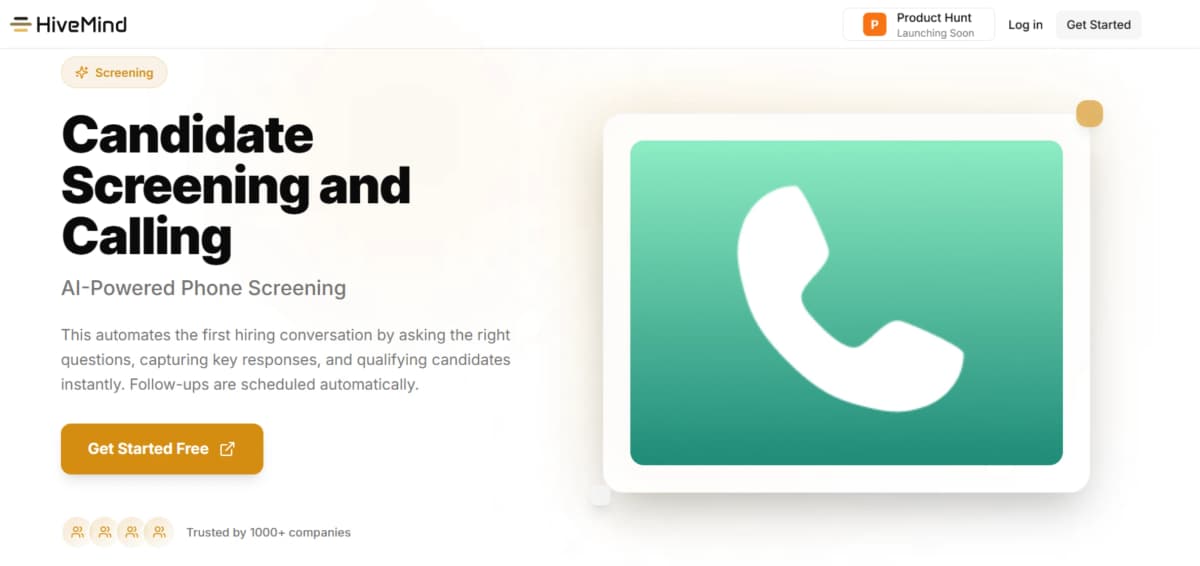
Having the most effective phone screening questions to ask candidates in your arsenal is great, but you might notice how hard it is to manually call up 40 - 500 candidates with great resumes, while being in charge of other tasks. It not only slows the hiring process, but it takes a lot of man-power, and you might end up missing the right person.
This is where Hivemind AI comes in.
Imagine automating the entire process, thereby streamlining the hiring funnel with efficiency, consistency, and speed. With this HiveMind feature, you don’t need to imagine.
With AI-powered phone calls, Hivemind conducts phone screening questions to ask candidates using real-time screening and a natural, conversational voice. There would be no risk of having any interviews skipped and no follow-ups forgotten.
By asking relevant follow-up questions and capturing key responses, the qualified candidates are moved to the next stage of the process immediately. This feature also ensures that every candidate receives a fair, comprehensive evaluation.
After interviews, Hivemind makes sure that the summaries of the calls are delivered. This ensures that hiring teams can rapidly shortlist top performers without having to replay calls.
Some of its key capabilities include customizable screening questions, multi-language support, and automatic call scheduling. With HiveMind AI-powered phone screening feature, you’re sure of a 90% speed in processing, and it’s 24/7 availability.
Stop letting routine phone screens slow down your hiring process. Hivemind automates those first-base conversations with potential candidates, so you can focus on quality hires.
Learn More
FAQs on Phone Screening Questions to Ask Candidates
What questions should I ask during a phone screening?
Make sure to ask questions that cover background, logistics, motivation and fit. The Common ones include: “Can you tell me about your background?” “Why are you looking for a new job?” and “What do you know about our company?” These help screen for alignment early in the hiring process.
What are the 10 most common behavioral interview questions and answers?
Behavioral questions help predict future performance based on past experience. Some examples include: “Describe a situation when you used persuasion successfully” and “Give an example of a time you set a goal and met it.”
What questions should I ask when hiring a manager?
Some key managerial questions include: “What does being a manager mean to you?” and “If hired, what would you do in the first 30 to 90 days?” These questions help assess leadership perspective, strategic thinking, and cultural fit.
What are good screening questions for job applicants?
Effective screening questions look into candidates’ motivation, experience, and availability. Here are some examples: “What specifically caught your interest in this opportunity?” “How does your experience fit this role?” and “How soon could you start?”
What is the #1 question asked in a phone interview?
One of the most common opening questions is, “Can you tell me about your background?” This question acts as an icebreaker and quickly brings up relevant work experience.
How many questions are in a phone interview?
There’s no fixed count, but typical phone interviews last 15 to 30 minutes. Many sources recommend preparing 3 to 5 strategic questions to ensure clarity and consistency while staying concise.