
Hiring has changed a lot in recent times, with more job seekers online, more roles going remote, and more companies competing for top talent, and traditional hiring processes just can’t keep up.
Companies are increasingly turning to technology to improve their recruitment processes and stay competitive in today’s job market.
It’s no longer feasible to manage hiring with spreadsheets, inboxes, or manual processes alone. To stay ahead, companies need to build a recruiting tech stack which is a collection of specialized tools designed to make every stage of the hiring journey faster, smarter, and more human-centered.
This is much more than just chasing trends or stacking tools for the sake of it. The next evolution is the rise of talent acquisition tech stacks, where TA leaders focus on building integrated, well-managed ecosystems that drive sustainable productivity.
The best recruiting teams use a carefully curated tools that work together seamlessly, removing bottlenecks and enabling better decisions at every step, from attracting applicants and screening resumes to assessing skills and welcoming new hires.
A modern recruiting team is only as good as its recruiting tech stack. And while no two hiring teams are exactly the same, there are core categories of tools that every recruiter should consider having in their stack.
We’ve broken down 13 essential categories that belong in every modern recruiting tech stack in this article.
And these tools have become the backbone of competitive hiring operations and we’ll explain exactly what they do, why they matter, and which platforms are worth considering. Small businesses can also benefit from building an effective recruiting tech stack, making advanced hiring solutions accessible to organizations of all sizes.
Top Pick: The Best 9 Talent Assessment Tools
Introduction to Recruitment Tech Stack
A recruitment tech stack is the backbone of a modern hiring process, combining a suite of software, tools, and platforms to manage every stage of recruitment. From applicant tracking systems (ATS) and recruitment marketing solutions to interview scheduling tools and assessment platforms, the right recruitment tech stack empowers organizations to optimize their recruitment process and deliver a superior candidate experience. In today’s fast-paced and competitive job market, leveraging a well-curated recruitment tech stack is essential for attracting, engaging, and retaining top talent.
Emerging technologies such as artificial intelligence (AI), predictive analytics, and video interviews are transforming how companies approach recruitment. These tools help automate manual work, streamline interview scheduling, and provide actionable insights that drive smarter hiring decisions. By integrating these advanced solutions into your recruitment tech stack, you can reduce time-to-hire, improve candidate experience, and ensure your hiring process is both efficient and effective.
The Foundation of a Strong Recruiting Tech Stack

Before we dive into the individual tools, it’s worth emphasizing why building a cohesive recruiting tech stack is such a game-changer. Hiring is no longer a linear process.
Candidates now expect fast communication, a smooth experience, and transparency from day one. Recruiters, on the other hand, are juggling high volumes of applicants, tight deadlines, and the need for quality hires. Maintaining a clear focus on high-value tasks and candidate engagement is essential to achieving the best hiring outcomes.
Aside from solving one problem at a time, having the right recruiting tech stack is about creating an ecosystem where each tool complements the other. It’s also important to ensure each tool fits seamlessly into your overall workflow, matching your organization’s specific needs for maximum efficiency and effectiveness.
When done right, your stack becomes a strategic asset that helps you source top talent faster, screen more effectively, communicate clearly, and make data-informed decisions.
With that in mind, let’s look at the 13 must-have tools that power a modern recruiting tech stack.
Recruitment Process Optimization
Optimizing the recruitment process is a top priority for talent acquisition teams aiming for better outcomes and a more efficient hiring journey. The first step is to analyze your current hiring process, pinpointing bottlenecks and areas where manual work slows down progress. By implementing a cohesive tech stack, teams focused on high-volume hiring can seamlessly manage candidate data, automate repetitive tasks, and provide a user-friendly interface for both recruiters and candidates.
Integrating core tools like ATS, CRM, and scheduling software helps streamline outreach, minimize data silos, and ensure a consistent flow of information throughout the recruitment process. This not only reduces administrative burden but also enhances the selection process by making candidate data easily accessible and actionable. Leveraging AI-powered sourcing tools and technical assessments further enables recruiters to identify qualified candidates quickly and accurately, ensuring that only the best talent moves forward. Ultimately, a well-optimized recruitment process supported by the right tech stack leads to improved candidate experience, faster hiring, and better overall results.
Candidate Experience and Engagement
Delivering an outstanding candidate experience and fostering engagement are essential for building a strong employer brand and achieving successful hiring outcomes. A thoughtfully designed recruitment tech stack allows organizations to create a seamless, personalized journey for candidates—from the initial job posting to final onboarding. Advanced search capabilities, customizable workflows, and automated communication tools ensure that candidates stay informed and engaged at every step.
By prioritizing candidate experience, companies can boost applicant satisfaction and stand out in a crowded talent market. Emerging technologies like AI-powered chatbots and video interviews add a human touch, enabling recruiters to build stronger relationships and provide timely, relevant updates. These tools not only streamline the recruitment process but also help candidates feel valued and respected, leading to higher acceptance rates and better long-term retention. Investing in the right recruitment tech stack is key to creating a positive, engaging experience that attracts top talent and drives business success.
Top 13 Tools for Your Recruiting Tech Stack
When building the most effective recruiting tech stacks 2023, selecting tools that are interconnected, minimal, and aligned with your business outcomes is crucial to optimizing your recruiting processes.
-
Applicant Tracking System (ATS)
-
Candidate Relationship Management (CRM) Software
-
Video Interviewing Platforms
-
Job Boards and Aggregators
-
AI-powered Sourcing Tools
-
Data Analytics and Reporting Tools
-
Calendar and Scheduling Tools
-
Chatbots and Automation Tools
-
Onboarding Software
-
Employee Referral Program Tools
-
Skills assessment
-
Payroll and Compliance Software
-
Background Check Software
1. Applicant Tracking System (ATS)
The ATS is the central hub of your recruiting tech stack. It centralizes candidate information, making it easy to access, manage, and track detailed data about candidates throughout the recruitment process. It helps recruiters manage job postings, receive and track applications, and communicate with candidates all in one place. Good ATS tools eliminate spreadsheets, organize resumes automatically, and reduce repetitive tasks. Key benefits:
-
Streamlined candidate tracking
-
Workflow automation
-
Easier collaboration among hiring teams and hiring managers, with features like review interfaces and structured scorecards to facilitate assessments
Examples:HiveMind AI, Greenhouse, Lever, Zoho Recruit
2. Candidate Relationship Management (CRM) Software
Not every great candidate is ready to take a job right now. CRM tools help you keep warm relationships with passive talent so you can engage them when the time is right. They also make it easier to personalize communication at scale. Recruit CRM, for example, streamlines and automates candidate profile management, offers automation templates, and integrates with hiring workflows to improve efficiency and inclusivity.
Key benefits:
-
Build long-term candidate pipelines
-
Send targeted nurture campaigns
-
Track candidate engagement
Examples: Beamery, Avature, Bullhorn, Recruit CRM
3. Video Interviewing Platforms
Video platforms let you run interviews and video assessments without scheduling headaches, whether you’re hiring remotely or want to save time on early screening. Many platforms also include AI-assisted analysis and structured question formats. Interview kits provide interviewers with standardized questions and evaluation criteria, ensuring consistent and focused candidate assessments. Key benefits:
-
Flexible scheduling
-
Consistent candidate evaluation
-
More engaging candidate experience
Examples:HireVue, Spark Hire, HiveMind AI
4. Job Boards and Aggregators
Job boards are still one of the top ways organizations can manage and promote multiple job openings to active job seekers. Aggregators go a step further by distributing your listings across multiple platforms. Key benefits
-
Maximize job visibility
-
Attract more applicants
-
Target niche audiences
Examples: Indeed, LinkedIn Jobs, ZipRecruiter
5. AI-Powered Sourcing Tools
These platforms function as a sourcing tool that automates candidate identification using artificial intelligence to find ideal candidates from across the web, even if they haven’t applied. By analyzing online activity, social profiles, and past job performance, they help you reach out to high-quality leads faster. Key benefits:
-
Find passive candidates
-
Automate outreach
-
Reduce sourcing time
Examples: HireEZ, SeekOut, AmazingHiring, LinkedIn Recruiter
Related: Automated Candidate Sourcing: 7 Tools to Find Talent Faster
6. Data Analytics and Reporting Tools
What’s working in your hiring funnel? Where are candidates dropping off? Analytics tools let you measure performance across each stage of hiring, so you can adjust your strategy and prove ROI. Key benefits:
-
Track time-to-hire and cost-per-hire
-
Optimize recruitment funnels
-
Support data-driven decisions
Analytics dashboards are automatically updated with the latest recruitment data, providing real-time insights for more effective decision-making.
Examples: Tableau, Google Data Studio, Visier
7. Calendar and Scheduling Tools
Interview coordination can be a logistical nightmare, but these tools streamline the process by managing candidate and interviewer logistics and ensuring schedules are automatically updated in real time. These tools integrate directly with calendars and allow candidates to pick interview times that work best for them.
Key benefits:
-
Reduce back-and-forth
-
Eliminate manual scheduling
-
Improve interviewer coordination
Examples: Calendly, GoodTime, Clara
8. Chatbots and Automation Tools
AI agents now automate and enhance recruitment processes by answering candidate questions instantly, screening resumes, and scheduling interviews—even while your team sleeps. These tools also streamline candidate communications through automated messaging, email templates, and engagement strategies. Automated follow ups, such as reminders and notifications, keep candidates engaged throughout the recruitment process and reduce manual effort.
Key benefits:
-
Faster response time
-
Automated interview scheduling
-
Improved candidate experience
Examples: Paradox (Olivia), XOR, Humanly
9. Onboarding Software
Great onboarding tools ensure that once a candidate accepts the offer, they have a smooth transition into the company. From document signing to orientation scheduling, these platforms improve retention from day one. Key benefits:
-
Faster ramp-up time
-
Better new hire experience
-
Fewer manual onboarding tasks
Examples: BambooHR, Sapling, Rippling
You Might Like: 35+ Most Hilarious Hiring & Recruitment Memes of 2025
10. Employee Referral Program Tools
Referral tools help you to tap into your team’s network to source talents. The best ones automate the tracking and reward process, making it easy for employees to refer to great candidates. Key benefits:
-
Higher-quality hires
-
Reduced time-to-hire
-
Increased employee engagement
Examples: Teamable, Drafted, ERIN
11. Skills Assessment and Testing Tools
Resumes don’t always tell the full story, which is why skills assessments help you objectively evaluate whether candidates can actually do the job. These tests range from coding challenges to cognitive reasoning and soft skills.
For tech hiring, technical assessments are especially important to validate candidates’ skills and prevent fraud, ensuring authenticity and capability in the hiring process.
Key benefits:
-
Hire based on ability, not pedigree
-
Identify top performers early
-
Reduce mis-hires
Examples: Codility, TestGorilla, HackerRank
12. Payroll and Compliance Software
For agencies or companies working with freelancers or contractors, payroll and compliance tools are vital to help organizations stay compliant with labor and tax regulations. They ensure you’re handling worker classification, tax documentation, and payments properly across regions. Key benefits:
-
Global payment capabilities
-
Reduced compliance risk
-
Simplified contractor onboarding
Examples: Deel, Remote, Oyster
13. Background Check Software
Background checks are a crucial part of making safe and compliant hiring decisions. These tools help you verify candidate history, criminal records, education, and more. Key benefits:
-
Faster background verification
-
Reduced risk
-
Improved trust and security.
Examples: Checkr, GoodHire, Sterling
For You: Top 9
Tech Stack Integration for Recruitment: Achieving Maximum Impact
It’s one thing to have great tools and it’s another thing to make them work together. Integration is the key to ensuring your recruiting tech stack doesn’t become a source of frustration.
Integration ensures that your data flows smoothly across platforms, your processes remain consistent, and your team doesn’t waste time switching between disconnected systems.
Start by identifying your core systems, usually your ATS and CRM, and ensure that any new tool you bring in can connect easily to these hubs. Look for platforms with open APIs, pre-built integrations, or middleware solutions like Zapier. Recruiting platforms often connect with other tools in the HR and business ecosystem, such as payroll, onboarding, or performance management software, to create a seamless workflow.
For instance, integrating your sourcing tools with your ATS allows candidate profiles to move directly from search results into your pipeline. When your calendar and scheduling tools connect to your video interview platform, you eliminate back-and-forth emails.
Integrated stacks also make reporting more powerful. When data from different parts of the hiring process converges into a central dashboard, you can analyze bottlenecks, track conversion rates, and measure overall hiring health more accurately.
This not only saves your team time, it also helps you make smarter hiring decisions with less guesswork.
Ultimately, integration is a productivity multiplier and is not likely a tech concern. A connected recruiting tech stack creates a smoother candidate journey, less manual labor for your teams, and a stronger hiring brand overall.
Evaluating Tools for Long-Term Success
The tools you choose today will influence how your team operates, how candidates experience your hiring process, and how adaptable your recruitment function is to change.
To better understand this, begin by assessing your current workflows. What’s slowing your team down? Where do you see the most manual work or repeated tasks? Your recruiting tech stack should address these bottlenecks directly.
The next thing you should consider is usability. Great tools don’t need weeks of training and they should offer intuitive interfaces and support adoption across your team, even for non-technical members. However, be aware that a steep learning curve can be a barrier for some teams, especially if complex automation features are involved.
Scalability is another key factor you should consider, because as your company grows, your recruiting needs will evolve. Look for tools that can grow with you, whether that means supporting more users, automating more tasks, or integrating with additional platforms. Platforms that regularly introduce new features—such as automation improvements or AI-driven candidate ranking—can better adapt to your changing needs and keep your processes up to date.
Flexible pricing models and modular add-ons can also help ensure your investment pays off over time.
Finally, don’t underestimate vendor reliability because a tool is only as good as the support behind it. Read reviews, ask for references from other recruiters, and test support responsiveness before committing.
A reliable vendor with proactive support can become a true partner in your hiring success. By regularly evaluating your recruiting tech stack through this lens, you’ll be able to build a stack that stays relevant, powerful, and aligned with your business goals.
Related: 9 Best
The HiveMind Difference
Most ATS platforms were built to track applicants and not to help you hire better. They’re often clunky, rigid, and require workarounds to fit your real process.
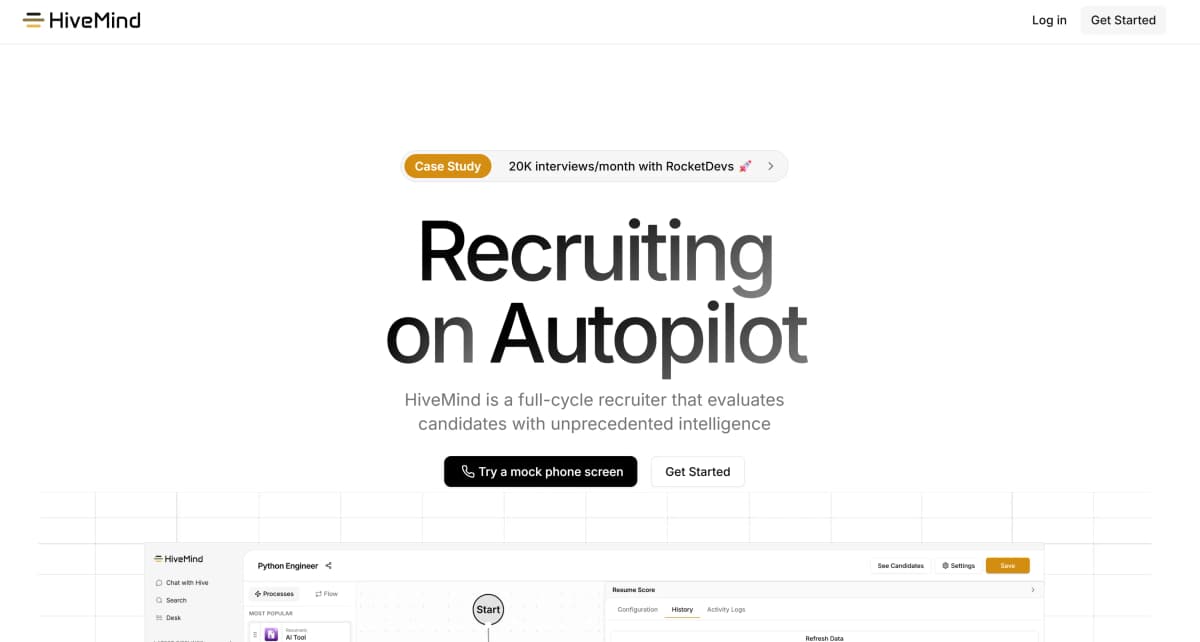
HiveMind AI takes a different approach. It’s designed around dynamic workflows, allowing recruiters to automate and customize their workflow processes, letting you build flexible recruiting paths tailored to different roles, teams, or hiring goals. With built-in AI for resume ranking, automated scheduling, and smart triggers, HiveMind can handle up to 90% of the repetitive tasks that slow teams down.
Unlike traditional systems that force you into fixed stages, HiveMind adapts in real time based on candidate performance, test scores, or feedback, so you’re always making decisions faster, with less effort. It’s intuitive, collaborative, and integrates seamlessly with the rest of your recruiting tech stack.
In short: if you’re ready for an ATS that actually works the way you hire, HiveMind is built for you.
Conclusion
In conclusion, building a robust recruitment tech stack is essential for organizations looking to stay ahead in today’s dynamic talent acquisition landscape. By understanding the core components of a recruitment tech stack, optimizing the recruitment process, and prioritizing candidate experience and engagement, companies can achieve better hiring outcomes and support their overall hiring strategy. As the recruitment industry continues to evolve, it’s crucial for talent acquisition teams to stay informed about emerging technologies, trends, and best practices to ensure they’re leveraging the right tools for their needs.
A cohesive tech ecosystem not only streamlines the recruitment process but also enhances candidate experience and supports business growth. By continuously evaluating and updating your recruitment tech stack, you can attract, engage, and retain top talent—ensuring your organization remains competitive and ready for the future of hiring.
Frequently Asked Questions on Recruiting Tech Stack
What is a tech stack in recruiting?
A tech stack in recruiting is a collection of software tools and platforms used to streamline and automate the hiring process from sourcing candidates and tracking applicants to conducting interviews, assessing skills, and onboarding new hires.
What are the four pillars of recruiting?
The 4 pillars of recruiting are Attraction, Selection, Engagement, and Retention.
-
Attraction involves drawing in the right candidates through employer branding, sourcing, and compelling job ads.
-
Selection focuses on identifying the best-fit talent through assessments, interviews, and data-driven evaluation.
-
Engagement ensures strong communication and a smooth candidate experience throughout the hiring process.
-
Retention is about keeping top talent through effective onboarding, culture alignment, and long-term development strategies.
What is a full stack recruiter?
A full stack recruiter is a recruiting professional who manages the entire hiring process from start to finish. This includes everything from sourcing candidates and writing job descriptions to conducting interviews, managing offers, and even helping with onboarding.
They combine skills in recruiting strategy, sourcing, screening, interviewing, relationship-building, and technology tools, essentially handling both the front-end (candidate experience) and back-end (hiring systems and workflows) of recruitment.
What are the 5Cs of recruitment?
The 5Cs for recruitment are a framework used to evaluate candidates more holistically during the hiring process. They help recruiters go beyond resumes and assess qualities that predict long-term success and fit.
Here’s what each “C” stands for:
-
Competence – Does the candidate have the skills, experience, and knowledge to perform the role effectively?
-
Character – What are their values, ethics, and level of integrity? Will they represent your company well?
-
Culture Fit – Does the candidate align with your team’s working style, values, and overall company culture?
-
Communication – Can they express ideas clearly, listen actively, and collaborate effectively with others?
-
Commitment – Are they genuinely interested in the role and likely to stay and grow with the company?