
Hiring used to be simpler. You posted a job, got a handful of resumes, maybe called in a few people for interviews, and boom! You had a new teammate.
Fast forward to today, and you’re staring at “1,000+ applications” for a single role, wondering if half the internet accidentally applied. A UK survey by Course Library reports that over 60% of workers have applied to jobs they aren’t qualified for, and among those applicants, about two‑thirds were rejected
That’s where talent assessment tools come in. These tools help overwhelmed hiring teams sift through the noise, score candidates on actual skills (not just résumé buzzwords), and make smarter, faster decisions. Assessment data from these tools provides real-time insights that improve decision-making and reduce bias.
AI assessment tools like HiveMind, Hirevue and HireeZ help to take the edge of by handling the assessments and most of the stress that comes with hiring without the need for extra costs or labor.
In this article, we have put together some of the best talent assessment tools.
We will be focusing on their features, pros, and cons, to help you make an informed decision when it comes to picking the right tool that you can seamlessly integrate into your hiring process. It’s important to consider compatibility with applicant tracking systems to streamline candidate management and improve workflow efficiency.
Benefits of Candidate Assessment Tools
In today’s fast-paced hiring landscape, making the right talent decisions is more critical—and more challenging—than ever. That’s where candidate assessment tools step in, transforming the hiring process from a guessing game into a data-driven science. By leveraging the best talent assessment software, organizations can move beyond gut instinct and résumé buzzwords, using actionable insights to identify top talent and drive business success.
One of the standout benefits of talent assessment tools is their ability to evaluate candidates across multiple dimensions—technical skills, cognitive ability, and personality traits—ensuring a holistic view of each applicant. This comprehensive approach helps hiring managers and HR professionals pinpoint the best fit for every role, whether you’re looking for a coding whiz, a customer service superstar, or your next leadership hire.
Talent assessment software doesn’t just improve hiring accuracy; it streamlines the entire hiring process. Automated skills tests, personality tests, and cognitive ability assessments allow hiring teams to quickly and confidently evaluate candidates, reducing time-to-hire and freeing up valuable resources. The result? A smoother, more efficient hiring workflow that keeps both candidates and recruiters happy.
But the benefits don’t stop at hiring. The best talent assessment tools also support ongoing talent management and employee development. With data-driven insights from online assessments and job simulations, organizations can identify skill gaps, tailor development strategies, and create personalized learning paths for their teams. This not only boosts employee engagement and retention but also ensures your workforce is ready to tackle future challenges.
Candidate assessment tools are also invaluable for internal mobility, helping HR teams uncover hidden potential within their existing workforce. By evaluating technical abilities and behavioral traits, companies can make informed decisions about promotions, succession planning, and targeted training programs.
In short, implementing candidate assessment tools empowers organizations to make confident, data-driven hiring decisions, improve hiring outcomes, and build a stronger, more agile workforce.
9 Best Talent Assessment Tools
-
Eightfold
-
Harver
-
Skillate
-
Peoplebox AI
-
Sova Assessment
-
Criteria Corp
-
iMocha
1. HiveMind AI
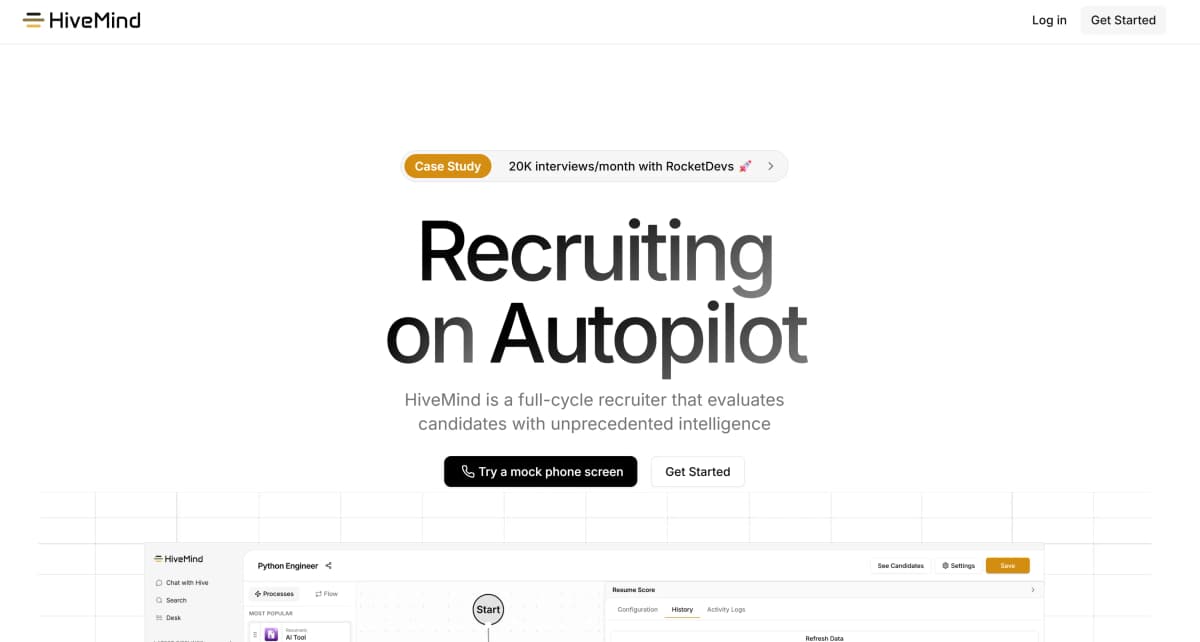
If your hiring pipeline feels more like a firehose lately, HiveMind might just be the AI talent assessment tool you need. It’s not just another applicant tracking system—it’s designed for speed and quality, and helps streamline hiring for busy teams, which is a rare combo in hiring tech.
Unlike platforms that rely on surface-level keyword matching, HiveMind uses AI to learn what makes your top performers great, and then ranks new applicants against that benchmark. This makes HiveMind AI one of the best talent assessment tools.
It’s how companies like RocketDevs manage to run tens of thousands of interviews a month without sacrificing quality or speed.
With HiveMind, you also get a customizable hiring workflow, built-in scheduling, smart interview tools, and AI-powered notes that save your team hours. The platform delivers assessment insights that support confident hiring decisions, giving you valuable data to evaluate talent and make strategic HR choices.
The candidate experience is smooth, the admin work is minimal, and the results? Surprisingly aligned with what you’re really looking for.
Best For: Startups and scaling teams drowning in resumes
Pricing: Custom, depending on your hiring goals, with a 14-day free trial
Downside: Probably overkill if you only hire a couple of people a year.
2. HireVue
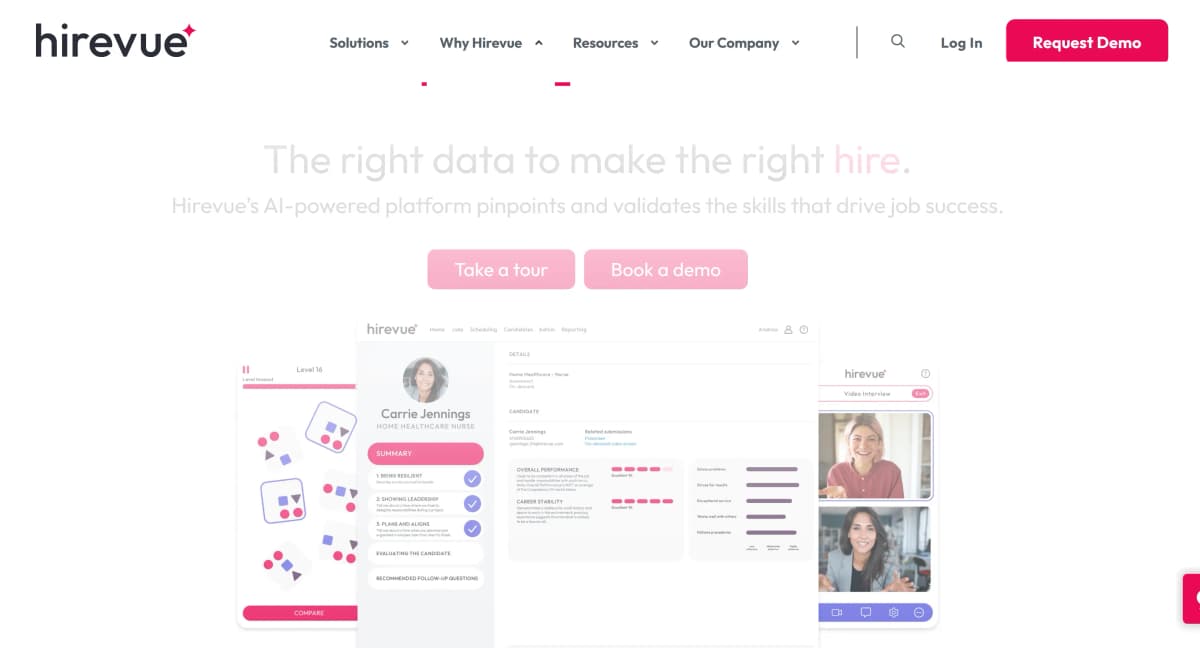
If you’re hiring at scale and tired of scheduling chaos, HireVue steps in with an AI talent assessment system that focuses on one key aspect: helping you evaluate more candidates in less time without compromising quality.
HireVue has an on-demand video interview feature, where candidates respond to pre-recorded questions at their own pace. The platform then analyzes these responses using AI, not by tracking facial expressions but by focusing on what candidates say and how they say it.
The AI digs into language patterns, key phrases, and even pronoun use to assess things like collaboration and clarity, incorporating behavioral assessments to better understand communication styles, team dynamics, and overall fit.
Companies can automate next steps based on AI scores or simply use the results to enrich human decision-making. Either way, it brings structure, speed, and a surprising amount of consistency to early-stage screening.
And it’s not just video: HireVue offers structured interviews, coding tests and challenges as part of its technical assessment suite, behavioral assessments, game-based psychometrics, and even a chatbot to keep candidates engaged and moving through the funnel, all under one platform.
The platform also enables tailored evaluations, allowing companies to customize assessments and interviews to match specific role requirements and hiring needs.
Best for: Companies doing high-volume hiring or juggling multiple roles at once
Pricing: You’d have to book a Demo with them
Cons: Occasional tech hiccups during video interviews
Related: Top 37 HireVue Interview Questions with Smart Answers
3. Eightfold
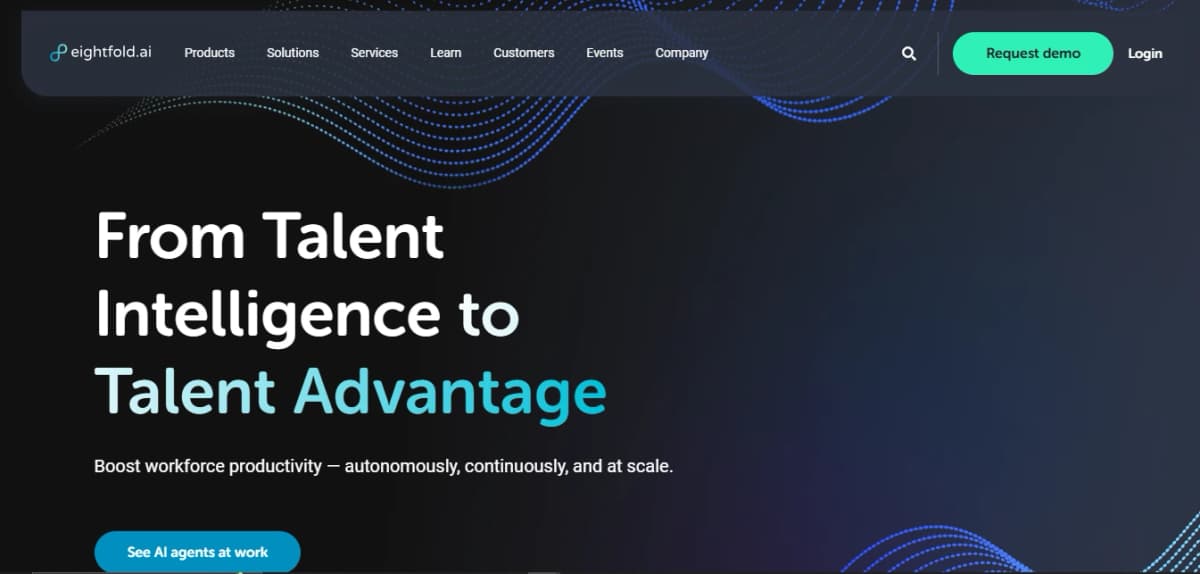
When you’re drowning in resumes but still struggling to find the right fit, Eightfold brings some serious assistance to bail you out.
This isn’t your average keyword-matching tool. Eightfold’s AI digs deep into a candidate’s skills, experience, and even potential, helping you spot hidden gems others overlook. It also enables organizations to assess future potential, predicting which candidates are likely to grow and contribute over time.
Its AI talent assessment engine doesn’t just pair people to roles; it maps competencies, identifies transferable skills, and helps you surface qualified candidates who might’ve flown under the radar in a traditional search. This makes it easier to identify candidates with the right skills, behaviors, and cultural fit for your organization.
Plus, its branded job board gives applicants a slick experience, while your team benefits from smart filtering options, like filtering by experience, availability, or salary expectations.
One of the reasons Eightfold AI is one of the best talent assessment tools is that it is big on reducing bias. Candidate profiles are anonymized to keep the focus on actual capabilities instead of unconscious snap judgments.
Combine that with its internal mobility features like the Project Marketplace, which auto-matches employees to internal gigs, and you’ve got a platform that supports hiring and retention. Eightfold also helps organizations advance their broader talent strategy initiatives, including workforce agility and succession planning.
Best for: Enterprise teams that care about skill-based hiring and internal growth
Pricing: You’d have to book a Demo with them
Cons: May slow down with complex workflows or large datasets
4. Harver
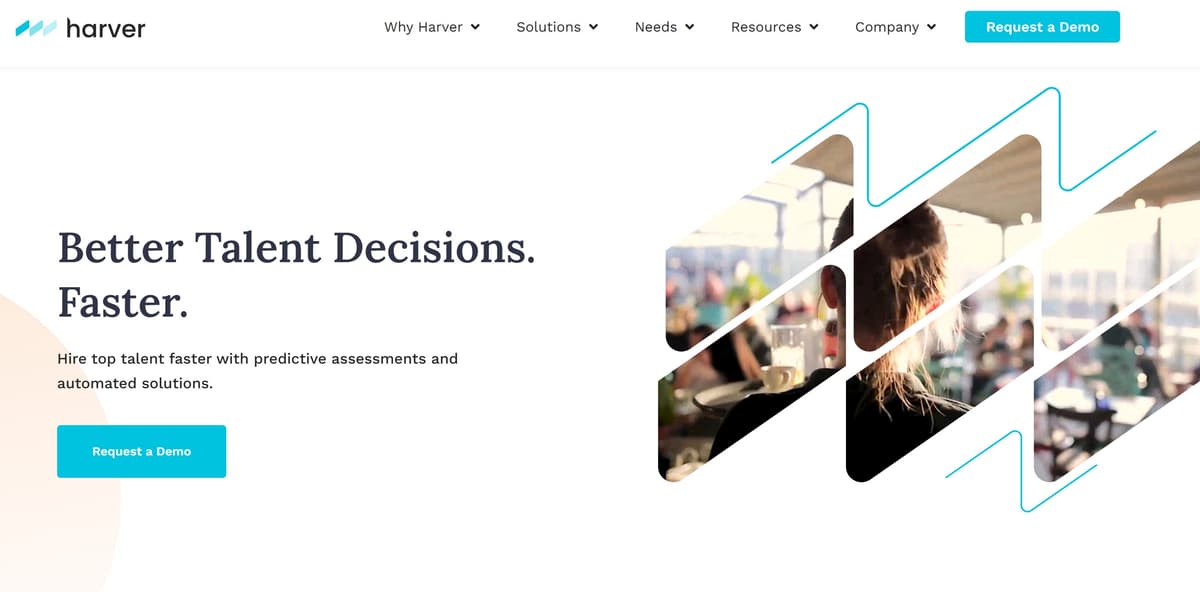
Harver’s AI talent assessment system takes the guesswork out of early screening.
As soon as candidates apply, they’re guided through a set of job-specific and targeted assessments, no résumé scanning, no endless phone interviews, just real data from the start.
Whether you’re hiring frontline workers or call center reps, Harver tailors the testing to match the actual demands of the role using targeted assessments to ensure candidates meet specific job requirements.
The platform uses AI technology to match applicants with the roles they’re most likely to succeed in, based on communication skills, cognitive ability, personality traits, and more.
You can even customize the assessment flow to align with your hiring goals and brand experience. Harver also helps identify development needs for each candidate, highlighting areas for improvement and supporting better job fit.
Best of all, it’s bias-conscious by design. With structured scoring and objective data guiding decisions, Harver helps your team move faster without sacrificing fairness or settling for seat-fillers.
Best for: High-volume hiring in customer service, hospitality, or retail
Pricing: Custom pricing based on your hiring scale
Cons: Best suited for high-volume hiring, might be overkill for smaller teams
LinkedIn Recruiter Pricing** Breakdown (2025): Is It Worth it?**
5. Skillate
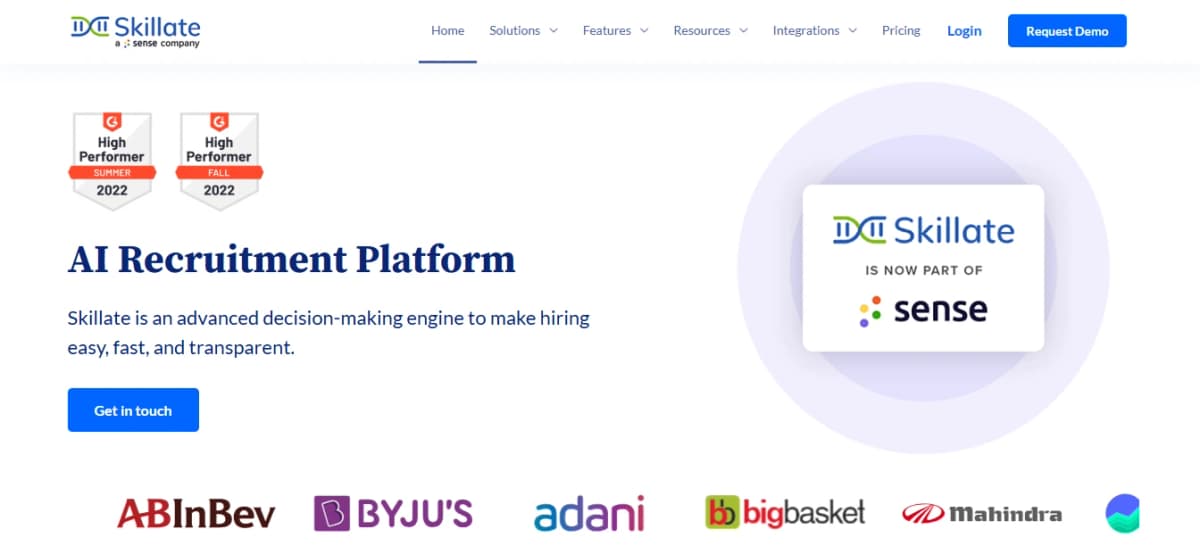
From day one, Skillate acts like your behind-the-scenes hiring assistant. It reviews your job descriptions and offers smart suggestions to help attract better-fit candidates.
And with its AI trained on a massive dataset of over 120 million profiles, this tool can be very effective.
As one of the leading talent assessment companies, Skillate brings specialized expertise to the hiring process.
Its core strength lies in automated AI talent assessment and resume ranking. Instead of manually reading through every CV.
Skillate’s matching engine parses, analyzes, and ranks applicants based on role relevance, looking at real qualifications, experience, and competencies (not just keywords). This supports a structured talent assessment process, ensuring a consistent and data-driven approach to identifying high-potential candidates.
Even better, its pre-screening chatbot gathers additional info like notice period, relocation preferences, and salary expectations, giving you a 360° view of each candidate before you even hit “schedule interview.”
Skillate also plays well with others, it integrates with major ATS platforms like Workday and SmartRecruiters, and offers seamless integration with existing HR systems, making it easy to fold into your existing workflow.
Best for: Teams that want intelligent, integrated recruiting without the manual grind
Pricing: You’d have to book a Demo with them
Cons: Struggles with resumes that include images or fancy formatting
6. Peoplebox AI
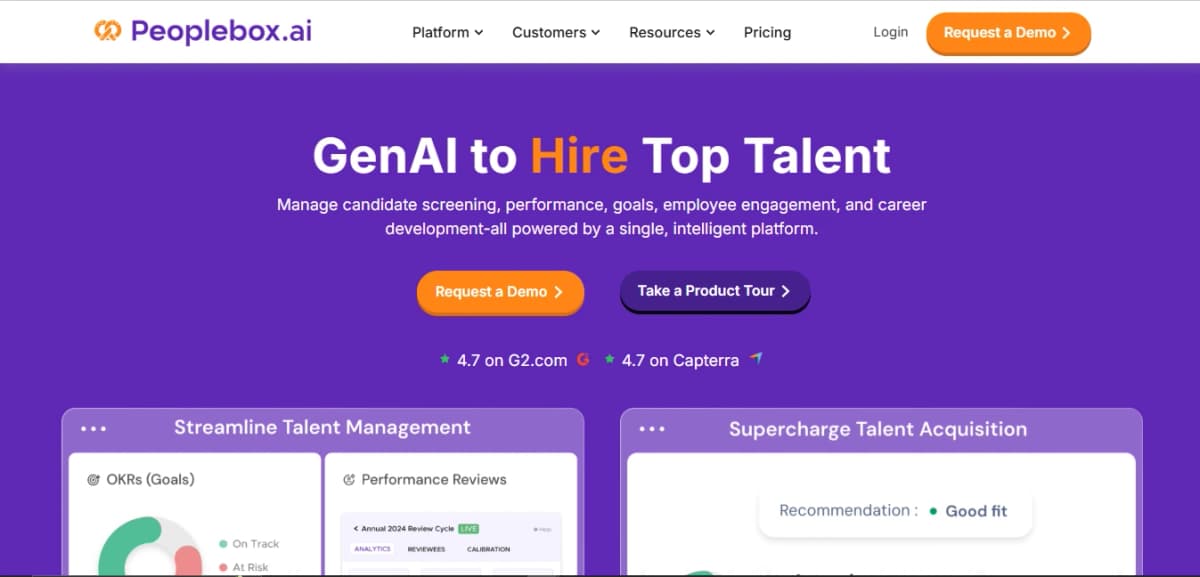
Peoplebox AI might not be the first name you think of for AI talent assessment, but it’s quietly changing the game, especially when it comes to internal hiring and performance reviews. It also supports leadership development and succession planning by helping organizations identify and nurture future leaders from within.
It combines AI capabilities with performance management and OKR tracking to give you a holistic view of your team, while enabling organizations to refine their workforce strategies based on real-time data and insights.
Rather than just focusing on external candidates, Peoplebox helps HR leaders identify who within the company is ready for the next role, who’s thriving, and who might need support.
It integrates with popular HR tools like BambooHR, Google Workspace, and Slack to keep everything connected and contextual. AI-generated insights help reduce bias in promotion and internal mobility decisions, and give managers clear visibility into both potential and performance.
Best for: Companies focused on internal hiring, growth, and performance alignment
Pricing: Custom, depending on company size and features
Cons: Not ideal for external candidate screening
7. Sova Assessment
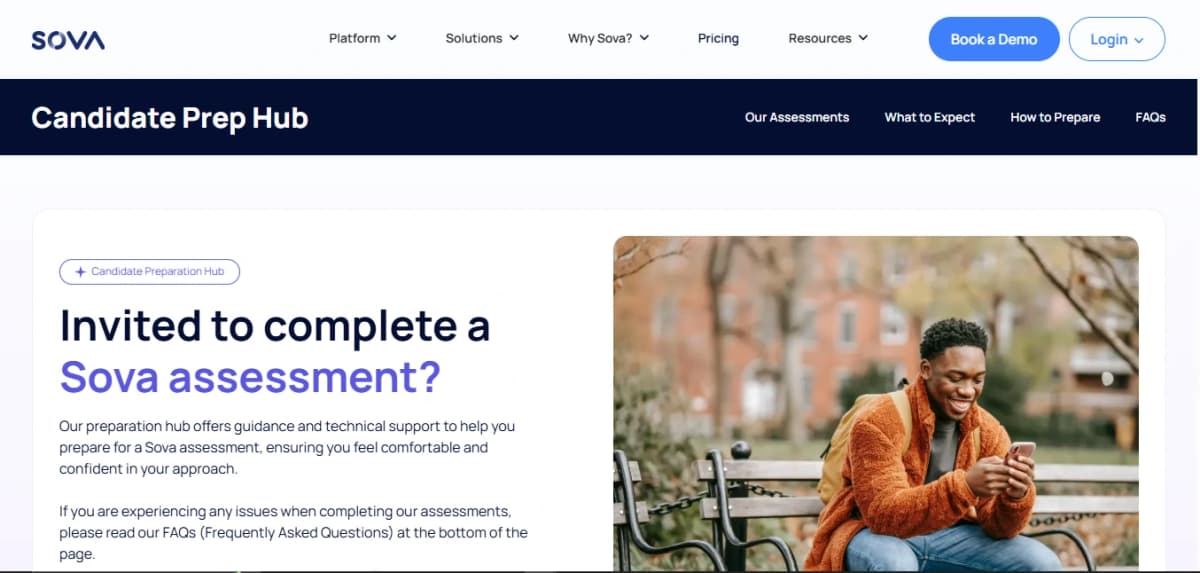
If your hiring process involves complex roles and careful evaluation, Sova Assessment delivers a flexible AI talent assessment platform that doesn’t cut corners.
Sova combines cognitive tests, personality assessments, and situational judgment scenarios, all analyzed with AI to deliver well-rounded candidate profiles. It’s popular in industries like finance, consulting, and law, where hiring decisions require both speed and nuance.
The AI works behind the scenes to evaluate large volumes of data from these assessments, surfacing the most relevant candidates while reducing bias and supporting the most critical talent decisions.
Plus, the platform’s reporting and analytics tools are some of the best in the space, helping hiring teams justify decisions, gain meaningful insights into candidates’ thinking and behavior, and improve their process over time. This makes it one of the top talent assessment tools
Best for: Organizations needing deeper candidate evaluation across multiple dimensions
Pricing: You’d have to book a Demo with them
Cons: Setup and calibration take time
8. Criteria Corp
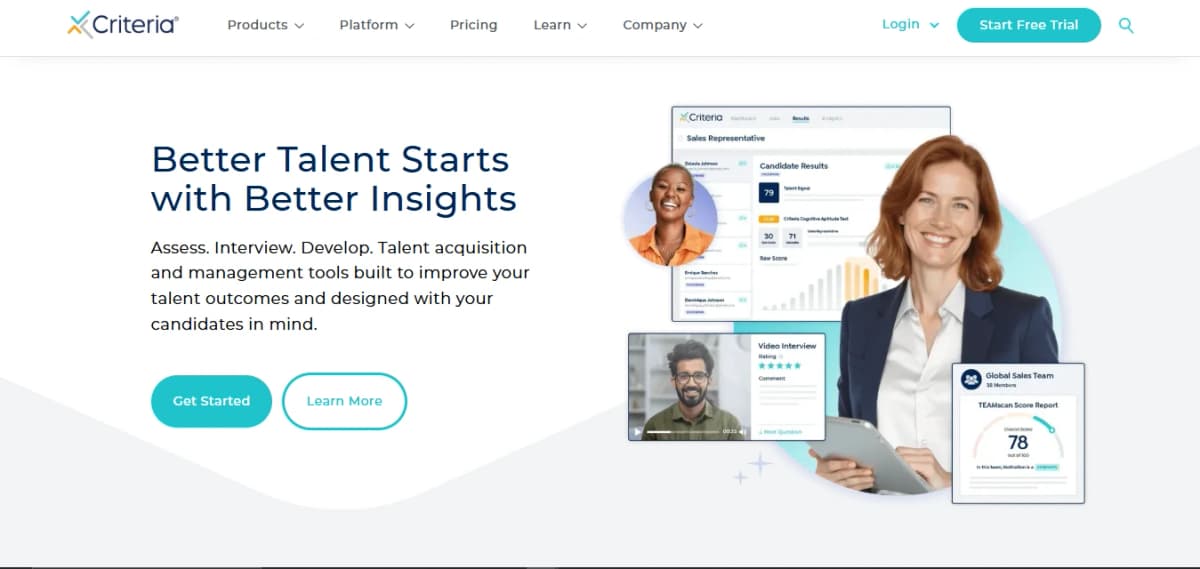
If you want science-backed hiring without the jargon overload, Criteria Corp offers an accessible and effective AI talent assessment platform.
It’s used by thousands of companies to predict job success through cognitive aptitude tests, personality inventories, and skills assessments.
What sets Criteria apart is its emphasis on validated assessments and reducing bias. Its tools are grounded in decades of industrial-organizational psychology, and everything is designed to help teams make fairer, more data-driven decisions.
The platform also includes structured interviews and video assessments, with AI helping to score responses based on consistency and relevance. It’s especially popular with mid-sized businesses looking for reliable hiring data without the enterprise-level complexity.
Best for: Mid-market teams wanting a scientific but user-friendly approach
Pricing: Tiered pricing based on features and usage
Cons: Limited customization for niche roles
For You: 9 Best AI Interview Scheduling Software for Hiring
9. iMocha
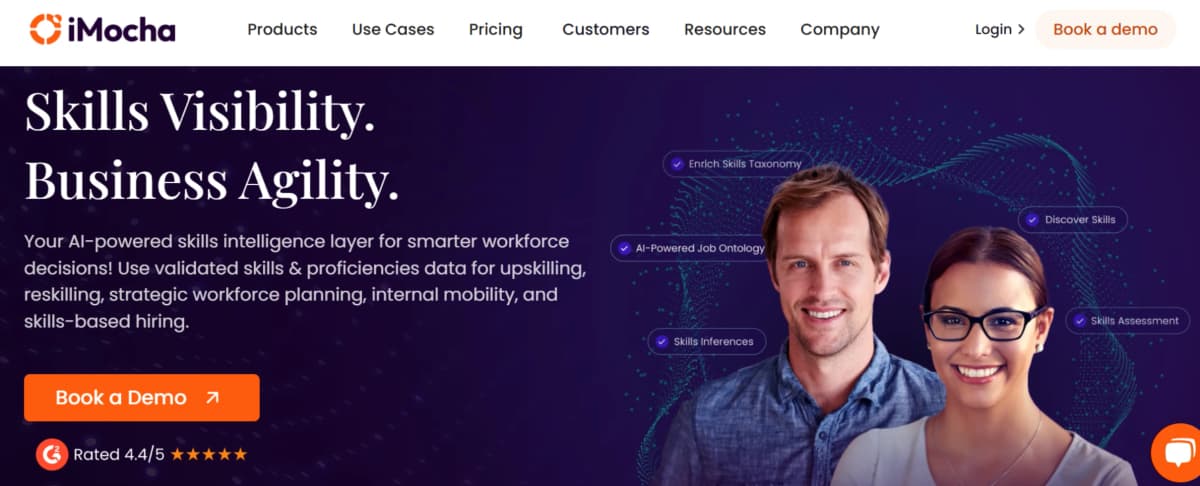
iMocha is a skills-first AI talent assessment platform built for companies that care more about what candidates can do than where they’ve worked.
It offers over 2,500 skills tests, from programming and cybersecurity to sales and finance, making it a go-to for global enterprises with complex hiring needs. iMocha’s assessments include scientifically validated tests to ensure reliability and accuracy, giving organizations confidence in their hiring decisions.
The platform’s AI doesn’t just grade tests, it also helps benchmark roles, generate customized assessments, and provide insights on skill gaps and assessment data across teams.
Whether you’re screening new candidates or reskilling existing employees, iMocha’s AI feature help you make smarter workforce decisions.
It integrates with major ATS tools, and offers features like proctoring, plagiarism detection, and benchmarking against global talent pools.
Best for: Large companies hiring for technical and non-technical roles at scale
Pricing: Custom pricing based on volume and features
Cons: UI can be a bit clunky for first-time users
Compare the Best Talent Assessment Tools
| Tool | Best For | Starting Price | Notable Features | Cons |
|---|---|---|---|---|
| HiveMind AI | Startups & fast-growing teams with flooded pipelines | Custom pricing (14-day free trial) | AI talent assessment trained on top performers, scheduling, smart notes, customizable workflows | Overkill for small hiring needs |
| HireVue | High-volume hiring across multiple roles | By request | On-demand video interviews, AI scoring from transcripts, game-based tests, structured interviews | Occasional tech issues in video interviews |
| Eightfold | Enterprise teams focused on skill-based hiring and internal mobility | By request | AI talent assessment via skill mapping, anonymous profiles, branded job board, internal project marketplace | Slows with large datasets or complex workflows |
| Harver | Hiring frontline workers at scale (e.g., retail, call centers) | By request | Job-specific AI talent assessments, cognitive/personality testing, bias-conscious, no résumé scanning | Less relevant for smaller teams |
| Skillate | Recruiters needing resume ranking & ATS integration | By request | AI talent assessment trained on 120M+ profiles, chatbot pre-screening, ATS integration | Struggles parsing resumes with images or non-standard formats |
| Peoplebox AI | Internal hiring, growth tracking, and performance-based assessments | Custom pricing | AI talent assessment for internal mobility, performance & OKRs, HR tool integrations | Not designed for external candidate sourcing |
| Sova Assessment | Deep evaluations for high-stakes, complex roles | By request | Multi-layered AI talent assessment (cognitive, personality, situational), advanced reporting | Setup and calibration require time |
| Criteria Corp | Mid-market teams needing validated, evidence-based hiring tools | Tiered pricing | AI talent assessments rooted in I/O psychology, video assessments, structured interviews | Limited role customization |
| iMocha | Enterprises focused on skill-based hiring at scale | Custom pricing | 2,500+ skills tests, AI-powered benchmarking, global talent insights, ATS integrations | Clunky UI for new users |
What to look for in Talent Assessment Tools
AI talent assessment tools promise to make hiring smarter, faster, and less biased. But not all tools are created equal, and the last thing you want is to replace human bias with algorithmic nonsense. The right talent assessment solution provides practical guidance for leaders, turning assessment data into actionable insights that support better hiring decisions. So before you commit to one, here are some things to look out for.
**1. Does it actually test the skills that matter?**Sounds obvious, but it’s easy to get swept up in AI buzzwords and forget the basics. If you’re hiring a front-end developer, make sure the tool isn’t just throwing generic personality quizzes at candidates.
Start by doing a proper job analysis, then look for AI talent assessment platforms that evaluate exactly what you care about, whether that’s Python proficiency or customer support empathy. The best tools let you tailor assessments to specific job requirements, ensuring you measure the skills and competencies that matter most.
**2. Does it back up its results with real-world performance?**A good AI talent assessment tool shouldn’t just tell you someone “seems promising”, it should prove it. Look for platforms that can show evidence their scoring correlates with on-the-job success. Bonus points if they’ve reduced turnover or boosted retention for other teams like yours. Assessment data should also be used to drive data driven development strategies, informing training programs and aligning workforce growth with your organizational goals.
**3. Is it fighting bias, not sneaking it back in?**AI is great at removing human bias, unless the training data was biased to begin with. Before you put your trust in a tool, make sure it’s not quietly favoring certain degrees, zip codes, or backgrounds.
The best talent assessment tools are transparent about how their models work and are designed to rank job candidates based on skill, not pedigree, ensuring you accurately assess candidates for both skills and fit.
**4. Can it play nice with your current stack?**You’re not looking for a whole new hiring universe, you just want something that fits into your existing workflow without making recruiters scream.
Make sure the AI talent assessment tool integrates smoothly with your ATS, calendar, job board, and whatever else you’re already using. Otherwise, you’re trading bias for chaos. Integration is also key for supporting the broader talent acquisition process, helping you source, assess, and hire talent efficiently.
**5. Does it improve the candidate experience?**Yes, AI can be efficient. But if your assessment feels like a dystopian puzzle challenge, you’ll lose good candidates before they finish.
The right AI talent assessment tool should feel intuitive and fair, something that helps candidates show what they can do, not trip them up with black-box logic and clunky UX. A positive assessment process can also reinforce company culture by creating a welcoming, employee-centric experience from the very first interaction.
Don’t Miss: The Best 9 Candidate Assessment Tools, Ranked by Accuracy
Let HiveMind Do the Heavy Lifting
Hiring at scale is no joke. When you’re juggling dozens or hundreds of applicants, it’s easy to lose hours trying to figure out who’s actually qualified. It’s times like these that an AI talent assessment tool like HiveMind can make a difference.
HiveMind AI can help you move beyond gut-feel hiring by automatically screening for the skills and traits that actually matter. From fast, job-relevant assessments to AI-powered candidate matching, it takes care of the heavy lifting, so your team can spend more time connecting with the right people. With robust assessment insights, HiveMind empowers organizations to make critical talent decisions with confidence, ensuring every hire is backed by data-driven precision.
FAQs about AI Talent Assessment
Which AI tool is best for assessment?
Tools like HiveMind, iMocha, and Sova are top choices for AI talent assessment, depending on the role and skill type.
Which AI tool is best for recruitment?
HiveMind is a strong option for AI-driven recruitment, combining sourcing, screening, and AI talent assessment in one platform.
What is an AI assessment tool?
An AI assessment tool uses artificial intelligence to test candidates’ skills and predict job performance.
What is a talent assessment tool?
A talent assessment tool helps employers evaluate a candidate’s skills, traits, and job fit, often using AI to improve accuracy.