

Not overnight, on the evidence so far. S&P Global Ratings expects six hyperscalers to spend more than $1.3 trillion by 2027 while their free operating cash flow runs negative, and the Nasdaq confirmed a correction on November 5, 2026. Forrester's model still reads healthy, though. The likelier path is a correction: tighter funding, consolidation, cheaper AI tools and more pressure to prove returns.
Artificial intelligence has become one of the biggest investment stories in modern technology. Billions of dollars are flowing into AI companies, data centres, chips and software development, with businesses racing to adopt the technology before their competitors do. However, growing investment costs, questionable valuations and concerns about profitability are raising an uncomfortable question: is the AI industry heading towards a bubble?
Recent market turbulence suggests investors are becoming less willing to accept promises of future returns without evidence of sustainable profits. While this does not mean AI is about to disappear, it could mark the beginning of a significant correction. For startups and established businesses, the next phase may bring cheaper technology, fewer speculative companies, tighter investment conditions and greater pressure to demonstrate measurable returns.
Understanding what could happen next will help founders make better technology investments, manage development budgets and avoid building their businesses around assumptions that may not survive a market correction.
Key facts
- S&P Global Ratings expects combined capital expenditure by six major hyperscalers to exceed $1.3 trillion by 2027.
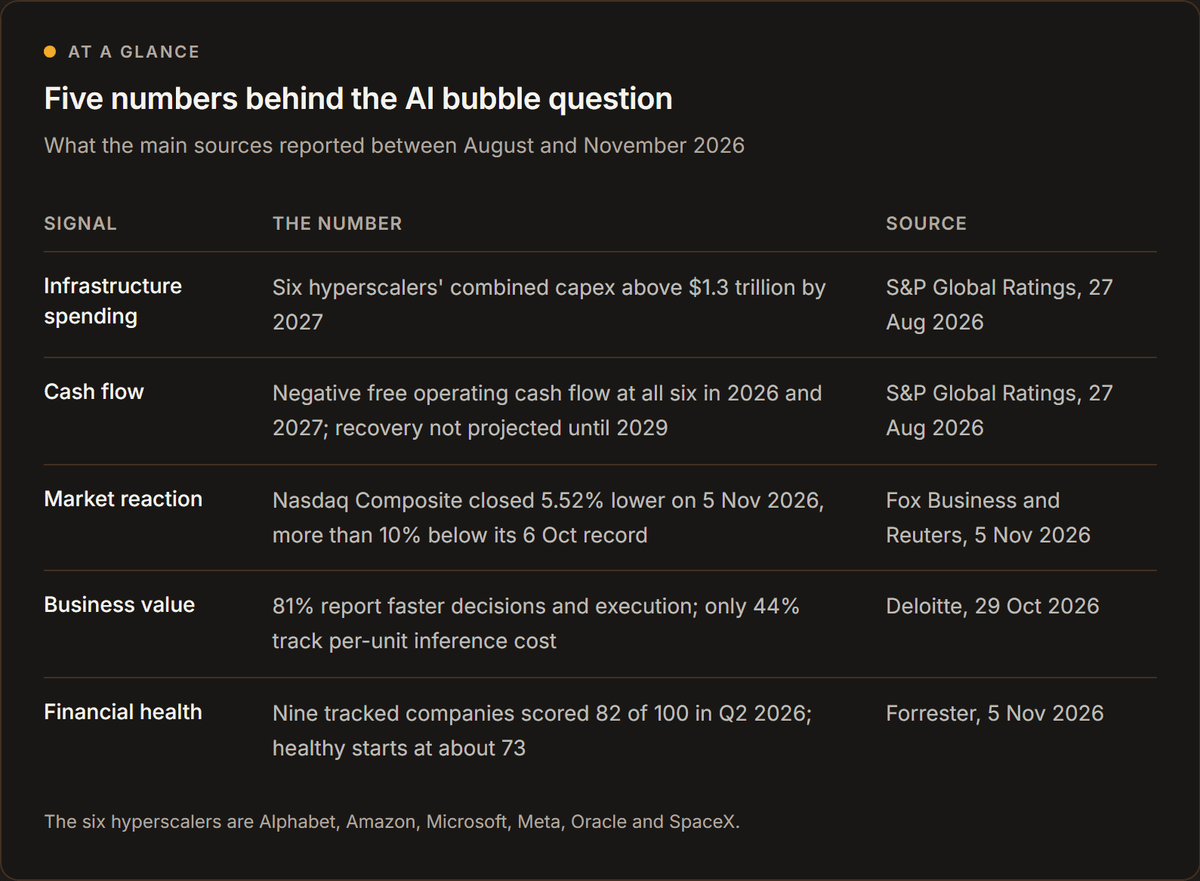
- The same six hyperscalers are expected to experience negative free operating cash flow across 2026 and 2027, with recovery not projected until 2029.
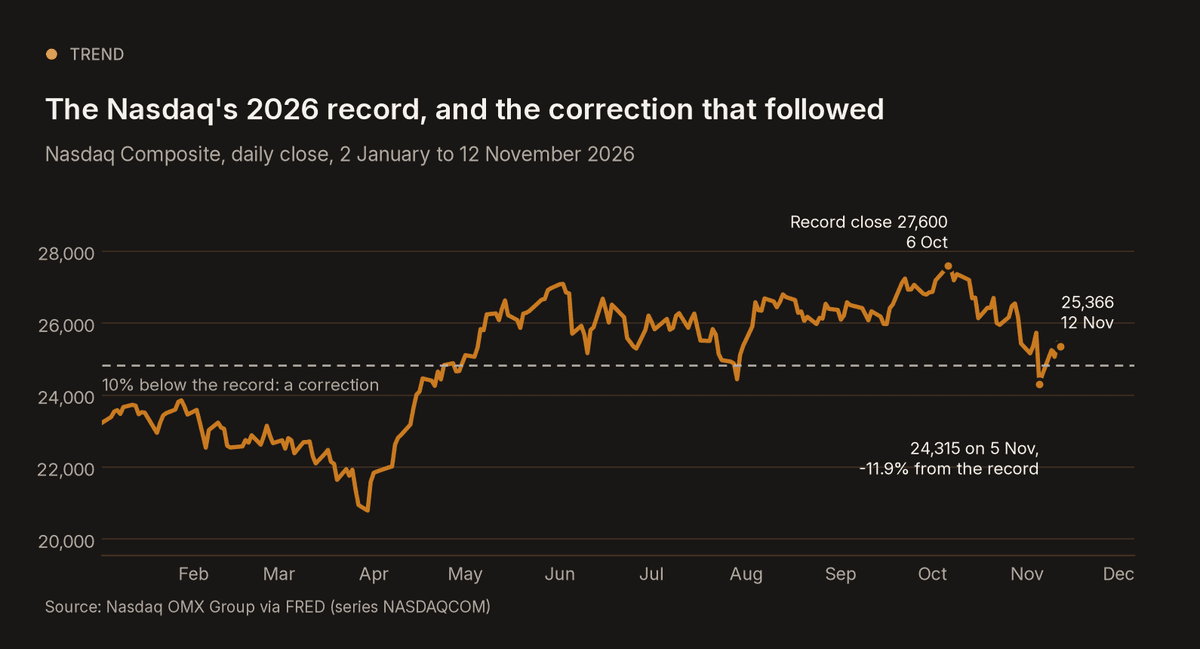
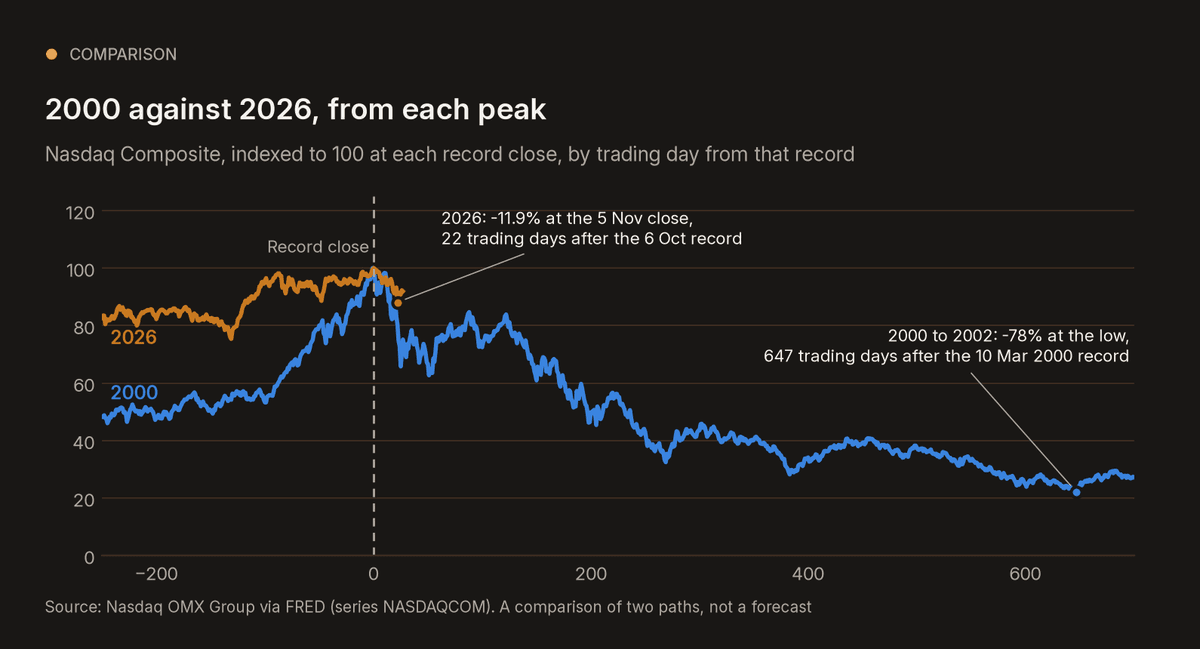
- The Nasdaq Composite closed 5.52% lower on November 5, 2026, more than 10% below its October 6 record, as concerns about AI spending and profitability contributed to a wider technology sell-off.
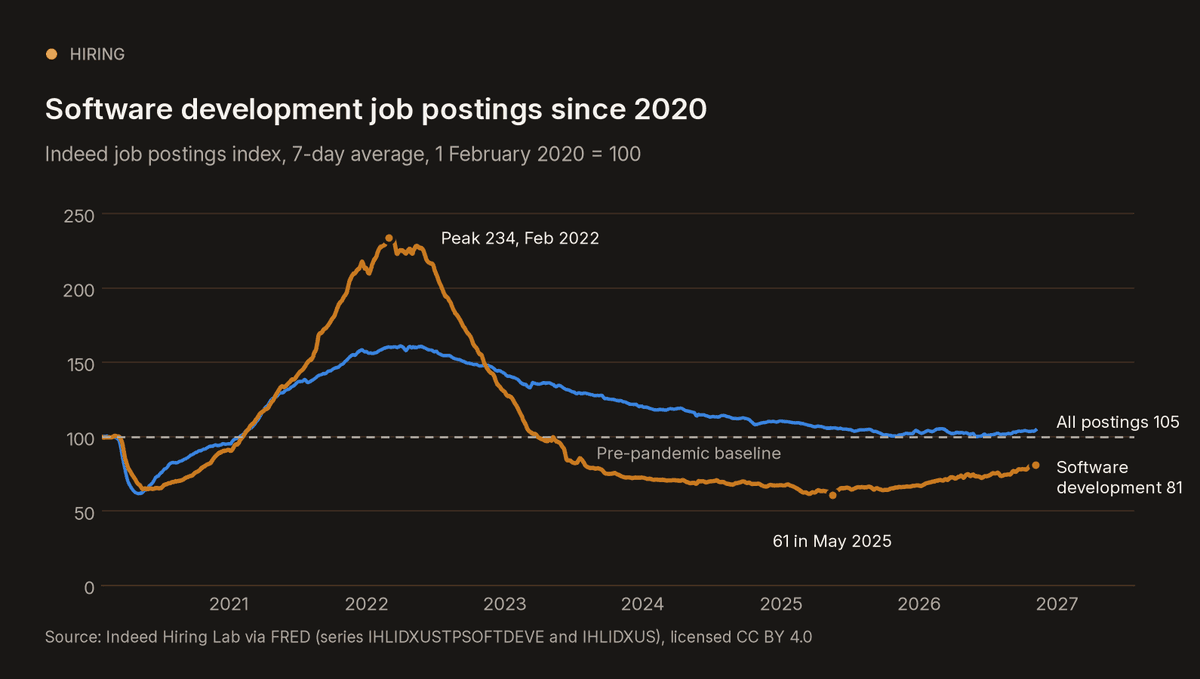
- Software development job postings on Indeed stood at 81 on November 6, 2026 (February 2020 = 100), about 19% below their pre-pandemic level and far below their 2022 peak of 234.
- Deloitte's October 2026 research found that 81% of surveyed companies reported faster decision-making and execution through AI, although financial returns remain uneven.
- The next phase of AI development is likely to place greater emphasis on profitability, practical applications and measurable business value rather than investment enthusiasm alone.
In this article
- Is the AI industry actually in a bubble?
- Why is the AI bubble at risk of bursting?
- What happens when the AI bubble bursts?
- Will AI development stop after the bubble bursts?
- How should startups prepare for an AI market correction?
- Conclusion: what should founders expect from the next phase of AI?
- Frequently asked questions
Is the AI industry actually in a bubble?
An economic bubble occurs when the value of an asset, industry or market rises beyond what its underlying financial performance can reasonably support. Investors continue putting money into the market because they expect prices to increase, rather than because the underlying businesses are generating enough revenue to justify their valuations.
The AI industry displays several characteristics associated with previous technology bubbles. Companies are attracting enormous investments, valuations are climbing rapidly and businesses are spending heavily on infrastructure in anticipation of future demand.
However, there is an important distinction between the AI technology itself and the financial market surrounding it. AI is already being used in software development, customer service, research, data analysis and business automation. Its practical applications are not imaginary.
The concern is whether the amount of money being invested can generate sufficient returns to justify the spending.
Forrester's November 2026 analysis argues that an immediate collapse is not inevitable. Its AI Bubble Model found that the financial health of the nine major companies it tracks remained in the healthy range during the second quarter of 2026, although warning signs were emerging. The nine scored 82 out of 100, with the healthy range starting at about 73, and Forrester says third-quarter filings indicate that the cushion is wearing thin.
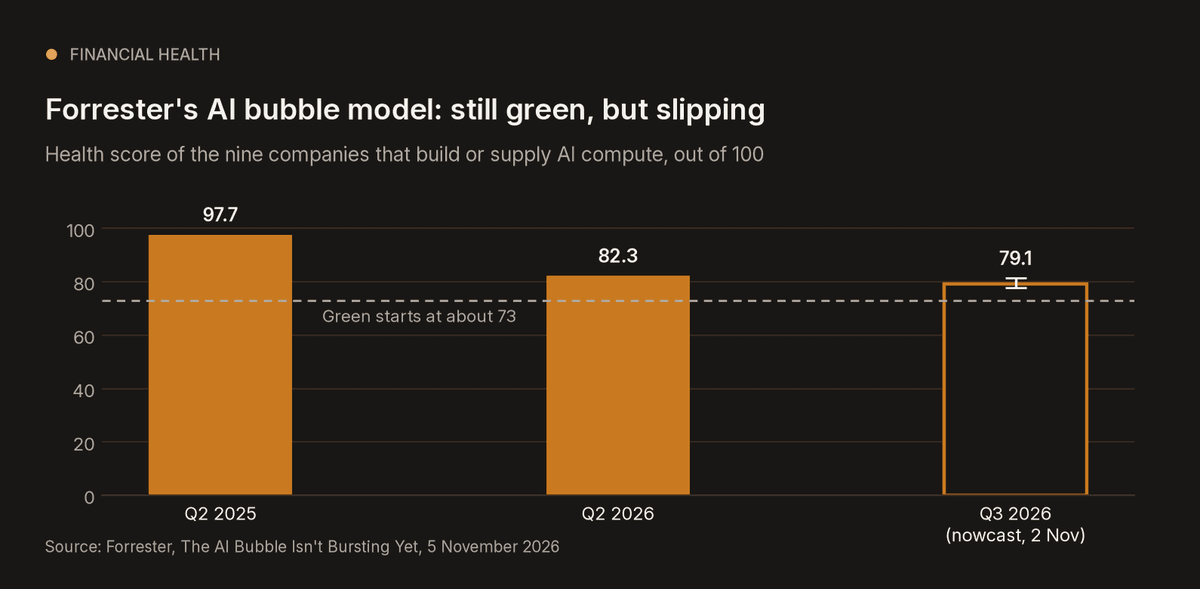
This suggests that the industry may be entering a period of financial pressure rather than facing an unavoidable overnight collapse. Some companies may struggle, valuations could fall and investment decisions may become more conservative without the underlying technology losing its importance.
Why is the AI bubble at risk of bursting?
Several financial and commercial pressures are converging, making it increasingly difficult for investors to overlook the gap between AI spending and the returns being generated.
AI infrastructure is becoming extremely expensive
Developing and operating AI systems requires substantial computing power, specialist chips, data centres, electricity and cooling infrastructure. These costs are particularly significant for companies developing large AI models and cloud-based services.
The scale of investment is becoming difficult to ignore. S&P Global Ratings estimates that combined capital expenditure by six major hyperscalers (Alphabet, Amazon, Microsoft, Meta, Oracle and SpaceX) could exceed $1.3 trillion by 2027.
The problem is that infrastructure spending happens before companies necessarily know how much revenue it will generate. Businesses are committing enormous amounts of capital today in the expectation that demand will continue growing over the coming years.
If adoption slows or customers are unwilling to pay enough for AI services, some of that infrastructure could become financially difficult to justify.
Investors want profits, not promises
For much of the AI boom, investors have been willing to fund companies based on their potential rather than their current profitability.
That approach becomes more difficult to sustain when valuations rise faster than revenue. Investors eventually want to see how businesses intend to turn technological capabilities into consistent income.
The November 2026 market sell-off reflects this changing attitude. Reuters reported that concerns about the profitability of AI infrastructure investments contributed to a significant decline in technology stocks, with investors questioning how quickly companies could recover their spending. The Nasdaq Composite closed 5.52% lower that day, more than 10% below its October 6 record, which confirmed a correction.
AI businesses will increasingly need to demonstrate that customers are willing to pay for their products and that the resulting revenue can support their operating costs.
AI companies are increasingly dependent on external financing
Another concern is how much of the infrastructure boom depends on borrowing, investment agreements and other financing arrangements.
S&P Global Ratings has warned that major hyperscalers are increasingly using debt, leases, guarantees and other financial structures to fund their expansion.
This creates additional risk if credit becomes more expensive or investors become reluctant to finance further development. A Reuters analysis in October cited a paper by Columbia Business School economist Stijn Van Nieuwerburgh, which warns that with this much borrowing, "a relatively modest deterioration in demand, delays, or asset values can therefore produce much larger losses."
A company can continue spending while money is readily available. However, if financing becomes harder to secure, planned projects may be delayed or cancelled.
The consequences could extend beyond AI developers to chip manufacturers, data-centre operators, cloud providers and businesses supplying the wider technology industry.
Businesses are still working out how to measure the value of AI
AI adoption is growing, but using a technology and generating a financial return from it are two different things.
Deloitte's October 2026 research found that 81% of surveyed companies reported faster decision-making and execution through AI. However, the organisation also identified difficulties with redesigning workflows, governance and measuring the costs associated with AI usage. The survey of 3,500 business and IT leaders across 25 countries found that only 44% track per-unit inference cost, and that financial returns are taking longer to materialise.
This matters because businesses cannot justify unlimited spending simply because a technology is useful.
If an AI subscription costs more than the time or resources it saves, the investment may not make commercial sense. Companies will increasingly need to evaluate AI according to its contribution to revenue, productivity and operating efficiency.

What happens when the AI bubble bursts?
A correction would not necessarily mean that the entire AI industry collapses. It would more likely involve a period of consolidation, during which weaker companies struggle to secure funding and established businesses become more selective about their investments.
For founders, developers and technology leaders, several changes are worth preparing for:
1. AI startups will face tougher funding conditions
Startups that have relied on investor enthusiasm rather than sustainable business models could find themselves under pressure.
Investors may become less willing to fund companies with limited revenue, expensive operating requirements or products that are difficult to differentiate from competitors.
Businesses will need to demonstrate customer demand, a clear route to profitability and a realistic plan for managing development costs.
Some startups may close, while others could be acquired by larger technology companies looking to absorb their intellectual property, engineering teams or customer bases.
2. AI technology could become more affordable
A market correction could also create opportunities for businesses.
As competition increases and companies fight to retain customers, AI providers may lower prices, introduce more flexible subscription models and improve the efficiency of their products.
Infrastructure providers could also face pressure to make computing resources more affordable.
This could benefit smaller businesses that have previously struggled to justify the cost of adopting advanced AI tools.
However, cheaper technology does not automatically mean cheaper implementation. Businesses will still need developers, integration work, security measures and ongoing maintenance to make AI useful within their existing systems.
3. Companies will become more selective about AI projects
The pressure to adopt AI simply because competitors are doing so is likely to decrease.
Instead, businesses will need to identify specific problems that AI can solve and calculate whether the expected benefits justify the investment.
Projects that automate repetitive administrative work, improve customer response times or reduce development bottlenecks may remain attractive because their value can be measured.
More experimental projects without a clear commercial purpose could be postponed.
This shift should encourage better technology planning. Rather than investing in every new AI product, businesses will need to prioritise applications that support their actual operations.
4. Technology companies will consolidate
A crowded market cannot support an unlimited number of companies offering similar products.
If funding becomes harder to obtain, smaller AI businesses may struggle to compete with established providers that have greater financial resources, infrastructure and customer bases.
Some companies will disappear, while others may merge or be acquired.
This could leave the market with fewer providers, but potentially stronger businesses with more established products and clearer revenue models.
For customers, consolidation may create uncertainty around subscriptions, product support and long-term access to certain platforms. Businesses should therefore avoid becoming overly dependent on a single AI provider without considering alternatives.
5. Developers will face changing expectations
The AI boom has changed how businesses approach software development. AI coding assistants and automated development tools have made certain tasks faster, but they have not removed the need for skilled engineers.
If the market corrects, businesses may become more careful about hiring and more demanding about what development teams deliver.
Software hiring has already been through one reset. Indeed's index of software development job postings stood at 81 on November 6, 2026, against 100 in February 2020: about 19% below its pre-pandemic level, and far below its 2022 peak of 234. Postings across all jobs stood at 105. The software index was still up about 24% on a year earlier, when it stood at 66, so a correction would arrive while developer hiring is recovering, not booming.
Developers who can evaluate AI-generated code, integrate different systems, identify security weaknesses and build reliable applications will remain important.
The emphasis may shift away from simply using AI tools towards knowing how to apply them effectively within real business environments.
Will AI development stop after the bubble bursts?
Unlikely. A financial correction does not mean the underlying technology has failed.
The dot-com crash provides a useful comparison. During the late 1990s, investors poured money into internet businesses, often assigning enormous valuations to companies with limited revenue and uncertain business models.
When the bubble burst around 2000, numerous businesses failed and technology stocks suffered significant losses. However, the internet continued developing and eventually became fundamental to commerce, communication and modern business operations.
The Nasdaq Composite fell 78% from its March 2000 record to its October 2002 low. On November 5, 2026, it was 12% below its October 6 record.
AI could follow a similar trajectory.
The companies attracting the most attention today will not necessarily become the long-term industry leaders. Some products may disappear, while others could become considerably more useful as the technology improves.
The distinction is that a technology can be commercially transformative without every company developing it becoming financially successful.
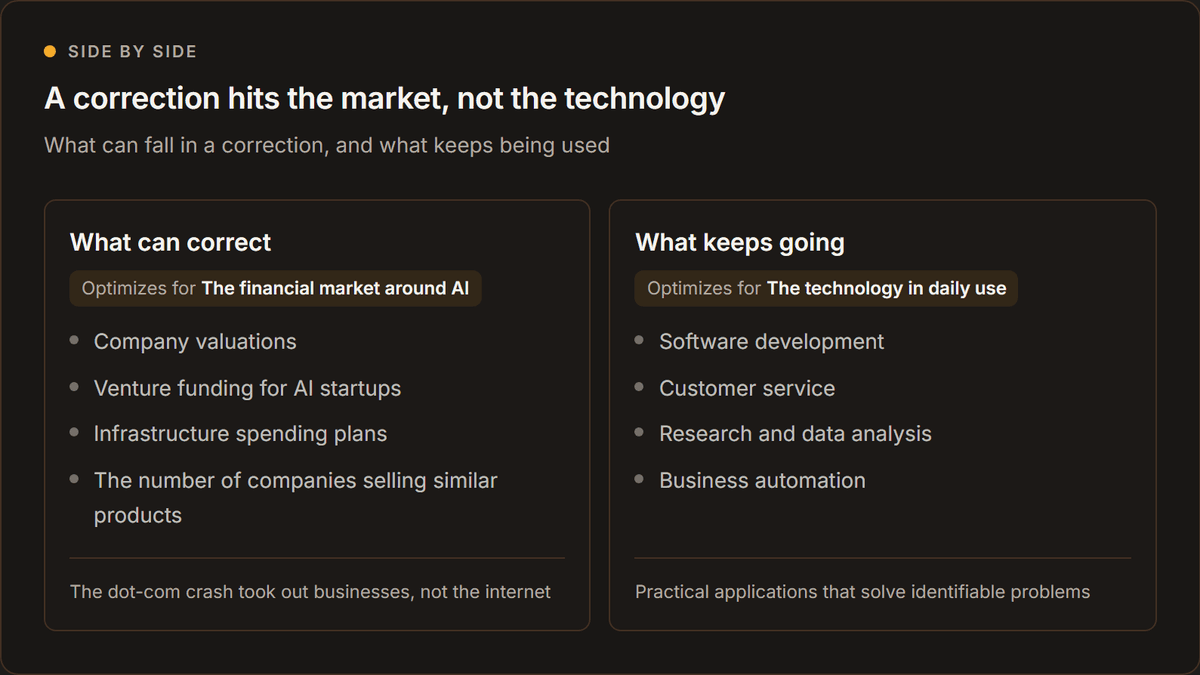
For businesses, this means there is little reason to abandon AI altogether. However, there are good reasons to avoid treating every new AI product as an essential investment.
The strongest long-term opportunities are likely to come from practical applications that solve identifiable problems and deliver measurable results.
How should startups prepare for an AI market correction?
Startups often have less financial flexibility than established businesses. They cannot afford to spend heavily on technology that does not contribute to growth or improve their operations.
Preparing for a potential correction does not mean avoiding innovation. It means making decisions that remain financially sensible even if investment conditions change.
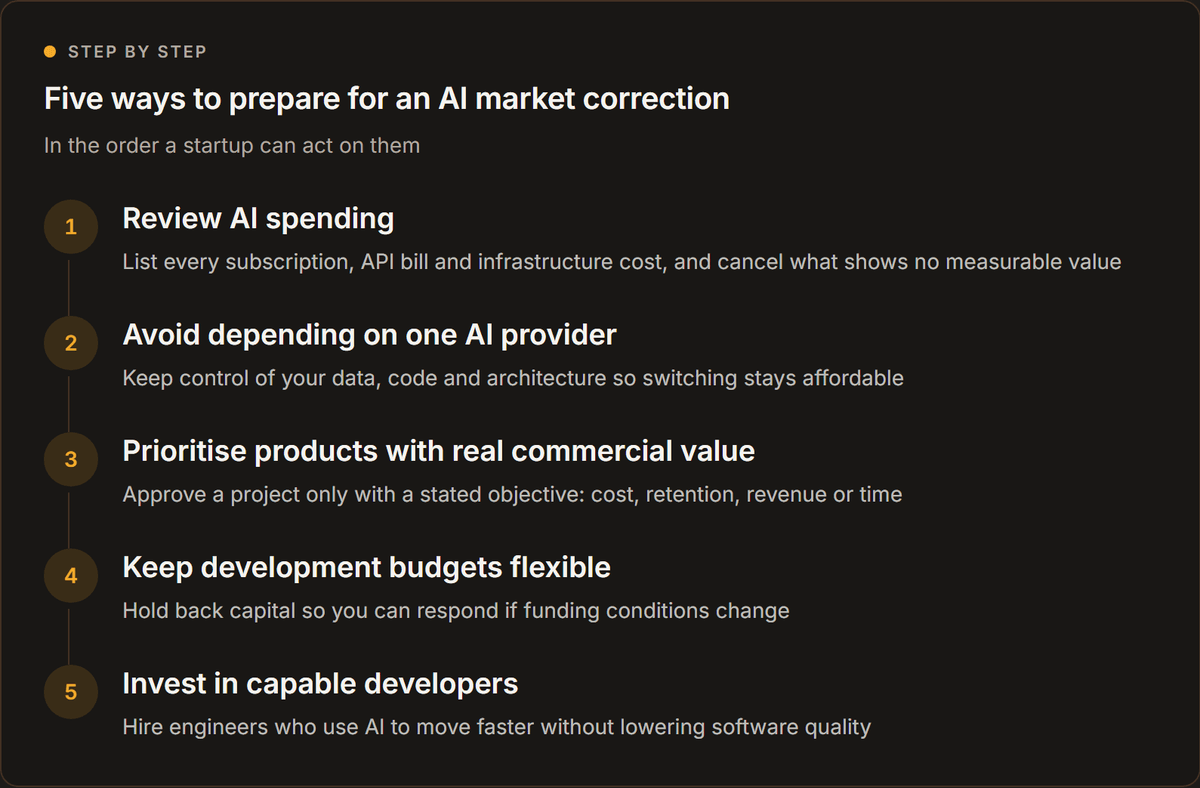
Review AI spending
Start by identifying every AI-related expense, including subscriptions, API usage, development costs and infrastructure.
Determine which tools are genuinely improving productivity or generating revenue. Cancel or replace services that duplicate existing capabilities or provide little measurable value.
It is also worth monitoring usage-based pricing. A tool that appears inexpensive initially could become costly as the business scales.
Avoid depending on one AI provider
Building an entire product around one provider can create problems if pricing changes, services become unavailable or the company changes its product offering.
Where practical, businesses should consider alternative providers and maintain control over their own data, code and application architecture.
This does not mean every system needs to support multiple AI models from the beginning. It means avoiding unnecessary technical decisions that make switching providers prohibitively expensive.
Prioritise products with real commercial value
Before approving an AI project, founders should establish what it is expected to achieve.
Will it reduce operating expenses? Improve customer retention? Help the business generate additional revenue? Reduce the time required to complete important tasks?
A clear objective makes it easier to evaluate whether the investment is worthwhile.
Keep development budgets flexible
Startups should avoid committing their entire technology budget to speculative AI projects.
A more flexible approach allows founders to invest in useful developments while retaining enough capital to respond to changing market conditions.
This is particularly important for early-stage companies that may need to demonstrate financial discipline to secure their next funding round.
Invest in capable developers
AI tools can accelerate development, but businesses still need people who understand how software works.
Developers are responsible for architecture, integration, testing, security and the decisions that determine whether an application can operate reliably.
Hiring based exclusively on the ability to use AI coding tools could leave businesses with applications that are difficult to maintain or scale.
The more valuable investment is in engineering talent that can use AI to improve development efficiency without compromising software quality.
Conclusion: what should founders expect from the next phase of AI?
The next stage of AI development will probably look different from the investment-driven expansion of recent years.
The market may become less forgiving of companies that cannot demonstrate commercial value. Funding could become more selective, infrastructure investments may slow and some AI businesses may struggle to survive.
However, businesses should not confuse a possible financial correction with the end of AI innovation.
AI is likely to become increasingly integrated into software development and everyday business operations. The difference is that companies will need to become more deliberate about how they use it.
For founders, the most important lesson is to avoid building a business strategy around market hype. Invest in technology that solves real problems, keep development costs under control and work with people who can turn promising ideas into reliable products.
The AI bubble may eventually burst, but the technology will remain. The businesses that emerge in the strongest position will be those that understood the difference between investing in a trend and building something that customers actually need.
How Hivemind handles hiring when budgets tighten
An AI market correction could make every hire count for more.
When investment becomes harder to secure, founders need to be more careful about how they allocate their budgets. They may still need to build AI-enabled products, improve existing platforms or integrate automation into their operations, but they will have less room for expensive development decisions that do not produce meaningful results.
Rather than treating AI as a replacement for engineering talent, businesses can use it alongside experienced developers to improve productivity and build practical software.
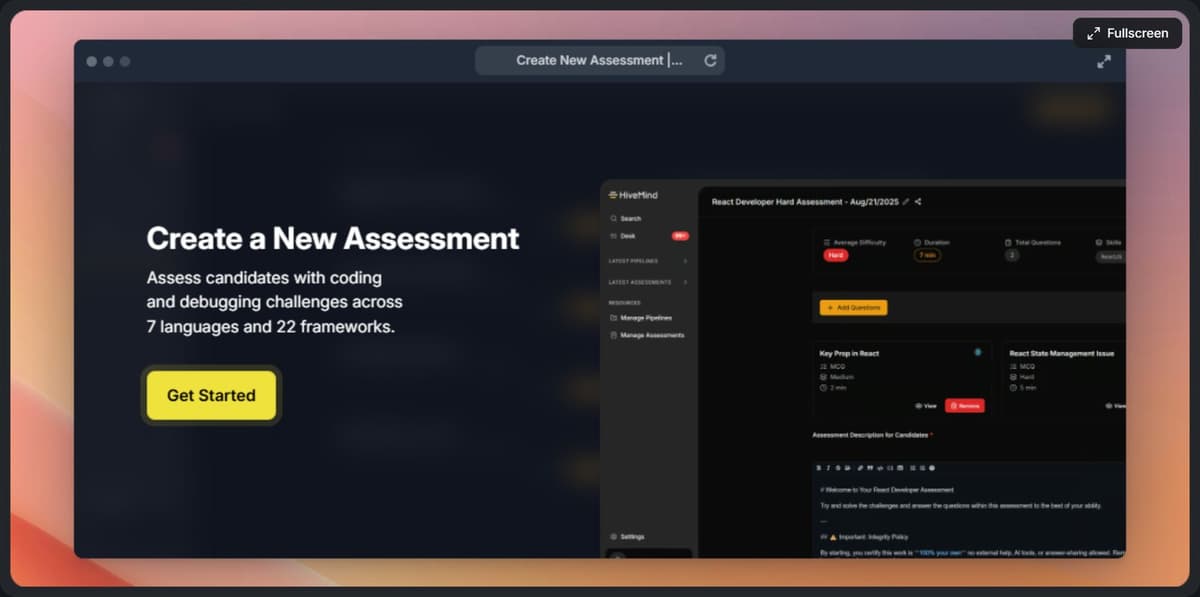
That makes the hiring process itself part of the budget. Hivemind is the hiring OS: manage every candidate from inbound to offer in one unified workflow. The modules closest to a careful technical hire are these:
- Resumatic: AI-Powered Resume Filtering System
- Automated Skills Assessments
- Automatic Video Assessment: AI-Powered Video Interview Analysis
- Automated Emails: Smart Email Automation for Recruitment
You can run Hivemind end to end, connect your existing tools, or mix and match both.
The objective should not be to spend less on technology at any cost. It should be to ensure that development spending supports a product, solves a business problem and creates long-term value.
As the AI market matures, businesses that combine appropriate technology with capable engineering teams will be better positioned to adapt.
Frequently asked questions
Is the AI bubble about to burst?
There are growing signs of financial pressure in the AI industry, including high infrastructure costs, ambitious company valuations and questions about profitability. However, a complete collapse is not inevitable. A gradual market correction and consolidation may be more likely than the disappearance of the industry.
What happens if the AI bubble bursts?
A correction could result in falling company valuations, reduced venture capital funding, business closures and industry consolidation. AI providers may also face pressure to lower prices and demonstrate stronger commercial returns.
Will AI disappear if the bubble bursts?
No. A financial bubble and the underlying technology are separate things. Even if some AI companies fail, the technology will continue developing and being adopted by businesses.
Will AI become cheaper after the bubble bursts?
It is possible. Increased competition and pressure to attract customers could lead to lower subscription prices and more affordable infrastructure. However, development, integration and maintenance will continue to involve costs.
Will AI replace software developers?
AI can automate certain coding tasks and accelerate development, but businesses still need developers to design systems, review generated code, manage integrations and ensure applications are secure and reliable. Developers who can use AI effectively alongside their engineering expertise are likely to remain valuable.
Should startups continue investing in AI?
Yes, provided investments have a clear business purpose. Startups should prioritise applications that improve productivity, reduce costs or generate revenue rather than adopting AI simply because it is popular.
How can businesses protect themselves against an AI market correction?
Businesses can reduce risk by reviewing AI expenditure, avoiding unnecessary dependence on individual providers, keeping development budgets flexible and prioritising projects with measurable returns.
Will an AI market correction affect technology hiring?
It could. Companies may become more selective about recruitment and place greater emphasis on technical capability, cost efficiency and practical experience. Developers who can build, integrate and maintain reliable software will remain important even if hiring slows in some areas. Software development postings on Indeed were still about 19% below their February 2020 level in early November 2026, up about 24% on a year earlier.
Sources
- Deloitte, Enterprise AI Enters an ROI Reckoning: More Use, Uneven Value, 29 October 2026
- Forrester, Brian Hopkins, Kevin Ogunsua and Michael O'Grady, The AI Bubble Isn't Bursting Yet: Here's What To Watch Using Our Model, 5 November 2026
- Indeed Hiring Lab, Job Postings on Indeed: Software Development and all US postings, via FRED, data to 6 November 2026, CC BY 4.0
- Nasdaq OMX Group, NASDAQ Composite Index, via FRED, data to 12 November 2026
- Reuters, Stephen Eisenhammer, AI's Race to Transform the World Before the Money Runs Out, 3 October 2026 (The Star's copy)
- Reuters, Utkarsh Hathi and Johann M Cherian, Nasdaq Set to Confirm Correction as AI Spending Worries Mount, 5 November 2026 (Kitco's copy)
- Fox Business, Nasdaq tumbles 5%, Dow plunges more than 1,800 points, 5 November 2026
- S&P Global Ratings, AI Infrastructure Investment To Exceed $1.3 Trillion By 2027, 27 August 2026