
Hiring can be fun, meeting new people, discovering what they’re great at, and imagining how they might fit into your team. But that fun usually lasts only as long as the candidate list stays small. Once you’re dealing with hundreds or even thousands of applicants, everything changes. That’s exactly what high volume recruiting feels like, and it’s where the stress often starts to outweigh the excitement.
2026 recruiting trends show that recruiting demands are higher than ever. Recent 2026 hiring benchmarks also show that about 88% of employers now use AI in recruitment, helping them reduce time-to-hire by up to 50% compared with traditional methods.
With talent shortages tightening pipelines and teams scaling faster, recruiters are expected to move quickly without sacrificing quality or candidate experience, and this is why high volume hiring isn’t just about volume; it’s about velocity and precision. Sifting through waves of resumes, coordinating bulk interviews, and still choosing the best talent, all while making each candidate feel valued, is not an easy task. Without the right bulk hiring strategies, teams can burn out, lose top candidates, or miss compliance risks altogether.
That’s where smart approaches, and smart technology come in. This 2026 guide breaks down the most effective strategies for high volume recruiting, from talent pipeline design and talent acquisition automation to scalable workflows and compliance best practices.
You’ll learn how top teams use data, structure, and AI to hire faster, retain better talent, and build fast hiring systems that actually scale without chaos.
What Is High Volume Recruiting?
High volume recruiting refers to the recruitment of a high number of candidates within a short period of time. This type of recruiting has become quite common recently, especially in high operating industries that demand rapid growth and a huge and experienced workforce to function, like the tech industry, the manufacturing industry, logistics and even customer service.
A typical recruitment process like this may involve dealing with hundreds of roles at the same time and large numbers of applicants while also needing to close the pipeline quickly so the candidates can get started on the job ASAP. Sometimes, a lot of high volume stakeholders are involved, from client to fellow recruiters, and it can be quite a task to handle.
Top Pick: AI-Powered Recruitment for Early-stage Startups: Top 7 Tools
Related:How RocketDevs Runs 20,000 Interviews per Month with HiveMind AI
Example of High Volume Recruiting
Here’s a typical example of high volume recruiting in action:
Company: SwiftCart (Global E-commerce Retailer)
Situation:
SwiftCart is preparing for a major expansion into three new regions ahead of peak shopping season. To support warehouse operations, last-mile delivery, and customer service, the company needs to hire 800 employees in four months. Roles range from warehouse associates and shift supervisors to logistics coordinators and remote support agents.
The challenge? Application volumes are massive, turnover risk is high in frontline roles, and delays could disrupt fulfillment timelines and customer satisfaction.
Recruiting Strategy
Instead of treating this as regular hiring at a bigger scale, SwiftCart built a dedicated high volume recruiting workflow designed for speed and consistency.
- Workforce Planning First
Operations and HR mapped out hiring needs by location, shift type, and skill level. This prevented overhiring in some hubs and shortages in others.
- Recruitment Automation for Screening
AI-driven screening tools were used to automatically filter thousands of applications based on availability, location proximity, and basic job requirements. This cut manual resume review by over half.
- Bulk Interview Days
SwiftCart scheduled “hiring events” both in-person and virtual, allowing recruiters to interview dozens of candidates per day using structured interview templates.
- Talent Pipeline Building
Candidates who weren’t selected immediately but met baseline requirements were added to a talent pipeline for future roles, reducing the need to start from scratch later.
- Fast Offer and Onboarding Process
Pre-approved compensation bands and digital offer letters helped the team move from interview to offer within 48 hours for most roles.
Outcome:
Through a structured recruiting approach, SwiftCart filled 92% of open roles before peak season, reduced time-to-hire by several weeks, and improved new-hire retention because candidates experienced a fast, organized process.
The company also built a reusable talent pipeline that made future bulk hiring faster and less stressful.
This example shows that high volume recruiting isn’t just about hiring more people; it’s about building systems that let you hire faster, smarter, and at scale without overwhelming your team.
Challenges You May Face During High Volume Recruiting

High volume recruiting sounds exciting in theory, but in reality it’s not, cause now you have to juggle spreadsheets, inboxes, and interview calendars at the same time. When hiring scales from a handful of roles to dozens or hundreds, the cracks in your recruiting process show up fast, and here’s some of them:
-
Application Overload
The most obvious challenge in high volume recruiting is sheer volume. A single role can attract hundreds or thousands of applications.
Manually reviewing every resume becomes unrealistic. Great candidates can get buried, while unqualified ones still take up time. Recruiters end up spending hours sorting instead of actually recruiting.
-
Quality Gets Lost in Quantity
More applicants doesn’t automatically mean better hires. One of the hardest parts of the task is identifying the right talent in a sea of unqualified candidates.
You’re not just hiring for skills, you’re hiring for reliability, cultural fit, and long-term performance. Without structured screening, it can feel like searching for one strong signal in a lot of noise.
-
Time Pressure Leads to Risky Decisions
High volume hiring usually comes with aggressive deadlines. Roles need to be filled yesterday.
This pressure can lead to:
-
Rushed interviews
-
Skipped assessments
-
Overreliance on gut feeling
When speed overtakes structure, hiring quality suffers, and bad hires are far more expensive than slow ones.
-
Candidate Experience Breaks Down
As high volume recruiting scales, communication often becomes the first casualty.
Candidates experience:
-
Delayed responses
-
Missed updates
-
Inconsistent interview processes
This damages your employer brand. Even candidates you hire may start their job already feeling like just another number.
-
Recruiter Burnout
High-volume environments multiply repetitive tasks: scheduling, follow-ups, note-taking, status updates. Instead of building relationships, recruiters become process administrators.
Over time, this leads to fatigue, lower engagement, and mistakes, all of which impact hiring outcomes.
The Bottom Line
High volume recruiting doesn’t fail because of effort, it fails because of scale. What works for 10 hires breaks at 200.
The good news however, is that these challenges aren’t signs that your team is doing poorly; they’re signals that your process needs structure, automation, and better systems. And that’s exactly where modern recruitment automation and AI-driven tools change the game.
Related: 9 Best AI Interview Scheduling Software for Hiring
How the High Volume Recruiting Process Works
To build strong strategies for high volume recruiting, you first need to understand how the process actually runs at scale. It works best when each stage is designed for speed, consistency, and smart filtering, not just effort.
Here’s how the process plays out:
-
Application Stage
Objective: Attract a large candidate pool and quickly filter for baseline fit.
This stage is less about reading every resume and more about designing a system that does the first round of sorting for you**.**
Best practices
- Clear job descriptions
Vague roles create application overload. Clear responsibilities, required skills, and deal-breakers reduce unqualified applications before they even start.
- Pre-screening questions
These are very essential in such large scale process. Knockout questions (location, work authorization, certifications, shift availability, etc.) help you automatically filter candidates who don’t meet minimum criteria.
- Automated assessments
Skills-based tests or short evaluations help you prioritize ability over resume keywords. especially useful when hundreds of applicants look similar on paper.
- Mobile-friendly applications
A complicated form kills volume and quality. Many candidates apply from their phones, so your process must be fast and friction-free.
-
Interviewing Stage
Objective: Evaluate candidates consistently without slowing the pipeline.
This is where high volume recruiting often collapses: too many interviews, inconsistent feedback, and long delays.
Best practices
- Structured interviews
Standardized questions tied directly to job requirements keep evaluations fair and comparable across dozens of candidates.
- Group interviews (when appropriate)
Useful for customer-facing, entry-level, or team-based roles. You assess communication, collaboration, and presence while saving time.
- Interview scoring systems
Scorecards are critical in high volume recruiting. They prevent “gut-feel hiring” and make it easier to compare candidates quickly and objectively.
-
Selection Stage
Objective: Make fast, confident hiring decisions before top candidates disappear.
Speed matters more in high volume recruiting because candidates often have multiple options.
Best practices
- Offer management readiness
Delays here cost hires. Pre-approved salary bands, templates, and approval workflows keep offers moving quickly.
- Collaborative but controlled decisions
Multiple perspectives improve hiring but too many interviewers slow everything down. Keep the decision group small and structured.
- Timely feedback
Silence kills candidate experience. Even automated updates help candidates feel informed instead of ghosted.
When each stage of the high volume recruiting process is designed for efficiency and consistency, you stop reacting to volume, and start controlling it.
The Importance of a Well-Structured High-Volume Hiring Strategy

We all know how crazy high volume recruiting can get, especially when those resumes start to pour in and you’re stuck in screening mode while the deadline draws near, that’s where having a well-structured strategy comes in. A well-defined high-volume hiring strategy isn’t just about handling more candidates; it’s about preventing chaos when hiring demand spikes. Without structure, things slip, decisions get rushed, and both recruiters and candidates feel the strain.
Here’s why getting this right matters:
-
Better Use of Time and Resources
In high-volume hiring, effort alone doesn’t scale; systems do. A structured approach to sourcing, screening, and selection keeps recruiters from drowning in manual tasks and lets them focus on high-impact work like engaging top candidates and aligning with hiring managers.
-
A Stronger Candidate Experience
When thousands of applications are flowing in, communication is usually the first thing to break. A solid high-volume hiring strategy uses screening tools, automation, and clear workflows to prevent delays, ghosting, and confusion. Candidates may not all get offers, but they should still feel informed and respected.
-
Higher Quality Hires Not Just More Hires
Speed means nothing if the wrong people are hired. A structured process ensures job requirements are clear and evaluations are consistent. This makes candidate shortlisting more accurate and improves the chances of long-term success, not just short-term headcount wins.
-
Flexibility Without Losing Control
High-volume hiring environments change fast, new roles open, priorities shift, and timelines tighten. A strong strategy includes talent pools, adaptable workflows, and the right technology so teams can scale up or down without the process falling apart.
-
Smarter, Data-Backed Decisions
You can’t improve what you don’t measure. Tracking metrics like time-to-hire, cost-per-hire, and source performance helps teams see what’s working and what’s slowing them down. Over time, this turns high-volume hiring from reactive firefighting into a predictable, optimized system.
At the end of the day, a structured high-volume hiring strategy is what separates teams that barely keep up from those that hire at scale with confidence and control.
Related: 11 High-Volume Recruiting Tools to Save Time and Cut Costs
Best 9 High Volume Recruiting Strategies
Strong high-volume recruiting isn’t about posting more jobs or pushing recruiters to work faster. It’s about designing a system that can handle scale without sacrificing quality, candidate experience, or sanity. The companies that get this right don’t just hire in bulk, they hire in a way that’s repeatable, data-driven, and sustainable.
That’s what these strategies are for; they’ll help you take your high volume recruiting to the next level.
-
Start with a process built for scale
-
Make your Employer Value Proposition (EVP) impossible to ignore
-
Let AI handle first-pass screening
-
Use chatbots to keep candidates engaged
-
Connect your tools into one workflow
-
Diversify your sourcing channels
-
Re-engage talent you already know
-
Use predictive data to plan ahead
-
Automate the pipeline end to end
-
Start with a process built for scale
What works when you’re hiring five people breaks when you’re hiring 200. High-volume recruiting demands a mapped-out candidate journey before applications start flooding in. Every stage of the application, screening, interviews, offers should have clear owners, timelines, and communication standards. When the process is defined upfront, recruiters spend less time firefighting and more time making good hiring decisions.
-
Make your Employer Value Proposition (EVP) impossible to ignore
In high-volume hiring, you’re competing in crowded talent markets where candidates have options. Your Employer Value Proposition (EVP) has to clearly explain why someone should choose your company over others hiring for similar roles. This isn’t just about salary; it’s about growth, stability, flexibility, culture, and purpose. When your messaging is consistent across job ads, career pages, and interviews, it builds trust fast which matters when candidates are making quick decisions.
-
Let AI handle first-pass screening
Resume-by-resume review simply doesn’t scale in high-volume recruiting. Automated screening tools help filter candidates based on required skills, experience, and eligibility criteria, dramatically cutting down the time recruiters spend on manual review. The key is using AI as a filter, not a decision-maker, and regularly checking systems to ensure they’re fair and unbiased.
-
Use chatbots to keep candidates engaged
One of the biggest risks in high-volume recruiting is poor communication. Candidates apply and hear nothing for days or weeks. Chatbots and automated messaging systems can answer common questions, confirm applications, share status updates, and even schedule interviews. This keeps the process moving and protects your employer brand, even when recruiters are managing hundreds of applicants.
-
Connect your tools into one workflow
When sourcing lives in one system, interviews in another, and feedback in Slack threads, things get messy fast. High-volume recruiting works best when your ATS, assessments, scheduling, and communication tools are connected. Workflow orchestration ensures candidates don’t get stuck in stages and recruiters don’t waste time chasing information.
-
Diversify your sourcing channels
Relying on a single job board is risky when hiring at scale. The most effective high-volume recruiting strategies use multiple channels, job boards, social media, employee referrals, campus partnerships, and talent communities. AI-powered recruitment marketing tools can even tailor job ads to different candidate groups, improving both reach and relevance.
-
Re-engage talent you already know
Your existing database is one of your most underused assets. Previous applicants, silver-medalist candidates, and former employees often convert faster than new leads because they already know your brand. AI matching tools can resurface these profiles automatically, helping you fill roles quicker during high-volume hiring pushes.
-
Use predictive data to plan ahead
High-volume recruiting becomes chaotic when teams operate reactively. Predictive analytics help forecast how many applicants you need at the top of the funnel, which sources produce the best hires, and where candidates tend to drop off. This shifts recruiting from guesswork to strategy, especially important when hiring goals are aggressive.
-
Automate the pipeline end-to-end
At the highest level, modern high-volume recruiting relies on platforms that automate the flow of candidates through the funnel. Tools like HiveMind use AI to screen resumes, deliver skill-based assessments, score candidates, and manage communication at scale. Instead of recruiters juggling repetitive tasks, automation keeps the pipeline moving while humans focus on decisions, hiring manager alignment, and candidate relationships.
How HiveMind AI Helps you Automate High Volume Recruitment
At a small scale, recruiting is about conversations. At scale, high-volume recruiting becomes a systems challenge. When hundreds or thousands of candidates are moving through your funnel at the same time, manual work isn’t just slow, it’s where mistakes, delays, and burnout creep in.
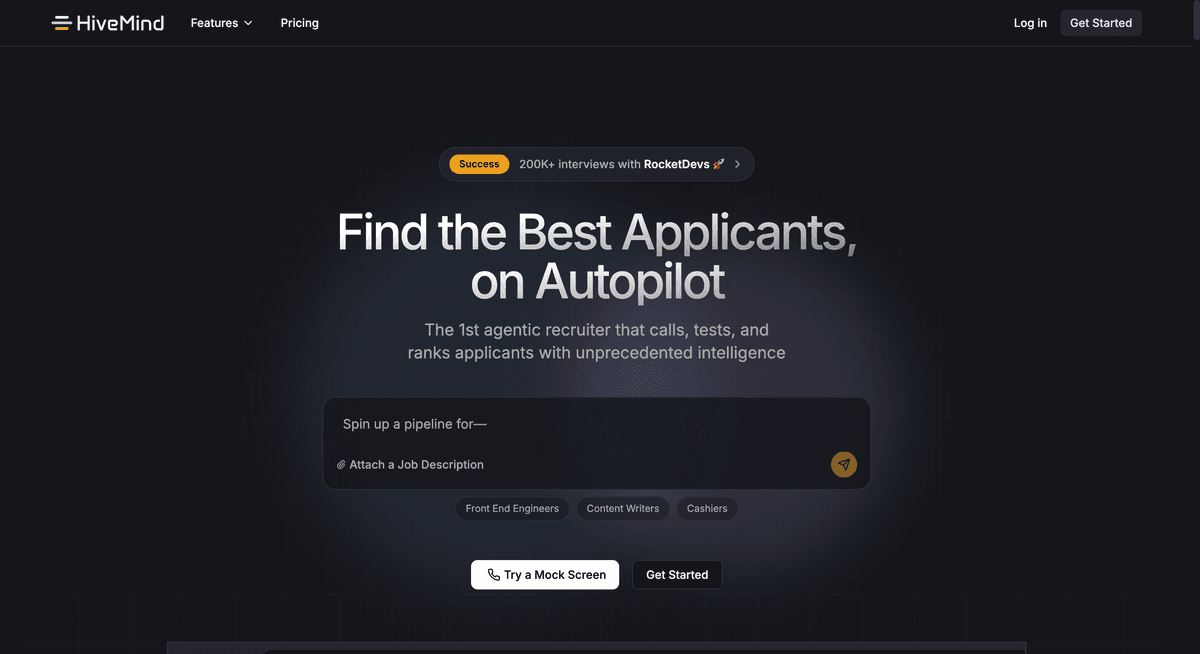
That’s where HiveMind changes the game. Instead of recruiters trying to hold everything together with spreadsheets, emails, and reminders, HiveMind turns your entire hiring process into an automated, intelligent workflow.
Here’s how:
-
It takes the heavy lifting off your plate
One of the biggest problems in high-volume recruiting is the sheer amount of repetitive work: reviewing resumes, sending updates, chasing interview feedback, scheduling calls. HiveMind automates these early and mid-stage tasks so recruiters aren’t stuck doing admin instead of actual recruiting.
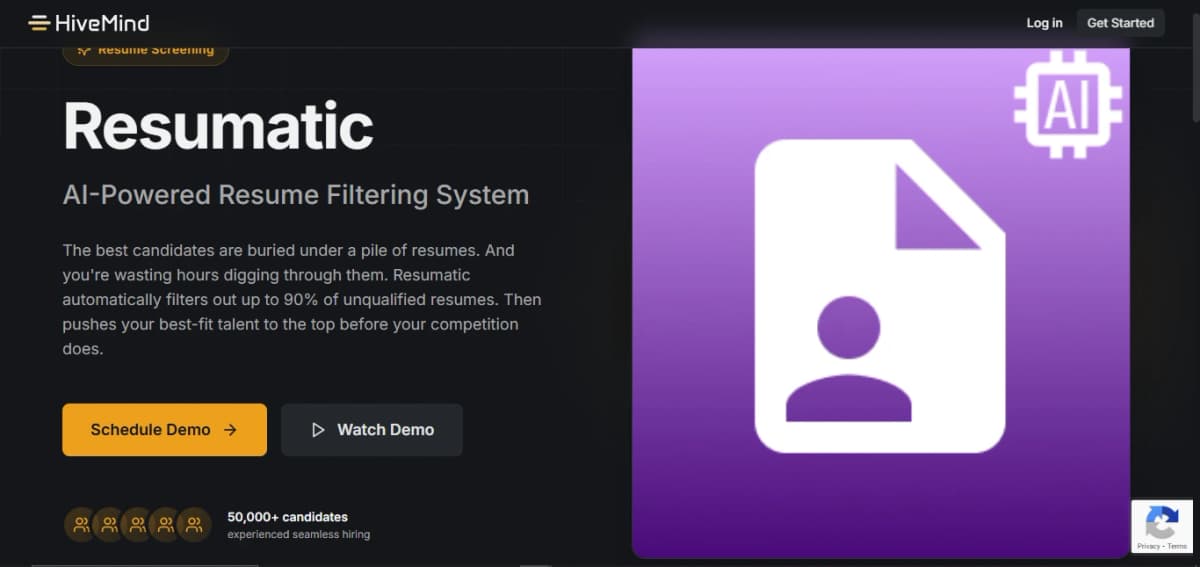
Through Hivemind’s tools like Resumatic, resumes are automatically parsed and analyzed, candidates are screened against role requirements, and the system surfaces the most qualified profiles first. Instead of drowning in applications, you’re working from a ranked shortlist built on skills, experience, and assessment performance.
-
It keeps candidates moving without you micromanaging
In high-volume recruiting, delays often happen between stages. A candidate applies… and waits. An interview happens… and feedback takes days. Offers stall because someone forgot to respond.
HiveMind automates the flow. Candidates receive instant confirmations, status updates, and next steps. Interview scheduling can be handled through self-serve booking, while automated reminders reduce no-shows. Internally, hiring managers get nudges when feedback is overdue, so decisions don’t sit in inboxes.
The result? Your pipeline doesn’t freeze just because someone is busy.
-
It adds intelligence, not just automation
Automation alone isn’t enough, it has to be smart. HiveMind uses AI to go beyond keyword matching. It evaluates candidates using skill-based assessments, structured scoring, and performance signals to help reduce bias and improve quality at scale.
This is especially powerful in high-volume recruiting, where it’s easy for great candidates to get overlooked simply because of volume. HiveMind ensures decisions are based on consistent, data-backed criteria rather than whoever’s resume got opened first.
-
It centralizes everything in one place
When hiring at scale, scattered data is a silent killer. Feedback in Slack, notes in email, resumes in the ATS, no one has the full picture. HiveMind centralizes candidate data, communication, assessments, and feedback into one system, so recruiters and hiring managers always know where things stand.
That visibility makes it easier to compare candidates, track progress, and make faster, more confident decisions.
-
It gives you real hiring insights, not guesswork
High-volume recruiting shouldn’t run on intuition alone. HiveMind provides real-time dashboards and reporting so you can see where candidates drop off, which sources produce the best hires, and how long each stage takes.
That means you can fix bottlenecks quickly, forecast hiring needs more accurately, and show leadership exactly how recruiting performance ties to business growth.
In short, HiveMind doesn’t replace recruiters, it removes the friction that slows them down. By automating workflows, adding AI-driven evaluation, and keeping the pipeline moving, it makes high-volume recruiting feel less like chaos and more like a controlled, scalable system built for growth.
FAQs on High Volume Recruiting
-
What are the 5 C’s of recruitment?
The 5 C’s of recruitment provide a simple framework for building a strong and consistent hiring process, which becomes even more important in high volume recruiting.
-
Clarity - Clearly defined job roles, expectations, and evaluation criteria help reduce unqualified applications and speed
up screening. -
Consistency - Structured interviews and standardized scoring ensure candidates are assessed fairly, even when many recruiters are
involved. -
Communication - Regular, timely updates keep candidates engaged and prevent drop-offs in a high-volume pipeline.
-
Candidate Experience - A smooth application and interview journey protects your employer brand, especially when hiring at scale.
-
Culture Fit - Beyond skills, assessing alignment with company values improves retention and long-term performance.
What are the most successful recruitment strategies?
The most effective strategies today combine process, technology, and employer branding, especially for high volume recruiting**.**
Successful teams focus on:
-
Recruitment automation for screening, scheduling, and communication
-
Structured, skills-based assessments to improve quality of hire
-
Strong employer branding and EVP to attract the right candidates faster
-
Multi-channel sourcing (job boards, referrals, social, talent pools)
-
Data-driven optimization, using metrics like time-to-hire and conversion rates
In high-volume environments, the difference between average and high-performing recruiting teams is how well they use automation and data to scale without sacrificing quality.
-
What are the 4 R’s of recruitment?
The 4 R’s of recruitment describe the core stages of the hiring lifecycle:
Reach - Attracting candidates through sourcing, job ads, and employer branding. Recruit - Screening, interviewing, and evaluating applicants. Retain - Ensuring new hires stay engaged and supported after joining. Refine - Continuously improving the process using hiring data and feedback.
For high volume recruiting, the “Refine” stage is critical, small inefficiencies become major bottlenecks when you’re hiring at scale.
-
What is the 80/20 rule in recruiting?
The 80/20 rule (Pareto Principle) in recruiting suggests that:
-
Around 20% of sources often deliver 80% of successful hires
-
A small portion of roles typically drive most hiring volume
-
A minority of candidates in the pipeline are truly top-tier
This principle helps teams focus their energy where it matters most, optimizing top-performing channels, prioritizing critical roles, and using AI or automation to quickly surface the highest-quality candidates from large applicant pools.
Instead of treating every application equally, smart high-volume hiring focuses effort where impact is greatest.
Scale your hiring processes with HiveMind AI
High volume recruiting doesn’t fail because teams aren’t working hard enough, it breaks when processes built for small hiring needs are forced to operate at massive scale. The difference between stressful, reactive hiring and smooth, scalable hiring comes down to structure, data, and smart automation.
In this guide, we’ve looked at what it really takes to succeed with high volume recruiting: clear workflows, strong employer positioning, automated screening, structured interviews, connected tools, and data-driven decision-making. When these pieces work together, hiring at scale stops feeling like chaos and starts feeling controlled, measurable, and repeatable.
That’s where HiveMind AI fits in. It brings your recruiting process into one intelligent system, automating screening, assessments, communication, and pipeline management, so recruiters can focus on people, not paperwork. Instead of juggling tasks, you’re guiding decisions. Instead of reacting to volume, you’re in control of it.
If you’re serious about scalable hiring, HiveMind helps turn high volume recruiting from an operational headache into a growth engine for your business.