

If you’re a business, we can all agree that the time between opening the hiring pipeline and finding the right candidate can be quite draining. It’s so draining sometimes that we just decide to go with a referral.
But what happens when there are no referrals for the roles you seek? You have no choice but to go through hundreds of thousands of candidates, which can take anywhere from 50-66 days; a relatively long time.
In this article, we’ll be showing you how to reduce time to hire by sharing some strategies you haven’t tried.
These strategies have become essential for fast-scaling startups and organizations dealing with high-volume hiring.
What is Time to Hire?

Before we dive into the strategies, let’s align on what we actually mean by ‘time to hire’.
Time to hire refers to the number of days between when a candidate first applies for a role and when they officially accept your offer. That’s the clock you’re racing against.
Every day that ticks by increases the chances that your top candidate ghosts, accepts another offer, or simply loses interest.
Spoiler: Candidates aren’t just sitting around refreshing their inbox for your response.
The old rule of thumb? Hire slow, fire fast. But in today’s talent market, “hire slow” often translates to “hire never.”
With the global average time to hire hovering around 44 days, and some industries stretching well beyond that, it’s no surprise that companies are hemorrhaging great candidates halfway through their hiring funnel.
And it’s not just about losing people. Long hiring cycles come with baggage like:
- Increased recruitment costs
- Burnt-out teams
- Slowed-down projects
And yes, revenue lost from roles that should’ve been filled weeks ago.
Now, if you’re serious about learning how to reduce time to hire, you’ve got to stop thinking of it as an HR metric and start treating it like a business performance lever. Because that’s exactly what it is.
Top Pick: 9 Best AI Interview Scheduling Software for Hiring
11 Strategies to Reduce Time to Hire
Here are a few practical ways you can reduce your time to hire:
- Build a Solid Hiring Culture
- Have a clear job description
- Map Out the Hiring Process
- Fix Your Careers Page and Watch Better Applicants Roll In
- Manage Applicant Screening Effectively
- Simplify the Interview Process
- Automate Interview Scheduling
- Maintain Fast, Clear Communication
- Build a Talent Pipeline Before You Need It
- Use Short, Paid Trial Projects
- Track Your Metrics, and Tweak Constantly
1. Build a Solid Hiring Culture
If your hiring process feels like HR’s lonely side project, don’t be surprised when it moves slowly. One of the most overlooked ways to reduce time to hire is to stop treating recruitment like it’s only the job of the talent team. It’s not.
Hiring is a company-wide sport, and if only one department is playing, you’re not going to score often or fast.
When everyone in your company understands that attracting and selecting talent is part of their role, magic starts to happen.
Suddenly, interviews get scheduled faster, referrals come in without begging, and candidates feel like they’re joining a team, not just filling a seat.
Here are a few practical ways to build a good hiring culture:
Share hiring updates internally: Don’t keep your open roles locked in the ATS like a secret. Make hiring updates part of your weekly comms. Share what roles are open, what kind of candidates you’re looking for, and where bottlenecks exist. The more your team knows, the more they can help.
Launch an employee referral program: Referrals still beat job boards and cold outreach in both speed and quality. But most companies either overcomplicate it or forget about it entirely.
Keep it simple: tell your team who you’re hiring for, how they can refer, and what’s in it for them. Then make it easy to submit a name, ideally without needing to log in to five tools and complete a six-step form.
Encourage employee-generated content: Want to attract candidates faster? Let your team do the talking. Ask employees to share their real experiences, what they love, what surprised them, and what life looks like day-to-day.
A single LinkedIn post from a happy team member often does more for hiring than a polished careers page. Plus, it helps candidates self-select early, which means fewer mismatches down the line.
2. Track Your Metrics, and Tweak Constantly
Vague job descriptions are like bad first dates: confusing, time-wasting, and destined to go nowhere. If you’re wondering how to reduce time to hire, start by making sure your job descriptions aren’t driving away the very people you want to attract.
A well-crafted job description does more than just describe a role. It acts as a filter, a magnet, and a signal.
It helps the right people say “yes, that’s me,” and the wrong people quietly bow out, saving everyone from a series of painful interviews that should’ve never happened in the first place.
Here’s what to focus on when writing a job description:
- Clearly outline the role
- List the skills, and separate the must-haves from the nice-to-haves
- Broaden your reach with skills-first language
- Set 90-day expectations
A clear job description is one of the easiest things to fix and one of the fastest ways to reduce time to hire.
Others Liked: 35+ Funny Hiring Memes of 2025
3. Map Out the Hiring Process
You wouldn’t start a road trip without a map or at least Google Maps. So why do so many companies try to hire without a clear plan?
One of the most underrated ways to reduce time to hire is simply this: map out your hiring process before you begin. Not during. Not after. Before!
To avoid chaos, sketch out each stage of the journey, from first spark to signed offer. That might look something like this:
Step 1: Plan the hire
Step 2: Attract candidates
Step 3: Screen applicants
Step 4: Interview with purpose
Step 5: Make the offer quickly
When each step is clearly defined and assigned to the right person, the process moves like a well-oiled machine.
You spend less time in limbo and more time actually hiring. If you’re serious about learning how to reduce time to hire, structure isn’t optional; it’s foundational.
4. Fix Your Careers Page and Watch Better Applicants Roll In
If your careers page feels like an afterthought, that’s exactly how candidates will treat it. A clunky, vague, or outdated careers page could be silently turning quality applicants away before they even hit “Apply.”
A well-designed careers page isn’t just decoration; it’s one of your most valuable recruiting assets. Done right, it can pre-qualify talent, excite the right people, and speed up the entire hiring process by reducing the number of mismatched applicants and no-shows.
Here’s how to turn yours into a conversion machine:
- Make open roles visible, and easy to explore
- Tell a real story, not a corporate fairy tale
- Spell out your hiring process
- Cut the busywork from your application form
This is one of the highest-ROI places to start, because the right page doesn’t just inform candidates. It converts them.
5. Manage Applicant Screening Effectively
These days, posting a job feels like opening the floodgates. You’re not getting five resumes, you’re getting 180. That’s the average, according to CareerPlug’s 2024 recruiting data. And the kicker? Only about 3% of those applicants even make it to an interview.
Managing that flood of resumes is non-negotiable. Otherwise, you’ll be stuck wading through applications while your ideal candidate slips away to a company that moves faster.
Here are a few suggestions that can help you manage applicant screening effectively:
- Know what you’re looking for, before you post
- Ask smarter application questions
- Let HiveMind AI handle the grunt work
This is where Hivemind comes in handy. Instead of spending hours manually reviewing resumes, Hivemind uses AI to scan, score, and sort your applicants based on your criteria.
It gives you a ranked shortlist so you can focus on the top matches right away, no spreadsheet required.
It even handles follow-ups and integrates skills assessments, which means less chasing, less guessing, and a lot less time wasted on candidates who aren’t a fit.
If you’re overwhelmed by volume and want to reduce time to hire without lowering your standards, Hivemind is a no-brainer.
6. Simplify the Interview Process (Seriously, It Doesn’t Need to Be That Complicated)
A bloated interview process might feel thorough, but more often than not, it’s just… slow. And in hiring, slow is risky.
Every extra round of interviews increases the chance that your top candidate loses interest, gets another offer, or simply ghosts you out of frustration.
If you’re figuring out how to reduce time to hire, tightening up your interview process is one of the fastest wins.
Here’s how to do it:
- Keep it to two rounds (max)
- Use structured interviews
- Assess during the interview
The goal isn’t to rush, it’s to remove friction. Because when your interview process is clear, simple, and aligned with the role, you make better hires, faster.
For You: Top 9 AI Recruiting Assistants to Hire Skilled Candidates Faster
7. Automate Interview Scheduling
Stop the endless back-and-forth emails. Use a scheduling tool (Calendly, GoodTime, or your ATS’s built-in scheduler) so candidates can pick a slot that works for everyone.
8. Maintain Fast, Clear Communication
Set an internal rule: every applicant gets an update within 48 hours. Use short, friendly templates to confirm receipt, next steps, or decisions. When you keep conversations moving, you’ll see a sharp drop in candidate drop-offs.
9. Build a Talent Pipeline Before You Need It
Don’t wait until your inbox explodes. Create and nurture a pool of past applicants, referrals, and passive candidates. Regular touchpoints (newsletters, event invites) mean you’re not starting from zero.
10. Use Short, Paid Trial Projects
Swap lengthy take-homes for quick, paid mini-projects (one to two hours max). You get real, relevant work samples; they get paid for their time. This fast-track assessment method is a brilliant hack for reducing time to hire without sacrificing quality.
11. Track Your Metrics, and Tweak Constantly
Collect weekly data on days-to-screen, days-to-interview, and days-to-offer. A simple dashboard (even a shared spreadsheet) can spotlight your slowest steps. Then adjust: maybe cut a round, tweak a question, or switch a sourcing channel. Iterating based on real numbers is the ultimate answer to reducing time to hire.
Don’t Miss: LinkedIn Recruiter Pricing Breakdown (2025): Is It Worth it?
Conclusion on How to Reduce Time to Hire
Hiring doesn’t have to be a hassle.
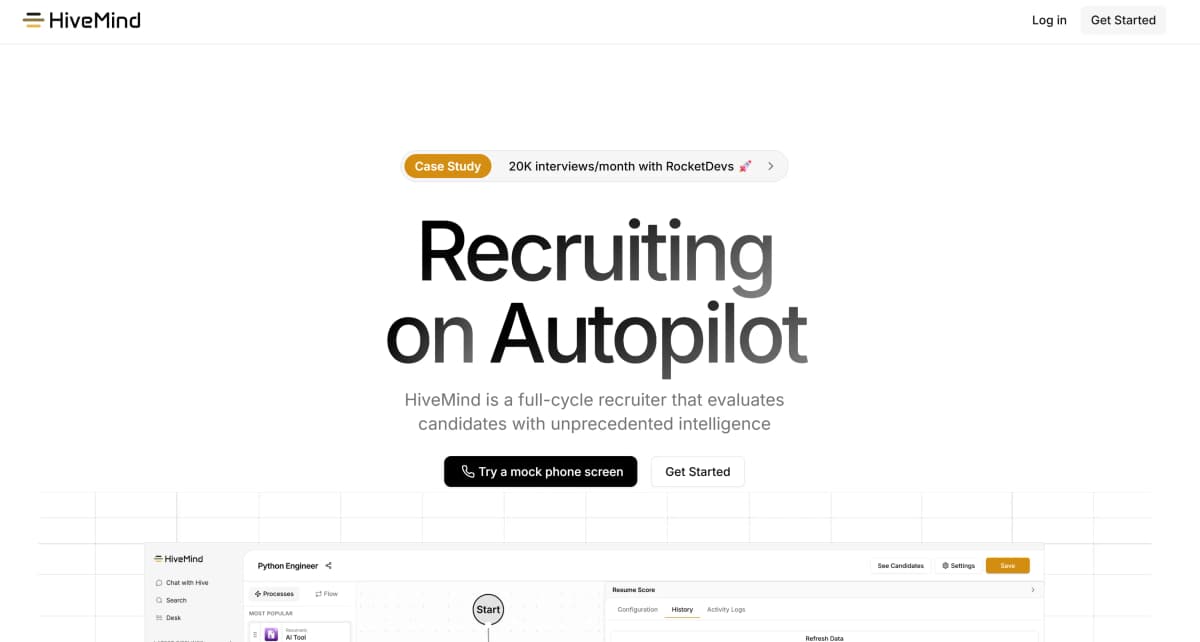
By treating your recruitment process as a shared responsibility, clarifying every step, and embracing smart shortcuts, whether that’s polishing your careers page, automating scheduling, or using AI like Hivemind AI to sift through resumes, you’ll not only save days (or weeks) but land better fits for your team.
Remember, the secret to reduce time to hire isn’t a magic bullet; it’s a collection of small, intentional tweaks that add up.
So pick one area that’s slowing you down, make the change today, and watch momentum build. Before you know it, filling open roles will feel less like a slog and more like a well-choreographed relay - smooth, efficient, and even a little bit fun.
Here’s to hiring faster, smarter, and with confidence. The best way to achieve it? HiveMind AI
Learn More
FAQs on How to Reduce Time to Hire
How to shorten the hiring process?
To shorten the hiring process, start by tightening your job description, mapping out each step before you start, and using tools to automate repetitive tasks. Structured interviews, faster screening methods (like AI-powered resume filters), and fewer interview rounds all help.
What are the 3 Ps of recruitment?
The 3 Ps usually stand for People, Process, and Platform
- People – Who’s involved in hiring, and how clear are their roles?
- Process – Is the workflow efficient, or full of unnecessary steps?
- Platform – Are you using the right tools (like Hivemind or ATS software) to support faster decisions? Mastering the 3 Ps can seriously improve how to reduce time to hire across your entire organization.
How can I speed up my hiring process?
Think of it like decluttering your closet; if it doesn’t serve a purpose, cut it out. Ditch extra interview rounds, automate scheduling, pre-screen applicants with skill-based questions, and define exactly what you’re looking for.
What is the ideal TAT for recruitment?
“TAT” (Turnaround Time) varies by industry, but a good benchmark is 1–2 weeks from application to offer. If you’re consistently taking longer, it might be time to revisit your hiring flow.
Fast doesn’t mean rushed; it means removing delays. The real goal? Find the right person, quickly and confidently. And if you’re working on how to reduce time to hire, cutting your TAT is a great place to start.