
Hiring processes are far from what we were used to 10 years ago. Unfortunately, hiring demands are growing more than some of the current processes used by recruiting teams. Recruiters today manage hundreds, sometimes thousands, of applications for each role. Some of these recruiters deal with tools that keep them in an endless scheduling loop, which increases the pressure to hire quickly without sacrificing quality.
According to an article put together by Tech Tree, it was revealed that nearly half of tech recruiters spend 30+ hours per week sourcing candidates alone. That’s time that could be spent on evaluating talent and collaborating effectively with hiring managers. This is why AI recruiting tools have shifted from being optional to an essential part of the recruiters’ package…
However, not all AI tools are beneficial or were created to make your job easier. If you’re a fast-growing startup or a large company hiring often and globally, this guide will elaborate on what these tools are, their beinefits and the top AI hiring softwares for modern hiring and how to choose the right one for your team.
What Are AI Recruiting Tools?

AI recruiting tools are software platforms that use artificial intelligence to improve, speed up, and scale the hiring process from sourcing to shortlisting.
When it comes to traditional applicant tracking systems (ATS), their primary purpose is to store resumes and track candidate movement, while modern AI hiring software actively analyzes data, makes recommendations, and carries out recruiting tasks in real time. These tools not only support recruiters; they also cut down on manual work, find better candidates faster, and help teams make more consistent, data-driven hiring decisions.
Recommended Read: AI in Recruiting: How Companies Are Hiring Faster in 2026
Key Benefits of AI Recruiting Tools
Despite having access to these tools, many recruiters still do not fully understand their strengths or benefits. Here are some major advantages of AI for recruiters:
-
Faster Hiring and Time Savings
One of the biggest benefits of AI hiring platforms is speed. High-volume roles often attract hundreds or thousands of applications, most of which are unqualified. With the help of AI-powered screening, it automatically filters out unqualified candidates.
This allows recruiters to focus on a smaller, higher-quality pool. Automated scheduling and interview coordination save hours of administrative work for each hire. AI recruitment automation was reported to have reduced time-to-hire by 75% in 2025.
-
Better Candidate Quality
AI recruiting tools prioritize skills, experience, and job relevance instead of relying on resumes or job titles. Skill-based matching and assessments ensure candidates are evaluated on what they can actually do. This creates a better match between job requirements and candidate abilities, thereby reducing the risk of wrong hires.
-
Reduced Bias and More Consistent Decisions
Humans are known for their biases, which sometimes can affect hiring decisions. When AI hiring software is used properly, it can help minimize human bias in hiring.
Structured evaluations, standardized screening questions, and consistent scoring ensure that candidates are assessed fairly throughout the process. Many AI recruitment platforms also include bias monitoring to promote ethical hiring practices.
-
Improved Candidate Experience
Hiring isn’t a one-way street. It involves the candidates as well and their experiences matter. Every candidate appreciates speed and clear communication.
AI recruiting tools allow for quicker responses, personalized messages, and clear next steps during the hiring process. A smoother experience enhances the employer brand and increases the chances that top candidates will accept offers.
-
Lower Hiring Costs
By cutting down on manual efforts, shortening time-to-hire, and improving hire quality, AI recruiting platforms reduce overall hiring costs. Teams get to scale their hiring without adding more recruiters. This makes AI particularly valuable for fast-growing startups and top organizations.
Top Pick: 11 Best AI Co-Pilot Interview Tools in 2025, Ranked
Top Features to Look For in 2026

As AI recruiting tools advance, certain features will help you distinguish basic automation from truly modern platforms. Here are some of the features to look out for:
-
Intelligent Resume Screening and Ranking
Resume screening is where most hiring time is lost and where modern tools deliver the best value. In 2025, resume screening went beyond keyword matching or rigid filters and the focus would continue to shift in coming years to understanding context, skills, and relevance.
These recruiting tools analyze resumes, identify transferable skills, relatable experience, and patterns that match up with success in similar roles. Instead of simply matching job titles or exact keywords, they evaluate how well a candidate’s background aligns with the actual requirements of the role.
-
AI Interviews and Screening Calls
AI-led interviews have become a major part of early-stage screening, especially when it comes to high-volume roles. AI phone and video screening tools can conduct first-round interviews, which removes scheduling delays and reduces recruiter workload.
These systems follow structured interview frameworks, asking role-specific questions and evaluating responses using predefined criteria.
Because every candidate is assessed using the same structure, AI-led screening improves consistency while ensuring no qualified applicant is overlooked due to time constraints or human fatigue.
-
Skill-Based Assessments
Skill-based assessments are one of the most important features of modern recruiting tools. Top AI recruiting tools offer assessments that simulate real work. These are interactive, role-specific tasks designed to measure practical ability rather than rely on theories.
Some of these high-quality assessment systems include:
-
Interactive exercises tied directly to role responsibilities.
-
Anti-cheat mechanisms.
-
AI-assisted grading to ensure speed and consistency.
-
Benchmarking against role-specific performance standards.
HiveMind stands out by supporting skill-based assessments across hundreds of roles, using real-world tasks that are automatically evaluated by AI. This ensures hiring decisions are grounded in demonstrated ability, not assumptions.
-
Automated Outreach and Scheduling
Automation yields produce great results in the area of outreach to candidates, such as through personalized contact with potential candidates and automated follow-up and scheduling of interviews via AI-enabled recruiting messaging tools.
AI Recruiting Tools provide candidates with real-time communication and allow candidates to remain engaged and informed through the hiring process.
By automating all aspects of hiring, hiring teams are able to decrease response time and enhance candidate experiences, which ultimately leads to reduced candidate drop-off rates. In addition to this, recruiters can utilize the time they would normally spend managing email and scheduling for a small number of candidates each week to conduct additional interviews.
-
Agentic Automation
This is a major defining feature of next-generation AI recruiting tools. This refers to AI agents that are powered by automation and can make decisions faster and independently.
Agentic platforms are designed to take over entire hiring workflows while still having human oversight. HiveMind AI recruitment platform is one example of an ever-evolving agentic platform. By using agentic architecture, the platform enables teams to create recruitment pipelines and then manage it all from a single shared inbox. This is the shift from AI as a tool to AI as a recruiting operator.
> Check Out: Top 9 AI Recruiting Assistants to Hire Skilled Candidates Faster
Best AI Recruiting Platforms to Look out For in 2026
Choosing the right AI hiring platform goes beyond knowing the features. Here are some of the top recruiting platforms to add to your list of prospective hiring platforms in 2026:
-
HiveMind AI
-
Paradox
-
Gem
-
Eightfold AI
-
Zoho
-
Manatal
-
Findem
-
SmartRecruiters
-
HiveMind AI
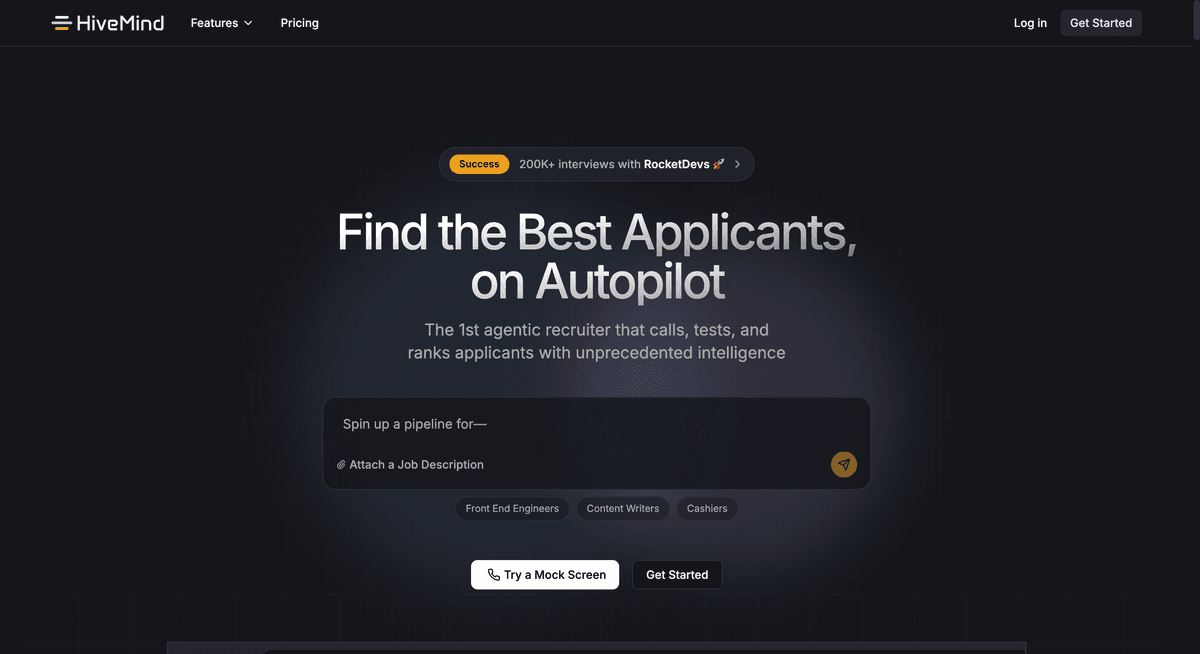
HiveMind is one of the top AI recruiting tools in 2025. It acts not only as a helper but as an independent recruiting agent. HiveMind can screen and rank resumes, assess skills with real project evaluations, and automatically score candidates. HiveMind was created to focus on candidate screening beyond resumes. It’s a skill-based hiring platform that puts candidates who might be overlooked by other screening platforms due to keyword differences. Hiring teams can prioritize critical thinking and other available tasks, making it ideal for startups, and organizations that want to go beyond resume screening.
Because HiveMind manages large parts of the hiring process from start to finish, it allows recruiters to focus on strategic tasks instead of repetitive ones.
-
Paradox
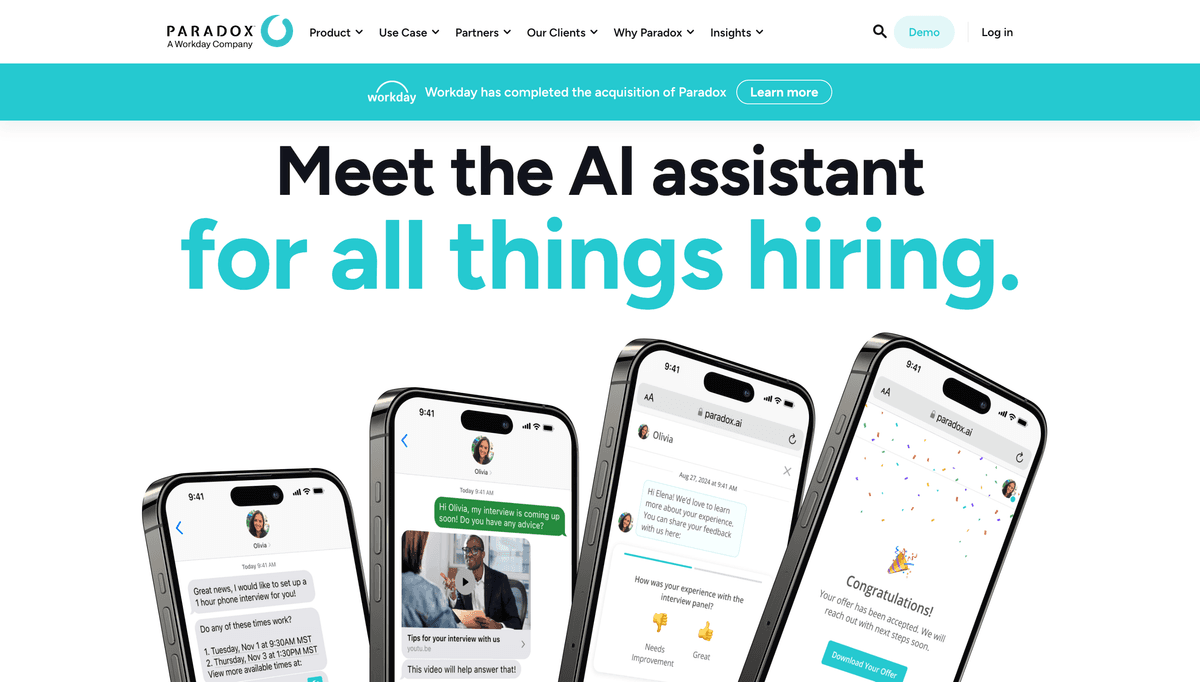
Paradox is known for candidate engagement and high-volume automation, especially when quality and speed are essential. Its AI assistant, “Olivia”, converses with candidates, answers questions, gathers screening responses, and schedules interviews at any time.
Paradox automates much of the initial candidate interaction, making it ideal for organizations that frequently hire or deal with large applicant pools. The platforms’ AI-driven conversations have achieved high conversion rates and has helped reduce time-to-hire and high-volume hiring situations.
-
Gem
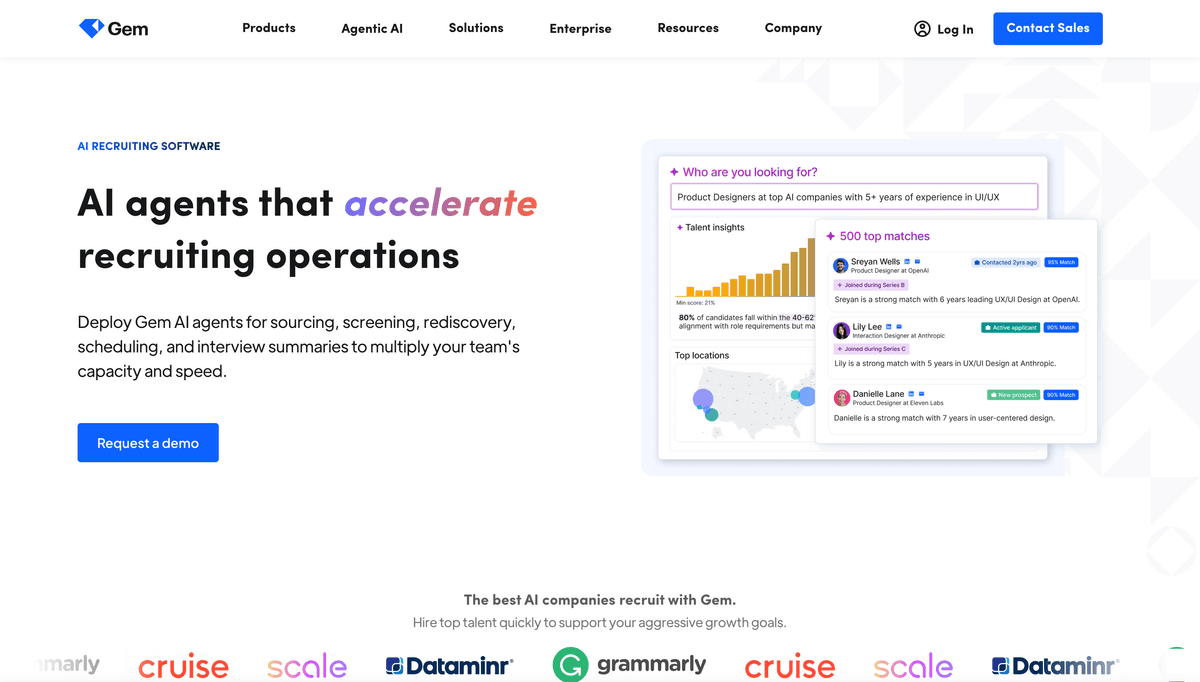
Gem happens to be one of the AI recruiting tools that uses a systemic approach by integrating AI into applicant tracking, candidate relationship management, sourcing, scheduling, and analytics. Instead of treating AI as an add-on, Gem includes intelligence in every workflow. This way, the system understands the context of candidates, past interactions, and response patterns, using this knowledge to improve outreach and pipeline management.
Gem stands out for helping organizations streamline their recruiting tech stacks while boosting recruiter productivity and cutting costs by automating manual tasks.
-
Eightfold AI
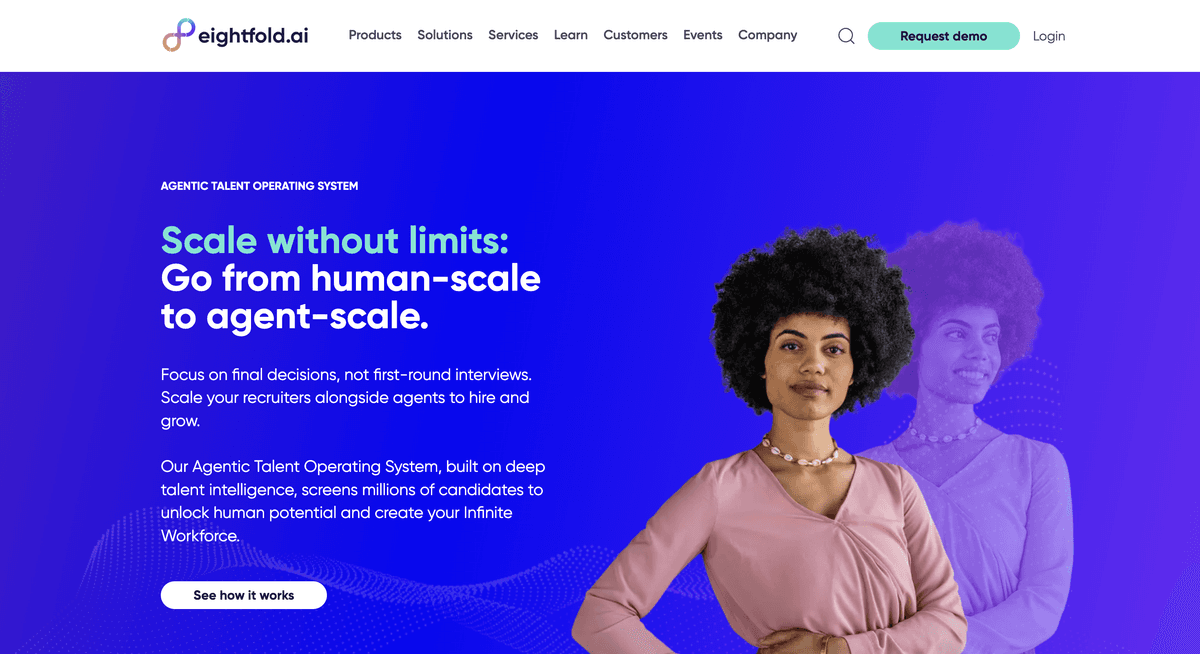
Eightfold AI is one of the most advanced tools for talent intelligence and skills-based matching. It doesn’t just rely on simple keyword filters. Its deep learning engine looks at a candidate’s profile as a whole, predicting fit based on skills, experience, and potential growth.
Beyond basic matching, many enterprises use Eightfold for internal mobility, talent rediscovery, and workforce planning. This makes it especially useful for organizations with complex hiring needs or long-term talent strategies. The platform helps teams fill roles while optimizing talent pipelines based on rich data and AI insights.
-
Zoho
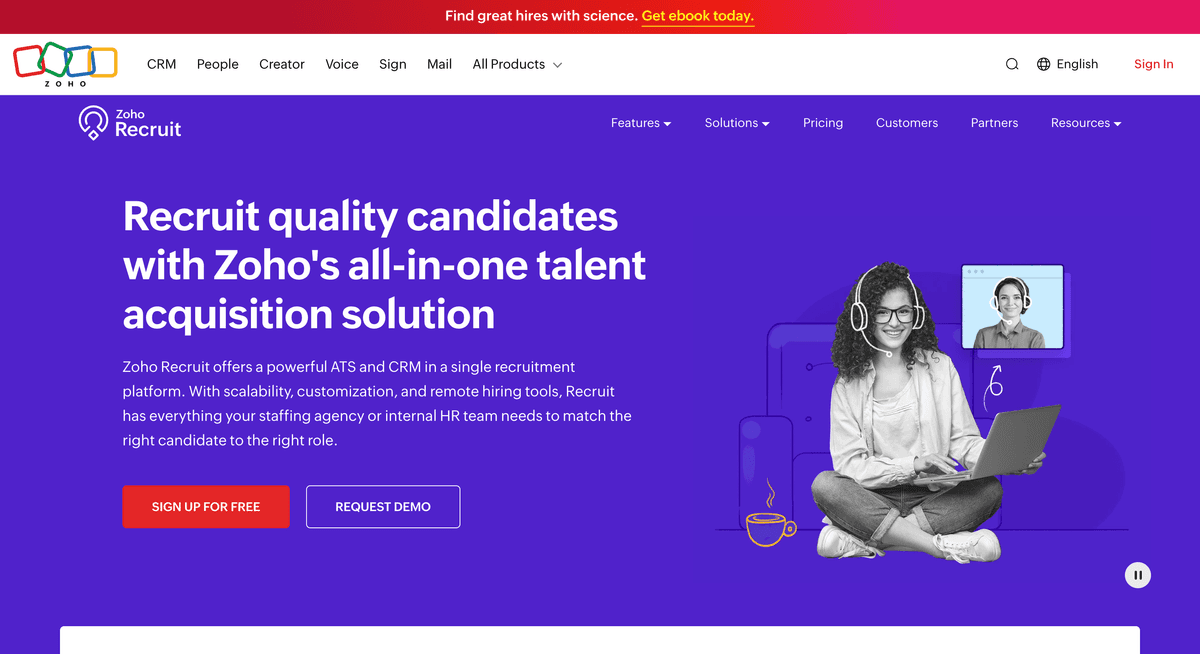
Zoho Recruit infuses AI into a broader ATS and HR ecosystem, supported by its AI assistant Zia. Aside from matching candidates for roles, Zoho Recruit’s AI assistant, also known as Zia, helps create job descriptions, offers automated communication features, and provides chatbot engagement on career sites.
Zoho excels in integrating with other business tools, making it accessible for companies that want strong AI features without the complexity or cost of enterprise-only systems. Zoho Recruit is particularly suited for teams that need both structured recruitment processes and intelligent automation in one platform.
-
Manatal
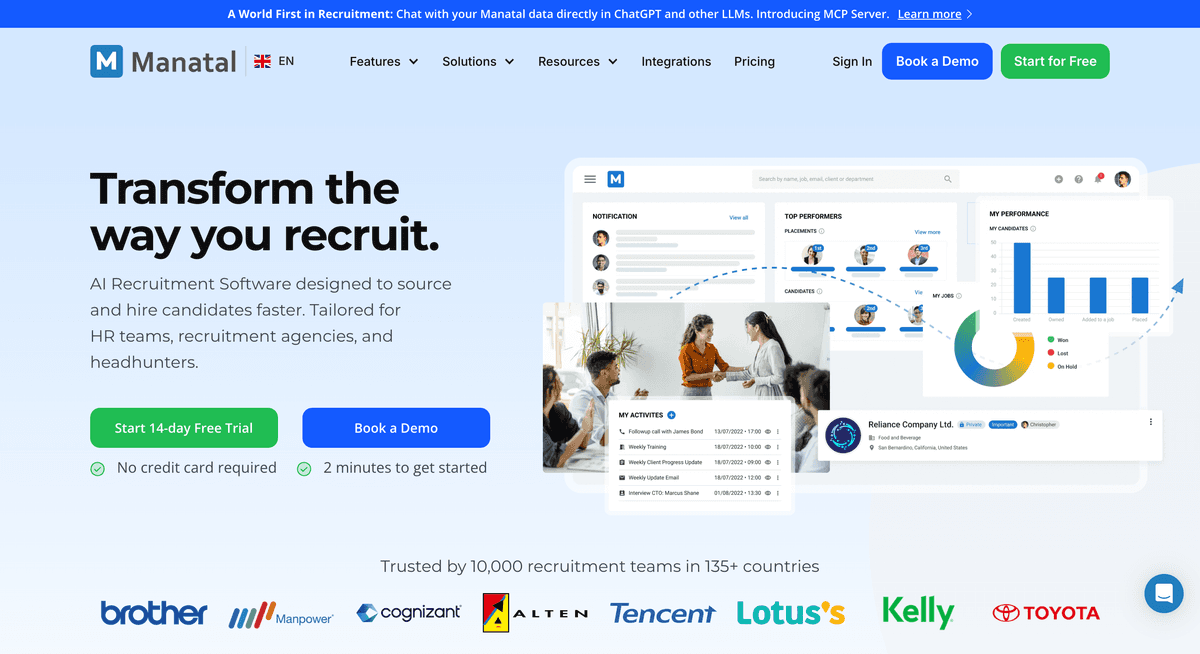
Manatal was created for startups and mid-sized teams that want to adopt AI recruiting without large expenses. Its platform combines affordable applicant tracking with AI-driven candidate recommendations, enhanced profile data from social sources, and collaboration tools that make hiring more transparent.
Although it is not as autonomous as some enterprise-level platforms, Manatal’s AI features help recruiters quickly find strong candidates and manage pipelines efficiently. This makes it a practical choice for growing companies that are trying to balance their budget with performance.
-
Findem
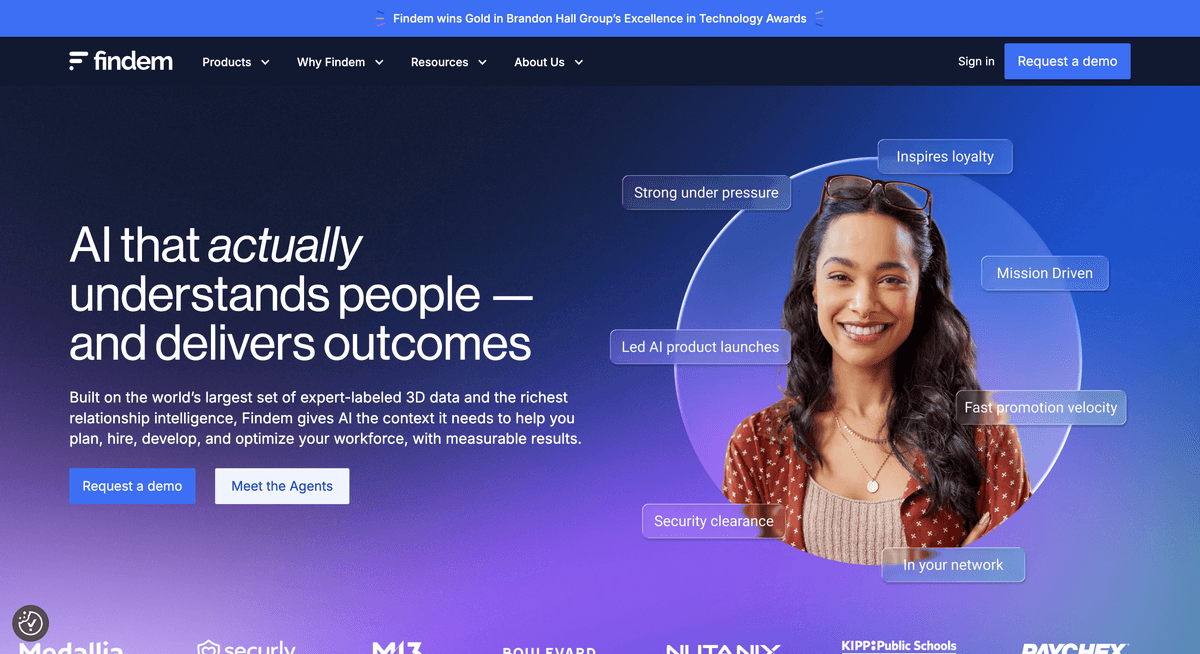
Findem is a talent intelligence platform that combines sourcing, screening, and analytics with advanced AI. It assists small hiring teams with matching, and predictive quality indicators.
By combining extensive candidate data with machine learning, Findem helps startups and organizations build smarter pipelines and make informed hiring decisions, rather than relying on surface-level matches.
-
SmartRecruiters
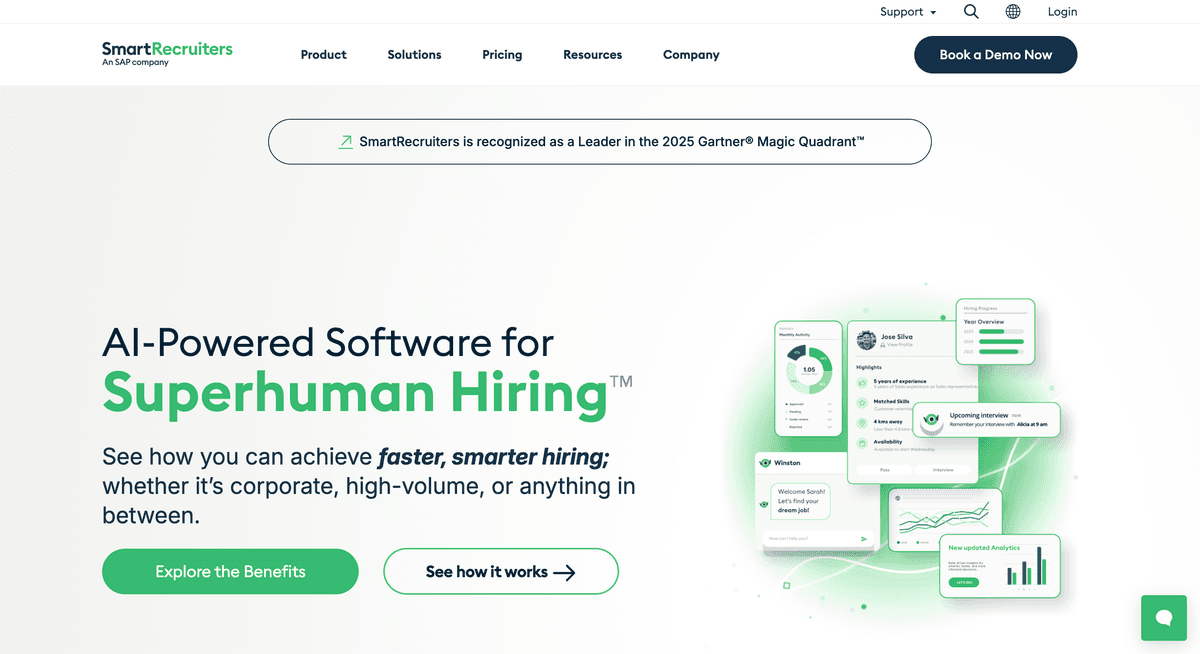
SmartRecruiters stands out with its AI-enhanced talent acquisition feature, especially with its embedded AI assistant, commonly called Winston.
This agent streamlines the recruiting process by reducing administrative tasks, speeding up candidate matching, and improving scheduling and coordination. SmartRecruiters is designed to scale from mid-sized to large organizations.
Comparison Table
| AI Recruiting Tools | Intelligent Resume Screening | Skills-Based Assessment | Automated Outreach & Scheduling | Agentic Workflow Automation |
|---|---|---|---|---|
| HiveMind AI | Advanced context & skill ranking. | Built-in role-relevant assessments with AI grading. | Personalized outreach to candidates and auto scheduling. | Full agentic automation across workflows. |
| Paradox | Basic screening support via chat. | Relies on external tools for deep assessments. | Chat-driven outreach and scheduling. | Not fully agentic, focused on communication. |
| Gem | Intelligent CRM-driven candidate scoring. | Limited built-in assessments. | Automated outreach and follow-ups. | Partial automation and focused on CRM. |
| Eightfold AI | Deep skills-based matching engine. | Predictive skill alignment & internal mobility insights. | Personalized outreach requires integrations. | Workflow automation depends on setup. |
| Zoho | Basic AI resume parsing & ranking. | Basic assessments happen via add-ons. | Automated candidate emails and scheduling. | No agentic automation. |
| Manatal | AI scoring & candidate match insights. | Basic matching but not job-specific assessments. | Outreach and candidate pipeline updates. | No agentic automation. |
| Findem | AI sourcing and deep profile insights. | Assessment through partners. | Candidate nurturing workflows. | Strategic sourcing platform only. |
| SmartRecruiters | AI-assisted ranking in ATS. | Assessment via integrations. | Workflow automation and scheduling. | Partial automation only. |
Conclusion: What Should Be Your Ideal Choice in 2026
By 2026, the discussion about AI in recruiting will shift from adoption to effectiveness. Most hiring teams will be using some form of AI, but only a few will have tools that actually reduce workload, improve hiring quality, and streamline decision-making without adding complexity. HiveMind stands out because it was built for this specific phase of hiring maturity.
While many AI recruiting tools still act as assistants for individual tasks, HiveMind works as a complete recruiting system. It not only helps recruiters screen resumes or schedule interviews, it also carries out key parts of the hiring process on its own. This includes candidate screening, AI-led calls, skill-based assessments, and structured ranking, all within one workflow. This movement from task-level automation to full execution defines the next generation of recruiting.
HiveMind’s strength is in its ability to focus on real skills rather than superficial signals. As resumes become more unreliable and inflated, HiveMind assesses candidates based on their performance in job-related scenarios. Through AI-graded assessments, structured screening conversations, and consistent evaluation criteria, hiring teams get a clearer picture of who can actually do the work.
This leads to better hiring decisions that are easier to explain both inside and outside the organization. Speed is another important advantage. By eliminating manual bottlenecks and enabling parallel screening at scale, teams can move faster without losing thoroughness. For organizations that want to move beyond small improvements and rethink hiring methods, choosing a tool that understands where your business stands and helps you achieve this is an important decision.