
As the years go by, hundreds of recruiting software have surfaced to reduce the workload on in-house and external recruiters. Dialectica reported that the U.S. recruiting software market alone is on track to reach $1.36 billion by 2033. A testament to the ever-changing hiring processes.
Despite these tools, recruiters continue to face a consistent rise in application volume, tighter hiring timelines, rising candidate expectations, and increasing pressure to demonstrate fairness and quality in every hiring decision.
In 2026, the best platforms are the AI recruitment platforms that actively assist recruiters throughout the hiring lifecycle. From sourcing candidates, filtering applicants, scheduling interviews, assessing skills, and even supporting hiring decisions with explainable insights.
At the end of this guide, you’ll have a clear, practical understanding of AI recruiting software in 2026, what it actually does, the different platforms, which tools are worth evaluating, and how to choose the right one that improves hiring outcomes for you.
Why AI Has Become Important for Recruiting Teams
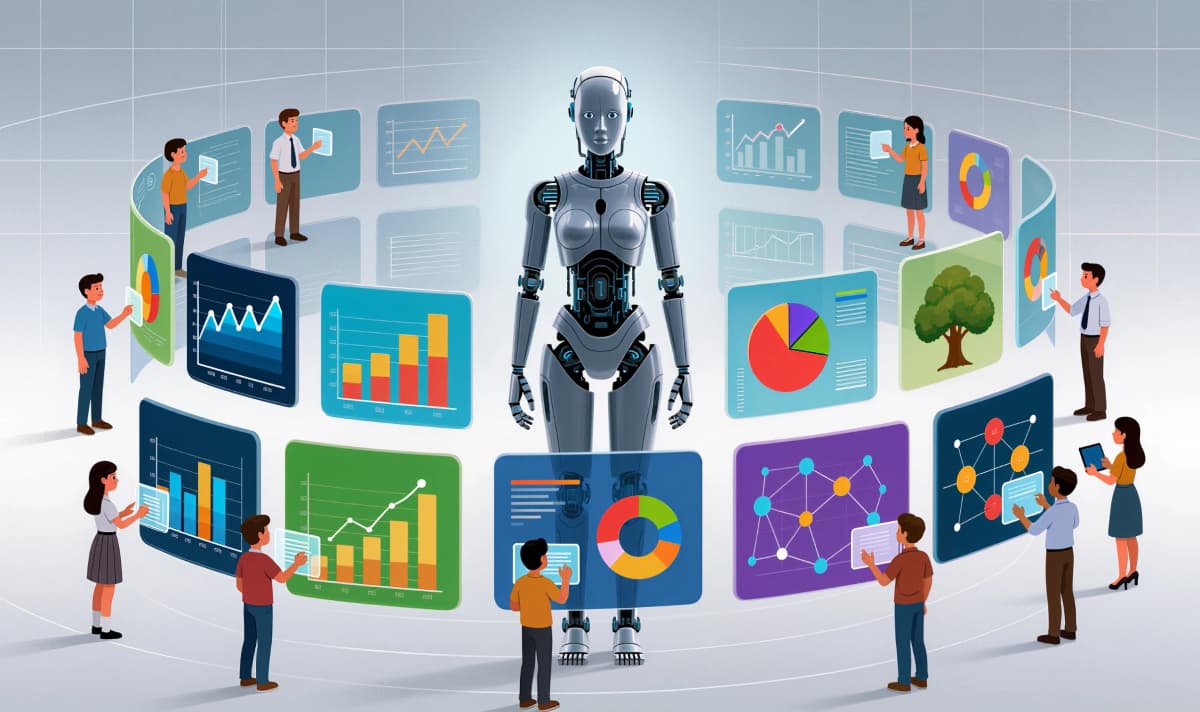
No doubt, recruiting has changed. Roles now attract many more applicants than hiring managers and recruiters can realistically review, and getting a perfect-fit can look like finding a needle in a large haystack.
Meanwhile, strong candidates expect quick responses, clear communication, and a smooth hiring process. Manual recruiting methods can’t keep up with this reality. The emergence of AI recruiting software is progress needed to help teams handle the workload.
Early tools focused on basic automation, like resume scanning or sending emails. In 2025, AI played a bigger role, as recruiters were able to decide where to focus their time, find the most relevant candidates faster, and support fairer, more consistent hiring decisions.
In 2026, technology has evolved. Instead of fixed rules, modern platforms use machine learning and language models to understand skills, experience, and culture-fit. Some tools now use agentic AI systems that can screen applicants, conduct phone interviews, and rank candidates based on skills. This allows recruiters to move faster without lowering hiring standards.
How Modern AI Recruiting Software Actually Works
AI recruiting software is majorly known for applying artificial intelligence to common hiring workflows, but the depth and quality of that intelligence vary widely across tools. Most platforms support some of these features:
-
Resume and Candidate Application Analysis
AI resume screening tools now do more than just match keywords. They examine experience patterns, relevant skills, career growth, and role relevance. These systems can detect transferable skills and flag candidates who may not seem ideal on paper but excel in skills assessments.
-
Candidate Sourcing and Matching
AI-powered sourcing tools search large candidate databases or the open web to find potential matches. Some use conversational systems, letting recruiters describe a role in everyday language and receive ranked candidate lists in seconds.
-
Interview Automation and Intelligence
Certain AI recruiting software, like HiveMind AI, are known for their interview automation features that can be used to transcribe calls, summarize conversations, and highlight signals like role fit, clarity in communication, or risk indicators. This reduces manual note-taking and improves consistency among interviewers.
-
Scheduling and Consistent Communication
Top hiring tools in 2026 have now included recruitment automation capabilities, which include chatbots and assistants that schedule interviews, answer candidate questions, and send updates.
When executed properly, this enhances the candidate experience, but when done poorly, it feels mechanical. Which is why the human factor can not be taken away completely.
-
Skills-Based Assessments
One significant change to AI ATS(Applicant Tracking System) in 2026 is the shift from resume-based screening to skills-based hiring.
AI-driven assessments evaluate candidates through role-specific tests, projects, or simulations that are graded automatically and fairly. The most advanced AI recruiting software combines several of these functions into a single workflow, while others specialize deeply in one area.
Check This Out: AI Recruiting Myths: What Works and What Doesn’t
Top AI Recruiting Tools & Platforms for 2026
Here are some of the best AI recruiting tools in 2026 that can help narrow down your search from the thousands out there to a few trusted ones:
-
HiveMind AI
-
Workable
-
Greenhouse
-
Manatal
-
Zoho Recruit
-
Juicebox (PeopleGPT)
-
SeekOut
-
HireEZ
-
Eightfold AI
-
Paradox
-
HiveMind AI
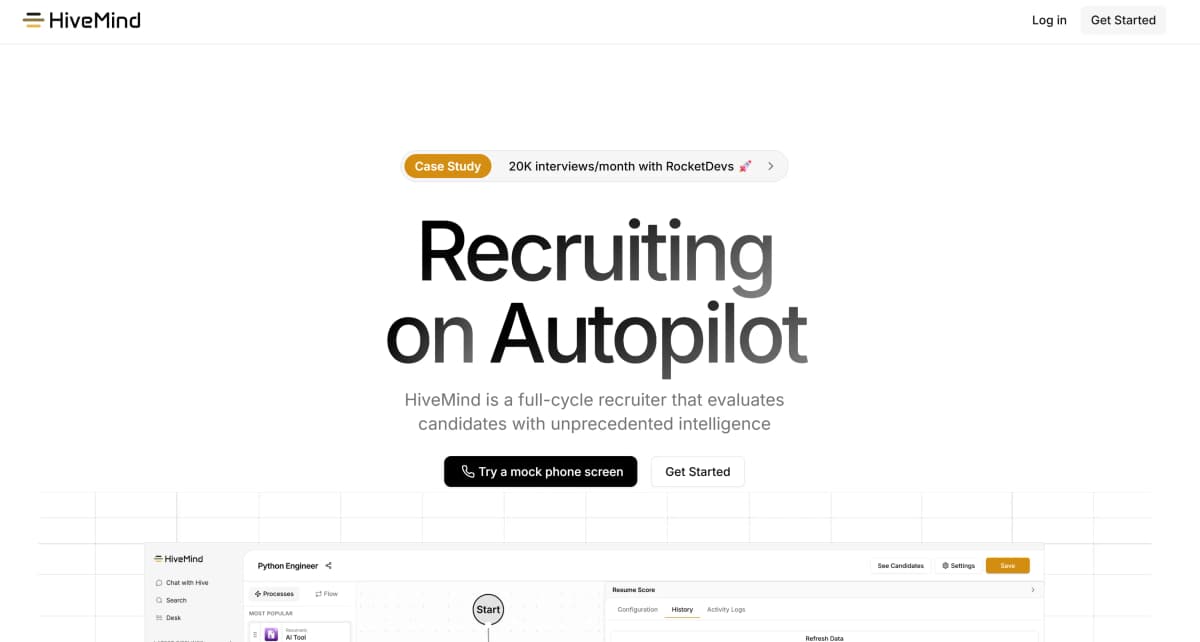
Hivemind AI serves as an active AI recruiter, performing recruiting tasks and assisting hiring managers and recruiters. This platform screens resumes based on how relevant they are to the role and filters out unqualified applicants early on.
Candidates are evaluated through skill-based assessments across various roles, and these assessments include real-world tasks that are graded automatically with anti-cheat protections.
With HiveMind, recruiters get to work with an adjustable workflow and pipelines rather than chunky databases. This makes it particularly effective when resumes cannot be trusted.
HiveMind’s follow-up feature also makes it easier for recruiters to follow-up with candidates, which makes it impossible for anyone to fall through the cracks. It’s a tool that’s beneficial to small teams, major organizations, solo-founders, and external recruiters.
-
Workable
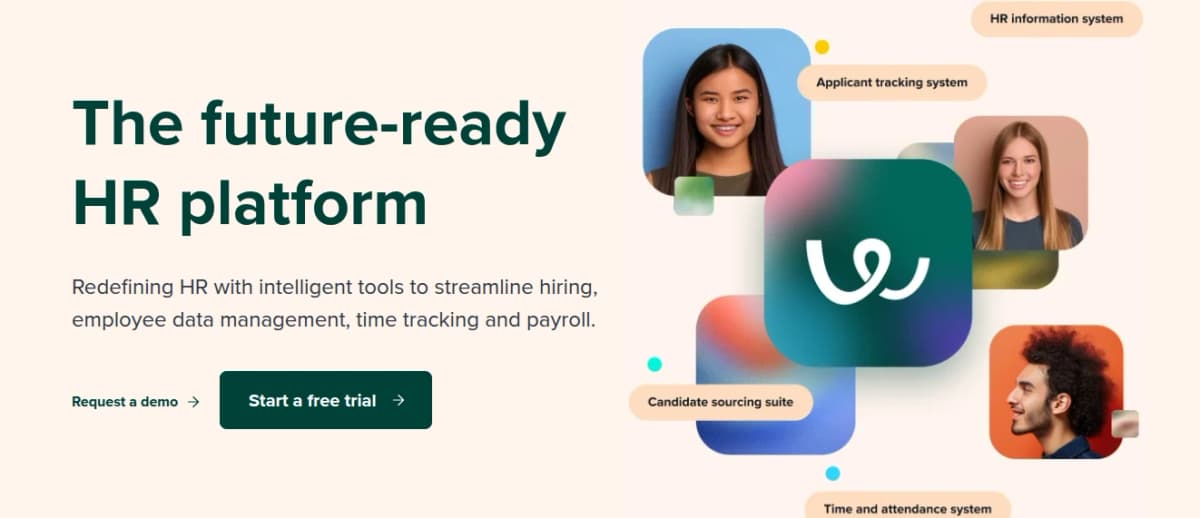
Workable is an applicant tracking system that has built-in AI assistance. It helps sort through resumes, identify relevant candidates, and create job descriptions. The platform is user-friendly, even for teams new to hiring software.
Recruiters maintain most decision-making authority, while AI serves as support instead of taking over tasks. Workable manages job postings, candidate communication, and interview scheduling all in one place. It connects with popular HR and calendar tools.
Workable’s major focus is to save the time of recruiters rather than eliminate steps. Acting as a partner rather than a replacement. This makes it accessible and is frequently used as a central hub for hiring.
-
Greenhouse
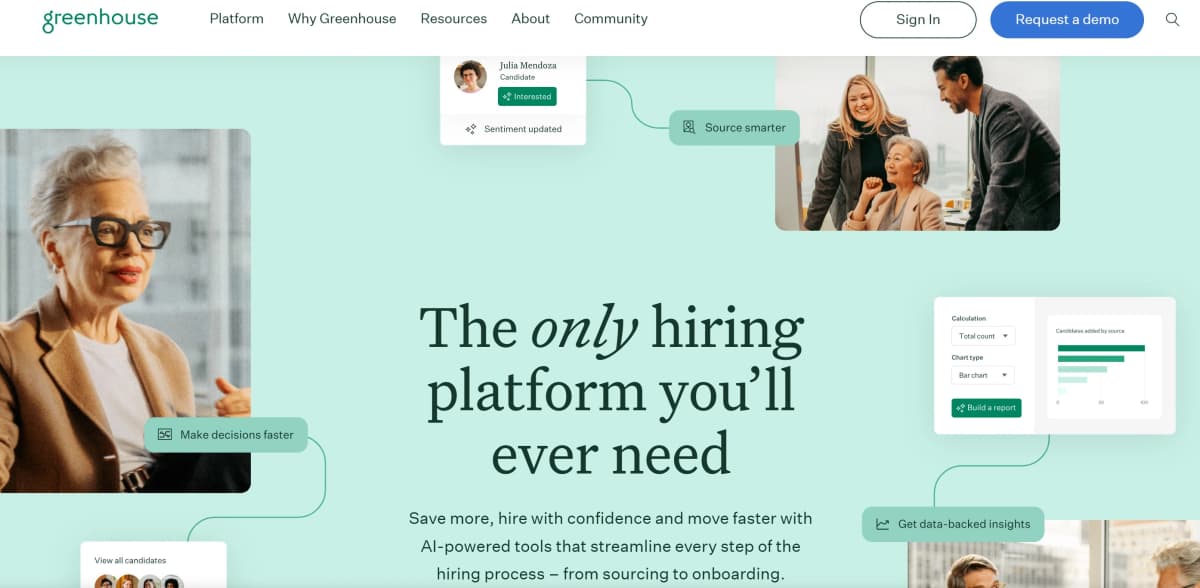
Greenhouse emphasizes structured and consistent hiring processes. Its AI features assist recruiters by providing valuable insights about candidates. The platform highlights scorecards, interview plans, and standard evaluations of each candidate.
This helps ensure consistency among interviewers and teams. Greenhouse AI recruiting software is often used when hiring processes are complex and need careful documentation. It’s a system that performs best with clearly defined processes. Getting started with it usually requires extensive setup and training.
-
Manatal
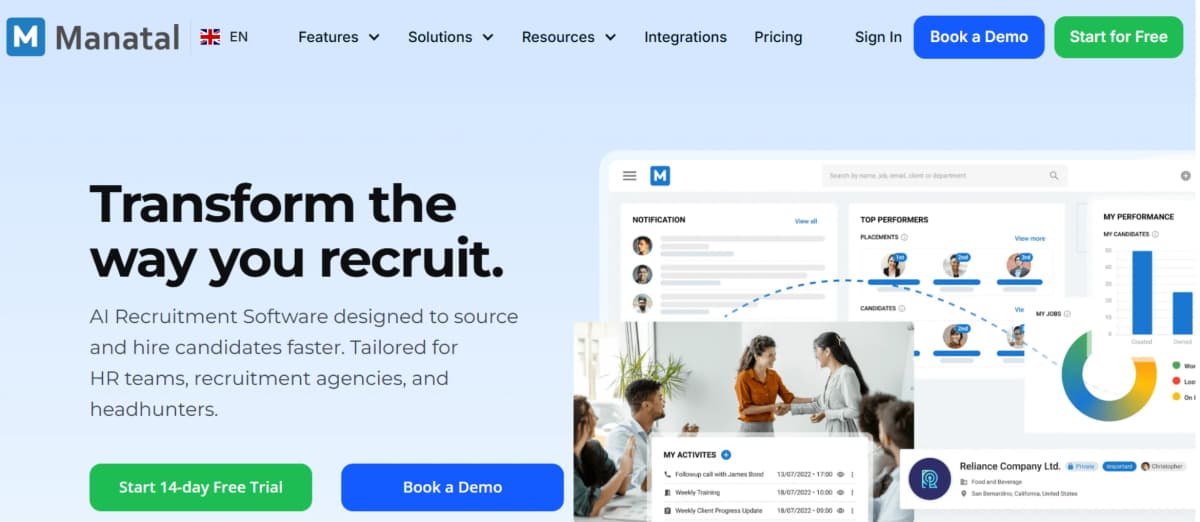
Manatal is an applicant tracking system designed for smaller teams that need flexibility. It offers resume screening, candidate recommendations, and workflow automation. Recruiters can customize stages and fields to fit their hiring process.
The AI helps organize candidates and find matches, but does not deeply assess skills or run evaluations. Much of its value comes from being configurable rather than intelligent. Teams typically refine the system over time. It works best for recruiters who prefer hands-on control.
-
Zoho Recruit
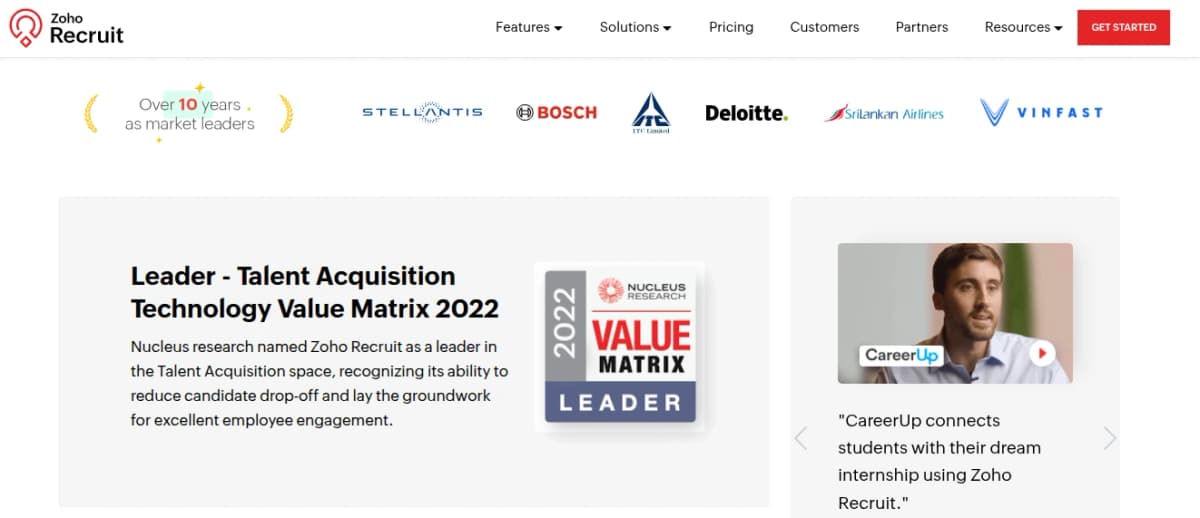
Zoho Recruit is a highly customizable applicant tracking system that supports resume automated workflows, resume screening, candidate matching, and communication tools.
Recruiters can extensively tailor hiring stages, rules, and notifications. AI features assist with organizing candidates, not assessing their performance.
The platform works well for teams already using other Zoho products. Because it offers many options, setup can take time. It suits teams seeking structure without strict workflows.
-
Juicebox (PeopleGPT)
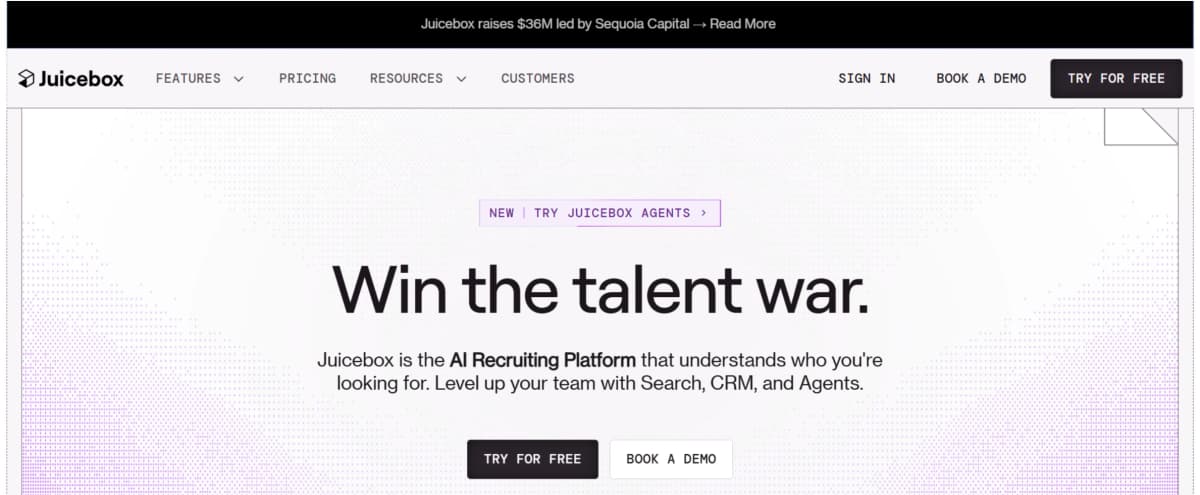
Juicebox also known as PeopleGPT, is a sourcing tool that uses conversational AI. Recruiters enter natural-language prompts to find candidates instead of relying on filters.
The system searches for a vast pool of public profiles. Results are ranked based on how relevant they are to the role. This makes sourcing quicker, especially for non-technical recruiters.
Juicebox focuses solely on finding candidates, not managing them. After sourcing, recruiters get to transfer candidates to another system.
-
SeekOut
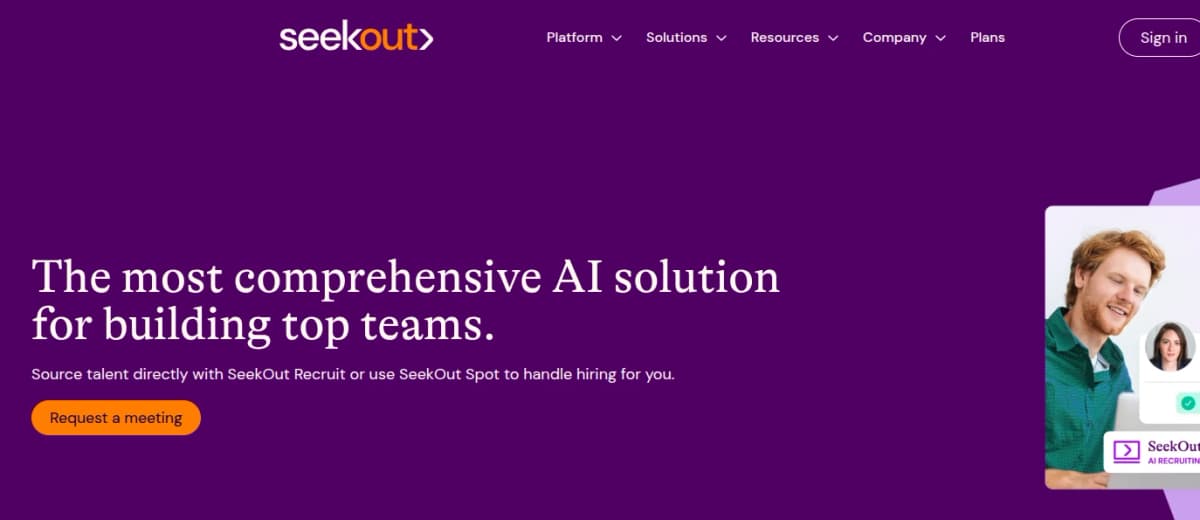
SeekOut combines AI sourcing with talent intelligence and analytics. It assists recruiters in finding candidates while also analyzing other talent pools. It’s a platform that promotes diversity-focused hiring by identifying underrepresented groups.
Recruiters can examine hiring trends and workforce data. SeekOut is often used for strategic hiring decisions and provides more data than basic sourcing tools. The interface is powerful but may feel complex. Teams usually need training to use it effectively. It’s commonly used alongside an applicant tracking system.
-
HireEZ
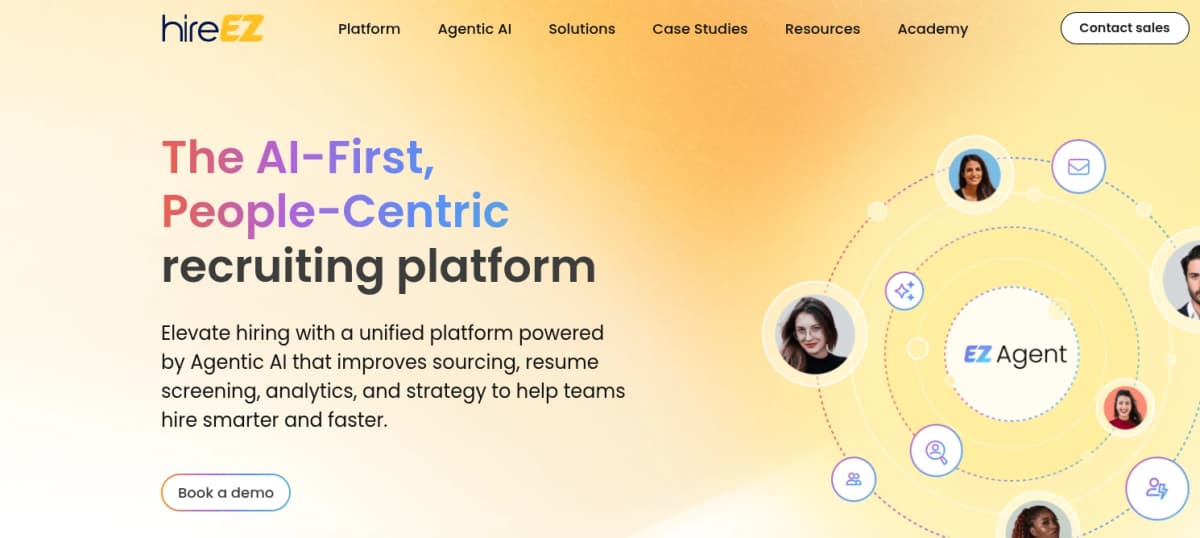
HireEZ focuses on finding candidates and candidate discovery. It helps recruiters engage with candidates across various platforms. Its AI model assists in matching candidates for roles and personalizing outreach. The tool is designed to scale sourcing efforts rapidly.
Recruiters use it to build pipelines even before roles are open. Although HireEZ does not handle interviews or assessments, it works best when paired with an applicant tracking system. It minimizes the time spent on manual profile searches and is often used by teams that focus heavily on sourcing, emphasizing speed and reach over evaluation.
-
Eightfold AI
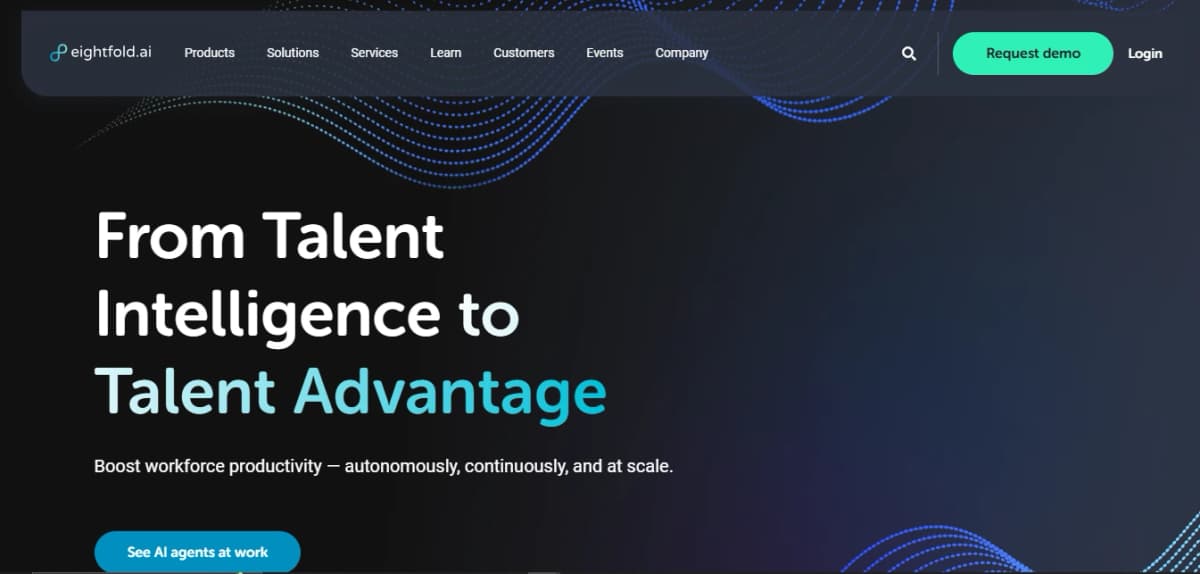
Eightfold employs AI to understand skills across different roles and career paths. It doesn’t depend on job titles and focuses on applicants’ skills.
This helps identify candidates with transferable or related skills. The platform is used for both external hiring and internal mobility, supporting long-term workforce planning.
Eightfold’s AI takes note of candidates’ potential instead of just experience. The system is often used by large organizations, as the setup and training require expertise.
-
Paradox
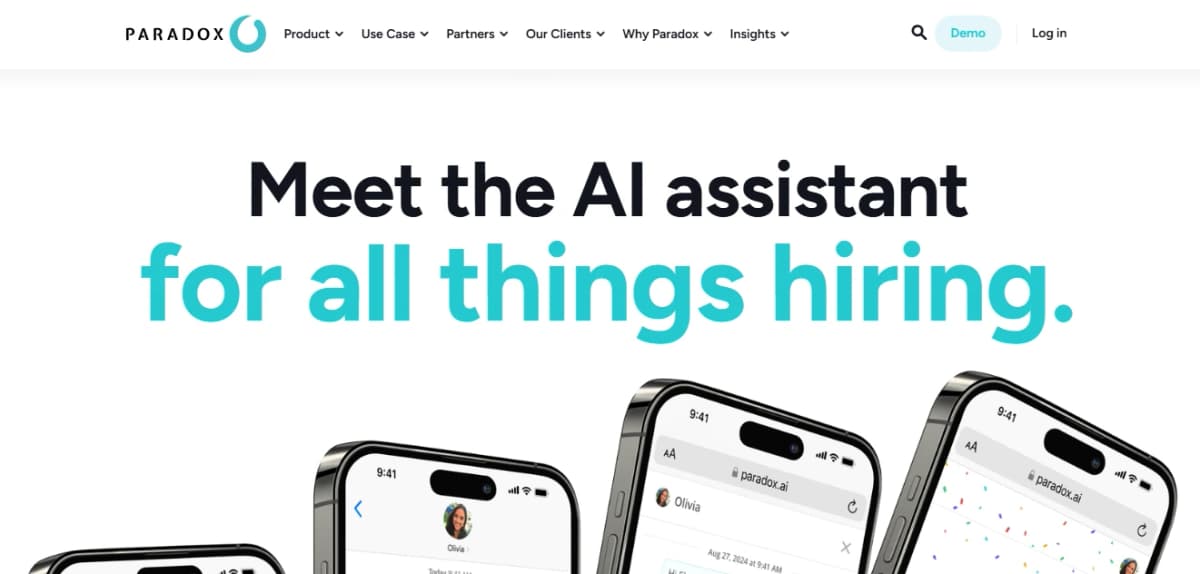
Paradox uses conversational AI to automate candidate communication. It handles scheduling, reminders, and basic screening via chat and voice. Candidates interact with an AI assistant instead of waiting for recruiters, which helps speed up hiring processes.
Paradox is widely used in environments with high-volume applications. It reduces the administrative work recruiters have to do, and it enhances the candidates’ experience by providing faster responses. Paradox is most effective for repetitive hiring flows and integrates with applicant tracking systems.
How to Choose the Right AI Recruiting Software in 2026
Having a ton of information and tools at the tip of your fingers is useless when you end up choosing the wrong one for your needs. Here are some pointers to look out for when making the ultimate choice of AI recruiting software:
-
Understand Your Hiring Needs
Start by assessing the type and number of roles your team hires. High-volume hiring needs AI recruitment software that can actively screen and rank candidates. On the other hand, small teams might benefit more from tools that focus on sourcing or taking care of administrative support.
Think about the complexity of the roles. Whether they are technical, specialized, or general, and how much manual effort currently slows your process. Understanding these factors helps ensure the tool fits your team’s current workflow and can scale with your team.
-
Assess AI Capabilities
Not all AI hiring tools are the same. Some only automate simple tasks like scanning resumes or sending emails. Look for platforms with more advanced AI, such as systems that can screen, evaluate skills, or conduct assessments.
Check how decisions are made, and make sure the system can clearly explain candidate rankings or recommendations.
-
Check for Fairness and Compliance
AI hiring faces increasing regulatory audits. The right tool should include measures to reduce hiring bias and clear evaluation criteria.
Skills-based assessments and evidence-driven decision-making help cut reliance on keyword-stuffed resumes, improve fairness, and protect your hiring process from future regulatory changes.
-
Integration and Usability
Think about how the AI platform connects with your current systems, such as ATS, calendars, and communication tools.
Smooth integration makes processes smooth, and lets recruiters focus on quality instead of juggling multiple dashboards. Avoid tools that are complicated or difficult to use, as they often fail, regardless of how sophisticated AI is.
-
Scalability
Look for AI recruitment platforms that are built for growth. Platforms designed around advanced AI, organized workflows, and skills-first assessments are likely to stay relevant as hiring trends change.
Scalability makes sure the tool can support larger teams, handle higher volumes, and manage more complex processes over time.
Conclusion
Choosing the right AI recruiting software in 2026 involves more than just checking boxes or picking the most popular tool. The best solution actively supports recruiters, reduces manual work, and helps make hiring decisions fair and consistent. Modern platforms should prioritize skills-first evaluation, practical assessments, and candidate experience over simple resume matching or email automation.
For lean teams or large organizations managing high volumes or specialized roles, AI recruiting platforms that can independently screen, evaluate, and prioritize candidates are becoming essential.
Among the new platforms in 2026, Hivemind AI stands out as a solution that brings these elements together. It intelligently filters candidates, conducts skill-based assessments, has a structured workflow, and an organized candidate pipeline. By focusing on proven abilities rather than just resumes, Hivemind helps reduce mis-hires, speed up the hiring cycle, and create a better experience for candidates and recruiters.
In today’s competitive market, the best AI hiring tool should serve as both a productivity partner for recruiters and a clear, fair guide for candidates. Hivemind shows how AI can evolve from a simple assistant to an active recruiting partner, helping teams make smarter, faster, and more informed hiring decisions in 2026.