
It’s well known that recruiters wear many hats. Some specialize in just sourcing candidates or managing client relationships, while others take on both roles. The latter are known as full desk recruiters.
Now, to the question of the day, what is full-desk recruiting? Is it just another buzzword, or is it a necessary move for startups and established businesses?
Full desk recruiting is a recruiting model that has been around for a while now. It involves blending sales, relationship management, and talent acquisition into a single, multifaceted role.
At the end of this article, you’ll understand the full concept of full desk recruiting, why companies consider it, and how AI recruiting tools like HiveMind AI keep transforming the future of full desk recruitment.
What is Full Desk Recruiting?

Full desk recruiting, in simple terms, is the practice of managing the complete recruiting process from lead generation to candidate placement. It’s a recruitment model where a single recruiter manages the client and the candidate aspects of recruiting.
The client aspect refers to the business development and account management part of the business, while the candidate aspect refers to the sourcing of talent for business growth.
Unlike traditional recruitment methods, where recruiters are divided into those who handle clients and those who handle candidates, a full desk recruiter manages everything.
They are also known as the 360° recruiter, and they successfully combine sales skills with sourcing, screening, and relationship-building skills.
This allows them to have a deep understanding of both the client’s needs and the candidates’ talents, leading to more successful and lasting placements.
Related: AI-Powered Recruitment for Early-stage Startups: Top 7 Tools
Who is a Full Desk Recruiter?
A full desk recruiter is someone who manages the entire hiring process from start to finish. They find companies that need to hire (the sales side) and also find and screen the candidates to fill those roles (the recruiting side). Instead of splitting these tasks between two people, one recruiter does both.
Example:
When a tech startup needs a software engineer, a full desk recruiter will first talk to the company to understand the role, then write and post the job ad, search for candidates on platforms like LinkedIn, interview the top applicants, and finally help the company choose the best fit.
They’ll also handle the job offer, negotiate if needed, and check in after the hire to make sure everyone is satisfied.
Responsibilities of a Full-Desk Recruiter

We’ve established the meaning of a full desk recruiter, so here are some of the common responsibilities of a full desk recruiter:
1. Prospecting Clients
This is the sales aspect of full desk recruiting. It involves identifying prospective companies that are hiring and pitching quality recruitment services for them.
It involves conducting market research for current hiring trends, cold calling or emailing HR managers, following up consistently with leads, creating proposals, and closing recruitment contracts.
2. Sourcing and Screening Candidates
This is another aspect of full desk recruiting that involves talent acquisition, writing clear and optimized job descriptions.
It also requires the use of applicant tracking systems (ATS) or AI sourcing tools to filter and rank candidates by skill, experience, and fit.
It’s the job of a full desk recruiter to search through databases of platforms like LinkedIn for the right talent for the company as requested.
3. Managing Offers and Negotiations
After the sourcing and selection of candidates, the recruiter acts as a negotiator.
They communicate the offer details to the candidate and advise the candidate and clients of potential red flags. They also help take care of last-minute back-out scenarios by maintaining communication and trust.
4. Account Management
After a successful placement, the full desk recruiter does constant check-ins with clients to ensure satisfaction with the new hire.
They also stay updated on new hiring trends, team expansions, or upcoming projects. Account management ensures long-term relationships, client retention, and returning clients.
5. Pipeline and Database Management
Full desk recruiters work with a talent pipeline for current and future roles. It includes organizing candidate data in their ATS or CRM for efficient search. They keep detailed records of interactions, preferences, job titles, skills, and feedback.
Candidates who weren’t fit for one role might be perfect for another, and picking from an already vetted list makes things easy for the recruiter and the company.
Having a strong database helps full desk recruiters fill roles faster and build long-term value from their candidate pool.
Top Pick: Top 11 Manatal Alternatives
Full Desk Recruiter Job Description
Key Responsibilities:
Client Side (Business Development):
- Identify and pursue new business opportunities through outbound sales, networking, and referrals.
- Build and maintain strong relationships with hiring managers and decision-makers.
- Conduct client meetings to understand hiring needs, team dynamics, and job requirements.
- Negotiate contracts and recruitment fees with clients.
- Provide ongoing client support, updates, and feedback on candidates and market conditions.
Candidate Side (Recruiting):
- Source, screen, and interview candidates for a variety of roles (temporary, contract, or permanent).
- Utilize job boards, social media, ATS systems, referrals, and networking to identify top talent.
- Assess candidate qualifications, experience, and cultural fit.
- Present qualified candidates to clients with detailed summaries and recommendations.
- Coordinate interviews, manage offers, and guide candidates through the hiring process.
Required Skills and Qualifications:
- Proven experience as a full desk recruiter, agency recruiter, or similar role.
- Strong sales acumen with the ability to generate leads and close deals.
- Excellent communication, negotiation, and interpersonal skills.
- Proficiency with recruiting tools such as LinkedIn Recruiter, ATS/CRM platforms, and job boards.
- Ability to manage multiple searches and clients simultaneously.
- Self-starter with strong time management and organizational skills.
When Does Full Desk Recruiting Come Up?
Full desk recruiting isn’t the norm for companies when it comes to talent sourcing, but there are certain situations where it becomes a strategic move:
-
Small recruitment agencies
Having one person manage both sides of the desk in smaller firms is practical because it cuts down overhead costs and ensures consistency throughout the hiring process. -
Niche Recruiting
When it comes to specialized/niche roles, having one point of contact allows for a smooth process. It opens a clear channel of understanding of the client’s needs and candidates’ qualifications. -
Startups and Lean Teams
For startups or lean HR teams, hiring a full desk recruiter can help streamline efforts without needing to split roles and add more recruiting members. -
Client-Driven Markets
In industries where client relationship management is critical, full desk recruiters ensure consistency in messaging and trust-building. This helps with long-term retention and the return of clients.
Cons of Full Desk Recruiting
While full desk recruiting has its advantages, it is known to have a unique set of challenges that can make it seem overwhelming without the right systems in place. Some of the cons of full desk recruiting are:
1. It Can be Time-Intensive
One of the biggest issues of full desk recruiting is the volume of responsibilities.
In order to manage both clients and candidates, recruiters must schedule multiple interviews per day, manage calls from new clients, gather feedback, send follow-ups, and manage databases.
Having to do everything makes 24 hours seem short to tick all the boxes. Without the right tools, full desk recruiters can burn out quickly.
2. Combining Sales and People Skills Can Be Difficult
The best recruiters aren’t always the greatest salespeople, and this works both ways. A common struggle in full desk recruiting is filling the skill gap.
A recruiter may be great at building candidate rapport but slow to cold-call clients. Without proper training, it’s hard to deliver consistent results.
3. High Pressure and Accountability
Since the recruiter is responsible for both sourcing and client satisfaction, there’s no one else to blame when processes break down.
If a candidate backs out last minute, the recruiter is tasked with handling the fallout and still comes up with another option. Having to do everything without a support team can be a heavy burden.
4. The Challenge of Juggling Multiple Roles
Full desk recruiters must switch gears constantly. From negotiating a client contract to coaching a candidate for an interview, to updating a hiring manager, and then posting a job ad.
Mental switching can lead to slower decision-making, missed follow-ups, and an increased risk of errors.
5. Difficult to Scale
While full desk recruiting is manageable with 2–3 job orders, it becomes unsustainable when the workload scales.
As more clients and roles come in, the quality drops, which can lead to candidate experience suffering due to rushed interviews, clients feeling neglected if updates are delayed, and admin tasks falling through the cracks.
Would AI Take Over Full Desk Recruiting?

Full-desk recruiting is overwhelming. 65% of recruiters report increased stress, and 21% say their stress levels have drastically increased. AI tools are here to make full desk recruiting easier for full desk recruiters, not replace them.
When it comes to AI recruiting tools, there’s always a question of it taking over recruiters, and for full desk recruiters who already juggle sales, sourcing, screening, negotiations, and account management, the fear of being automated out of relevance is understandable.
AI recruiting tools shouldn’t be seen as a new system that has come to take out full desk recruiters, but act as recruiting partners.
While AI can automate repetitive tasks and make processes smarter, it lacks human judgment, emotional intelligence, and relationship-building skills that sit at the heart of full desk recruiting.
Candidates still want to be coached and understood, and clients still want to trust the person representing their brand.
AI recruiting tools like HiveMind AI and Spott can take over time-consuming, repetitive, low-impact tasks that drain a full desk recruiter’s time and energy.
Success Story: How RocketDevs Runs 20,000 Interviews per Month with HiveMind AI
How Hivemind AI Support Full Desk Recruiters
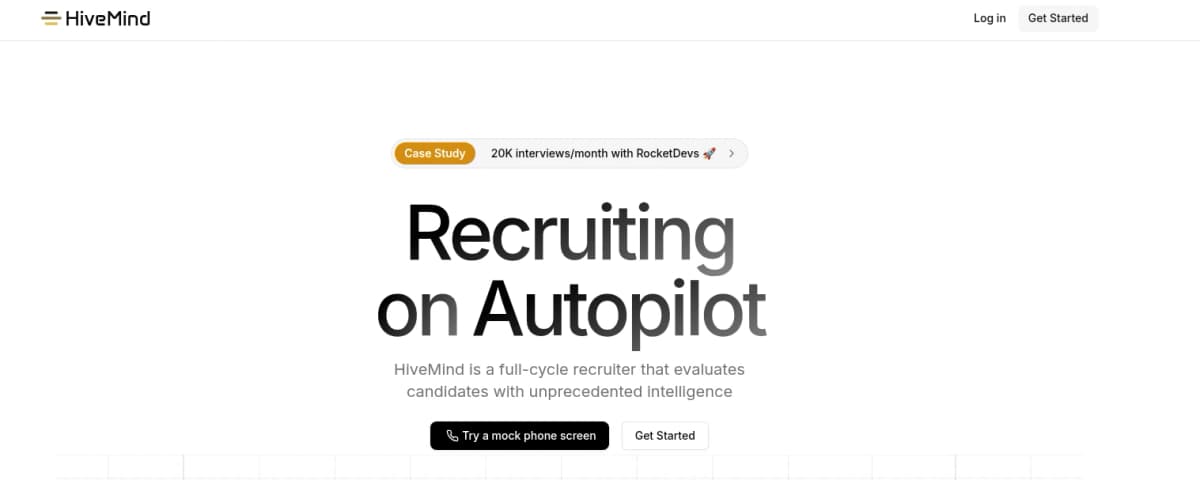
Why does HiveMind seem like the ideal choice for full desk recruiters?
Hivemind AI isn’t like your regular ATS. It was designed to act as an efficient co-pilot for full desk recruiters, making their workflow faster, more organized, and reducing the stress load.
It sources and ranks candidates by skills, experience, and personality fit, saving recruiters hours of manual searching and resume scanning. It also pre-screens candidates through automated conversations, allowing recruiters to focus on high-quality interactions.
Hivemind also has an AI-assistant that can handle initial candidate screening calls on your behalf and ask initial qualifying questions to get the best candidates. It sends timely email follow-ups, alerts you of unresponsive leads, and even recommends next steps, so nothing falls through the cracks.
Ready to make full desk recruiting easier? Let’s help you get started.
Get Started